OFDA
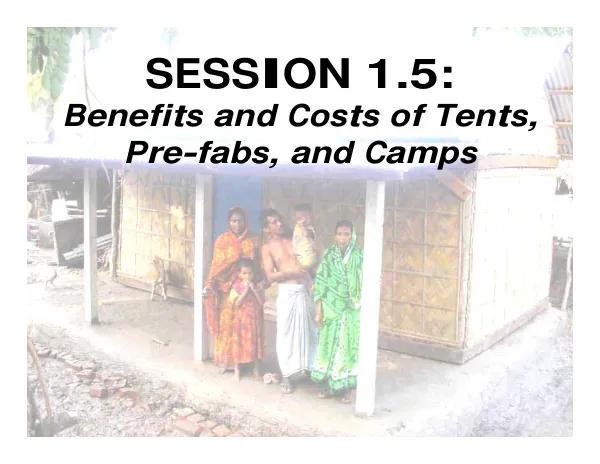
Session 1.5 - Tents Pre-fabs and Camps
The concept of need is often misunderstood, particularly in the context of disaster relief and humanitarian aid.
2009 · 9 pages
Sign in to readA free account is required to download.
Abstract
The assumption that damage to a physical structure or the presence of a tent or camp indicates a need for assistance is not always accurate. In reality, the home itself may be intact, but the occupants may be in dire need of support. The distinction between damage and need is crucial in disaster response. Damage to a physical structure does not necessarily translate to a need for assistance, as the occupants may be able to repair or maintain their home themselves. Conversely, a person or family may be in need of support despite their physical shelter being intact. The images accompanying this concept highlight the complexities of need assessment. A crowded displaced persons camp, with tents and makeshift shelters, may not necessarily indicate a need for assistance, as the occupants may be able to provide for themselves. Similarly, a person standing in a run-down shelter with children playing outside may not be in need of support, as they may be able to maintain their living situation. In contrast, the presence of an ambulance truck driving through a city or an urban area with rundown multi-story apartment buildings and high-rise office buildings in the background may indicate a need for medical or humanitarian assistance. The burned-out shelters in a crowded urban environment also suggest a need for support, as the occupants may be in danger or in need of basic necessities. The concept of need is multifaceted and cannot be reduced to a simple visual assessment. It requires a nuanced understanding of the context and the specific needs of the individuals or communities affected. By recognizing the distinction between damage and need, humanitarian organizations and disaster responders can provide more targeted and effective support to those who truly require it.
Related documents