U.N.
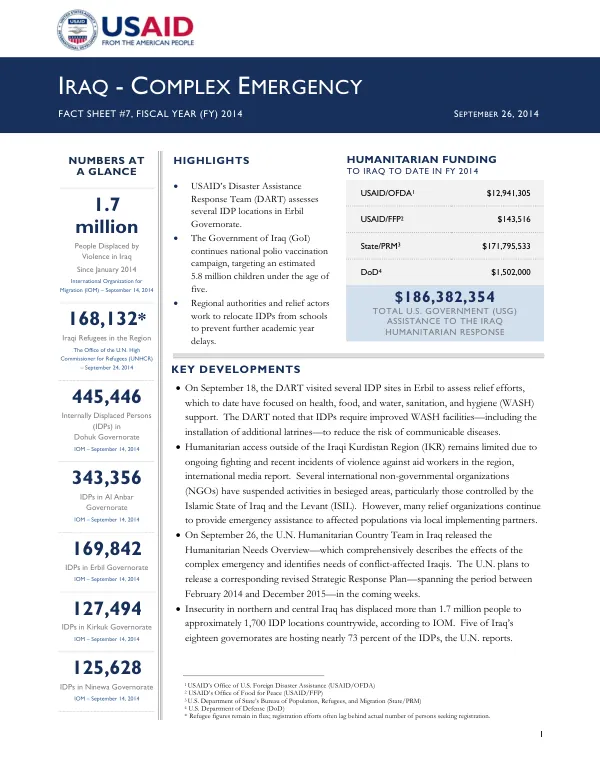
Syria - Complex Emergency Fact Sheet #7, Fiscal Year (FY) 2018
The Syrian Arab Republic Government (SARG) military operations against the Islamic State of Iraq and Syria (ISIS) and armed opposition groups (AOGs) in southern Damascus have resulted in significant displacement and humanitarian needs.
2018 · 8 pages
Sign in to readA free account is required to download.
Abstract
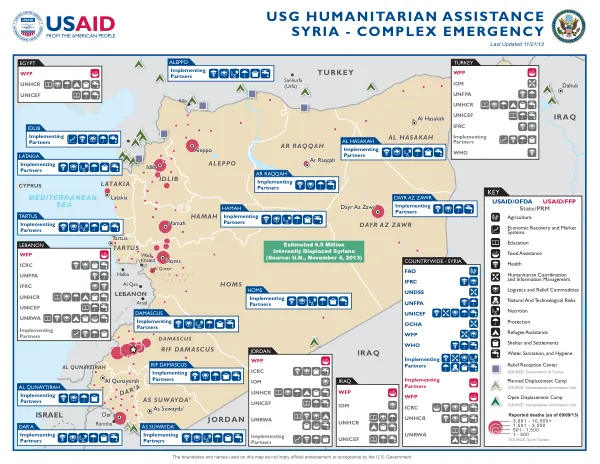
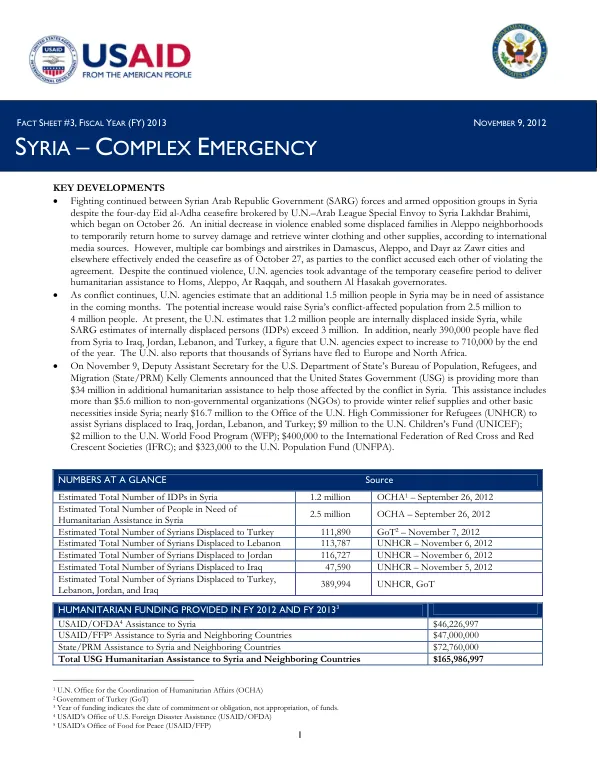
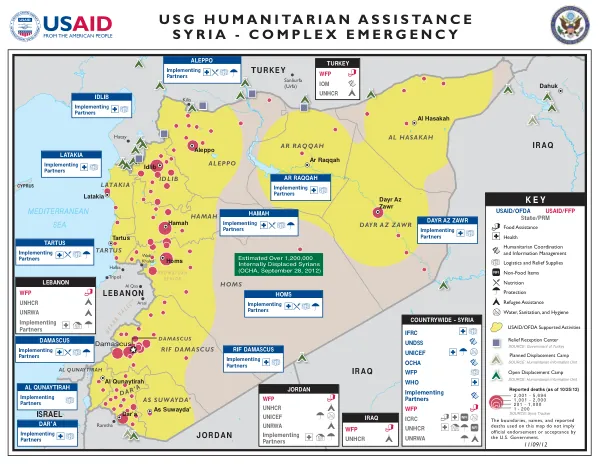
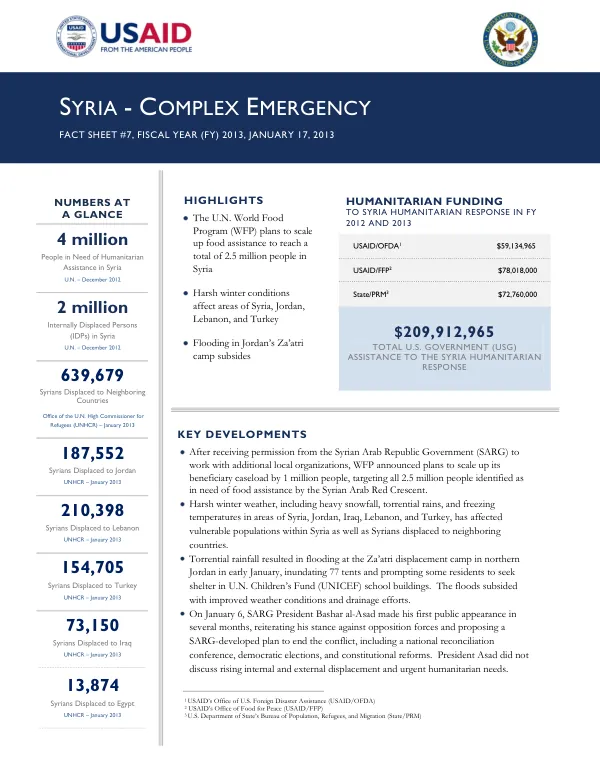
As of late April, an estimated 3,500 Palestinian refugees had fled the Yarmouk camp due to the conflict, with those remaining in the camp sheltering in basements with limited access to food, medicine, and safe drinking water. The United Nations (UN) has been unable to access the camp since 2015. Local agreements have been reached between the SARG and AOGs in various governorates, including Homs, Idlib, and Rif Damascus, resulting in the evacuations of opposition fighters, their family members, and civilians to opposition-controlled areas in Aleppo and Idlib. As of May 7, evacuations were ongoing in multiple locations, and relief agencies were assisting newly displaced populations in Aleppo and Idlib. The UN reports that nearly 2.1 million people were residing in UN-identified besieged and hard-to-reach (HTR) areas of Syria as of April 26, representing a decrease of approximately 12 percent since February. The recapturing of Eastern Ghouta by the SARG has led to a significant decrease in the population in besieged locations, from nearly 414,000 people to approximately 11,100 people. However, humanitarian access inside Eastern Ghouta remains limited, and commercial access and civilian freedom of movement remain restricted. The UN estimates that 120,000 people remain in Eastern Ghouta, but population figures are difficult to verify due to the UN's inability to access the region. Humanitarian organizations continue to respond to the needs of internally displaced persons (IDPs) hosted at collective centers in Rif Damascus. As of May 1, approximately 44,000 IDPs remained at the sites, while 48,000 people had left the sites under sponsorship arrangements with host communities in surrounding areas. The UN has conducted approximately 22,000 medical consultations and provided more than 513,000 emergency relief items and 77,800 ready-to-eat (RTE) rations to IDPs at the collective centers. The conflict has also resulted in significant health needs, with airstrikes striking the specialized Kafr Zita hospital in northern Hamah Governorate, killing one person, wounding three people, and significantly damaging the hospital. The UN reports that extensive unexploded ordnance contamination is hampering safe returns and impeding humanitarian response activities in Ar Raqqah city, where an estimated 100,000 people had returned since October 2017.
Related documents