INTERNATIONAL CHILDREN'S FUND, INC.
USAID's Office of Food for Peace (FFP) Food Assistance Fact Sheet: Djibouti
The Djibouti food security situation is characterized by a complex interplay of factors, including refugee presence, drought, and economic constraints.
2018 · 1 pages
Sign in to readA free account is required to download.
Abstract
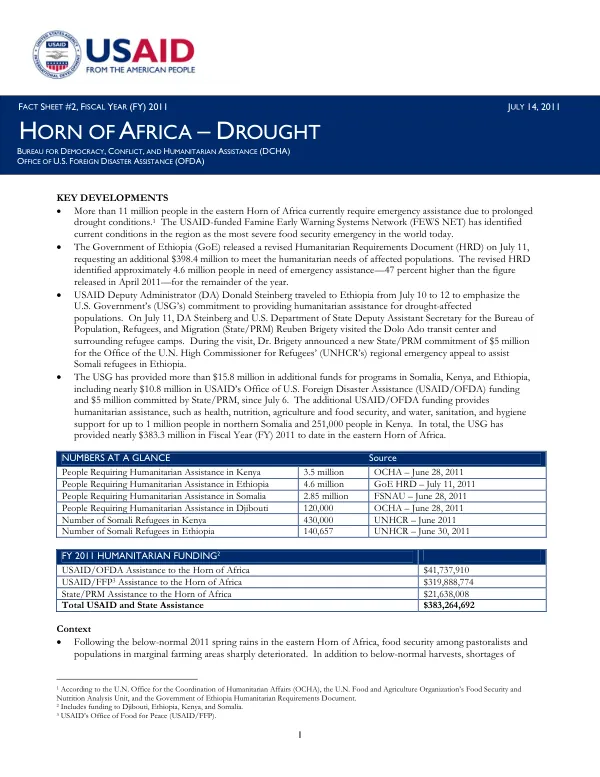
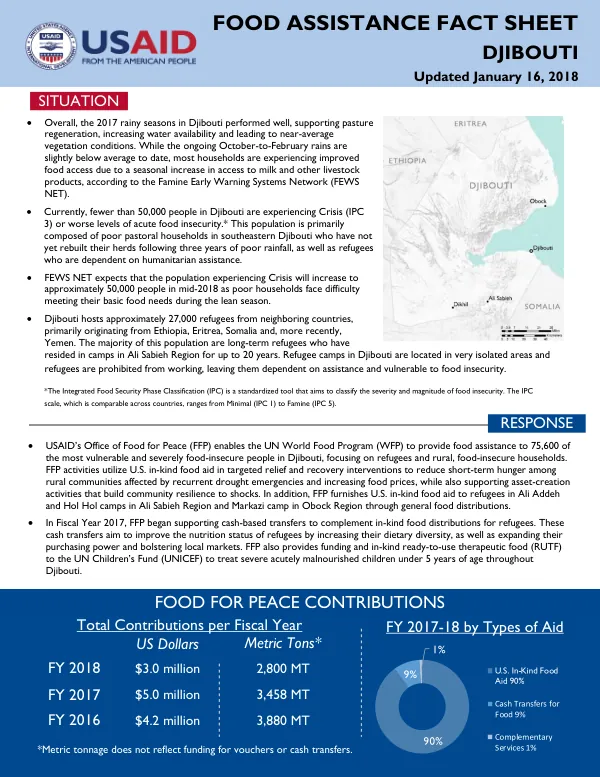
Refugee camps in Ali Sabieh Region have been home to individuals who resided in camps for up to 20 years, with refugees prohibited from working and thus dependent on assistance. This leaves them vulnerable to food insecurity. The 2017 rainy seasons in Djibouti performed well, supporting pasture regeneration, increasing water availability, and leading to near-average vegetation conditions. However, the ongoing October-to-February rains are slightly below average to date. Despite this, most households are experiencing improved food access due to a seasonal increase in access to milk and other livestock products, according to the Famine Early Warning Systems Network (FEWS NET). The FEWS NET reports that fewer than 50,000 people in Djibouti are experiencing Crisis (IPC 3) or worse levels of acute food insecurity, primarily composed of poor pastoral households in southeastern Djibouti and refugees dependent on humanitarian assistance. The population experiencing Crisis is expected to increase to approximately 50,000 people in mid-2018 as poor households face difficulty meeting their basic food needs during the lean season. Djibouti hosts approximately 27,000 refugees from neighboring countries, primarily originating from Ethiopia, Eritrea, Somalia, and Yemen. The majority of this population are long-term refugees who have resided in camps for extended periods. USAID's Office of Food for Peace (FFP) enables the UN World Food Program (WFP) to provide food assistance to 75,600 of the most vulnerable and severely food-insecure people in Djibouti, focusing on refugees and rural, food-insecure households. FFP activities utilize U.S. in-kind food aid in targeted relief and recovery interventions to reduce short-term hunger among rural communities affected by recurrent drought emergencies and increasing food prices. In addition, FFP furnishes U.S. in-kind food aid to refugees in Ali Addeh and Hol Hol camps in Ali Sabieh Region and Markazi camp in Obock Region through general food distributions. In Fiscal Year 2017, FFP began supporting cash-based transfers to complement in-kind food distributions for refugees. These cash transfers aim to improve the nutrition status of refugees by increasing their dietary diversity, as well as expanding their purchasing power and bolstering local markets. FFP also provides funding and in-kind ready-to-use therapeutic food (RUTF) to the UN Children's Fund (UNICEF) to treat severe acutely malnourished children under 5 years of age throughout Djibouti.
Related documents