USAID DEC
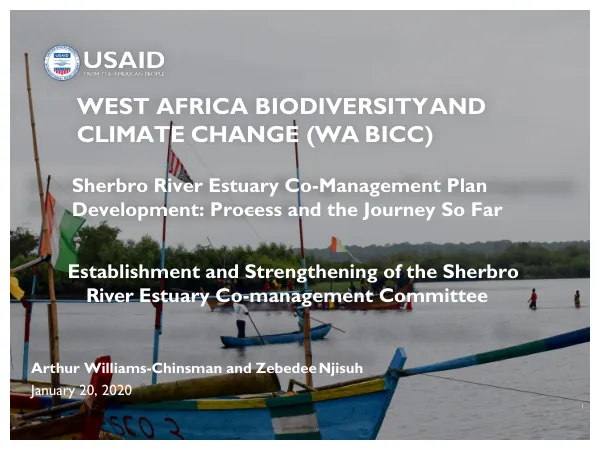
Sherbro River Estuary Co-Management Plan Development: Process and the Journey So Far
Sign inTETRA TECH
Sherbro River Estuary Co-Management Plan Development: Process and the Journey So Far
The Sherbro River Estuary Co-Management Plan Development Process and Journey So Far is a comprehensive document outlining the establishment and strengthening of the Sherbro River Estuary Co-management Committee.
2020 · 15 pages
Sign in to readA free account is required to download.
Abstract
The plan aims to guide the management of the Sherbro River Estuary, a Marine Protected Area located in Southern Sierra Leone, covering approximately 283.54 km². The estuary is home to 58.2% of the country's total mangroves, as well as other coastal habitats such as sandy beaches, rocky shores, and mudflats. The mangroves of the SRE are dominated by species such as Rhizophora mangle, Rhizophora harrisonii, Avicenmia Africana, Conocarpus erectus, and Lagucularia racemosa. The region is also a habitat for a diverse range of wildlife, including birds, turtles, primates, sharks, manatees, mollusks, oysters, periwinkles, algae, and coralline sponges. Fish species found in the estuary include Bonga, Sardinella, croaker, grouper, kuta, and various species of shrimps and lobsters. The Sherbro River Estuary provides numerous environmental benefits, including shelter and food for a wide variety of wildlife, improved water quality mitigation, and protection of communities from flooding and strong winds. The estuary also offers opportunities for learning and education, improves air quality, and serves as a source of livelihood for many community fishers, wood harvesters, and provides construction materials and medicine. However, the mangroves of the SRE are threatened by various factors, including pollution and waste from mining, unsustainable harvesting of mangrove wood, conversion of mangrove forests into rice farms, flooding and coastal erosion exacerbated by climate change, and vulnerability to the effects of climate change. Approximately 8% of the mangroves have been lost since 1990 at a rate of about 0.2% per year. A co-management plan is necessary to address these threats and ensure the sustainable management of the mangrove forest resources. The plan will set goals and identify future management orientations for achieving these goals in a functional document. The plan will provide the context, outline current resource characteristics, and ongoing and planned management practices for the SRE. The co-management plan will involve several steps, including the identification of stakeholders using PRA tools such as the 4Rs (Rights, Relationships, Responsibilities, and Revenue), mapping of resources users and uses, and seasonal calendars. The plan will also involve setting up the SRE management institution, participatory resource assessment, and writing and validation of the co-management plan. The final step will be the development and signing of a co-management agreement with the National Protected Area Authority (NPAA), outlining the agreed rights and responsibilities of both government and communities, as well as the agreed rules and regulations for the sustainable management of the mangrove forest resources.