USAID DEC
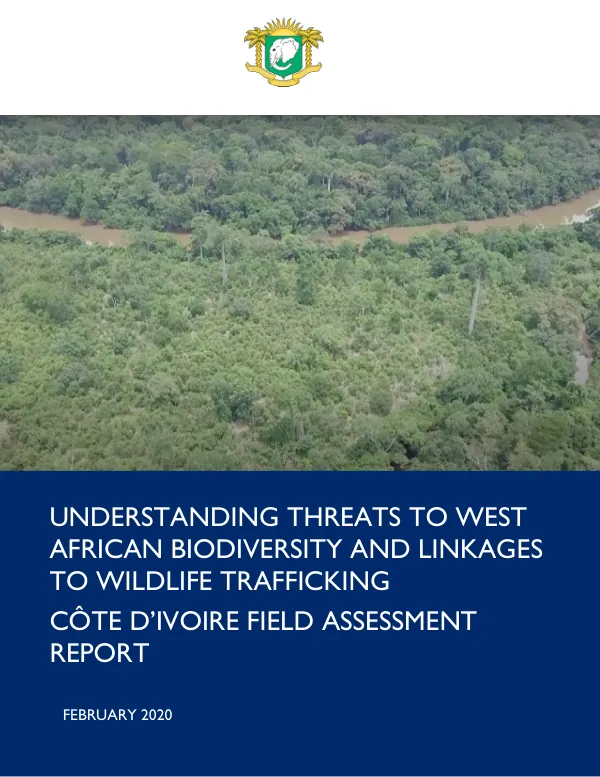
Understanding Threats to West African Biodiversity and Linkages to Wildlife Trafficking: Côte d'Ivoire Field Assessment Report
Sign inTETRA TECH
Understanding Threats to West African Biodiversity and Linkages to Wildlife Trafficking: Côte d'Ivoire Field Assessment Report
Côte d'Ivoire is a country in West Africa with a rich biodiversity, including forests, savannas, and wetlands.
2020 · 50 pages
Sign in to readA free account is required to download.
Abstract
The country's wildlife is threatened by various factors, including habitat loss, poaching, and wildlife trafficking. This report assesses the threats to West African biodiversity and linkages to wildlife trafficking in Côte d'Ivoire. The assessment was conducted in February 2020, with the objective of understanding the scope and complexity of wildlife trafficking in Côte d'Ivoire. The assessment involved visits to markets and entry points, including the Adjamé, Cocody de Saint-Jean, and Yopougon markets, as well as the Abidjan international airport, customs, airport police, airport safety, and the Airport Water and Forestry Inspection Service. The assessment also included visits to the Autonomous Port of Abidjan, customs, port safety, and the Noé land border crossing, customs, police, and the Water and Forestry Ministry. The assessment found that wildlife trafficking is a significant threat to Côte d'Ivoire's biodiversity. The country's markets and entry points are used as transit points for wildlife products, including ivory, rhino horn, and bushmeat. The assessment also found that law enforcement agencies in Côte d'Ivoire are not adequately equipped to combat wildlife trafficking. The country's wildlife law enforcement agencies lack resources, including personnel, equipment, and training, which hinders their ability to effectively enforce laws and regulations related to wildlife trafficking. The assessment identified several challenges to effective wildlife law enforcement in Côte d'Ivoire, including corruption, lack of coordination among agencies, and inadequate resources. The assessment also found that the country's wildlife law enforcement agencies lack a proactive approach to enforcement, relying instead on reactive measures to respond to wildlife trafficking incidents. The assessment recommended that the government of Côte d'Ivoire strengthen its wildlife law enforcement agencies by providing them with adequate resources, including personnel, equipment, and training. The assessment also recommended that the government of Côte d'Ivoire adopt a proactive approach to enforcement, including the use of intelligence-led investigations and specialized investigative techniques. The assessment further recommended that the government of Côte d'Ivoire strengthen its international cooperation with other countries to combat wildlife trafficking, including the sharing of intelligence and best practices. In conclusion, the assessment found that wildlife trafficking is a significant threat to Côte d'Ivoire's biodiversity. The country's law enforcement agencies lack the resources and capacity to effectively combat wildlife trafficking, and a proactive approach to enforcement is needed to address this issue. The assessment provided several recommendations to the government of Côte d'Ivoire to strengthen its wildlife law enforcement agencies and combat wildlife trafficking. The assessment identified several trafficking routes and seizures, including the use of markets and entry points to transport wildlife products. The assessment also found that participants in the wildlife trafficking trade face several challenges, including the risk of arrest and prosecution. The assessment recommended that the government of Côte d'Ivoire strengthen its prosecution guidelines and available penalties to deter wildlife trafficking. Overall, the assessment provided a comprehensive understanding of the threats to West African biodiversity and linkages to wildlife trafficking in Côte d'Ivoire. The assessment identified several challenges to effective wildlife law enforcement and provided recommendations to the government of Côte d'Ivoire to strengthen its wildlife law enforcement agencies and combat wildlife trafficking.
Related documents
Documents in this collection
 2020
2020USAID DEC
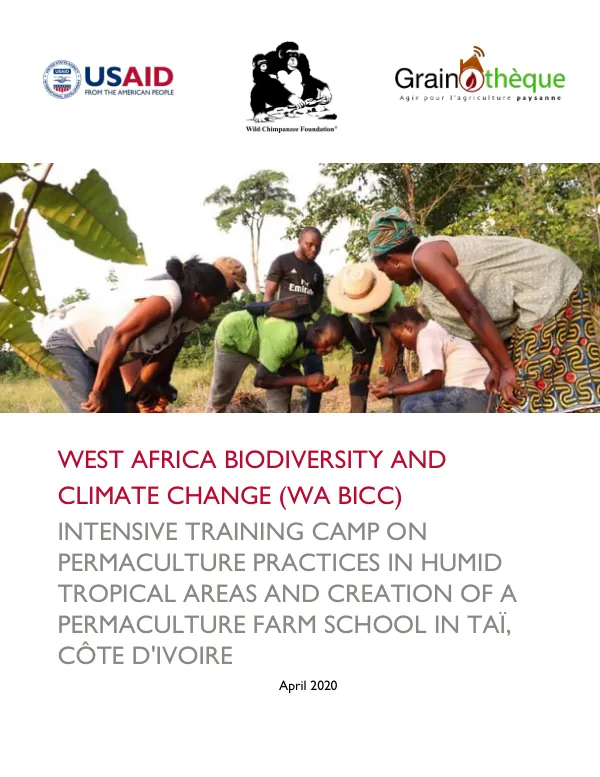
West Africa Biodiversity and Climate Change: Intensive Training Camp on Permaculture Practices in Humid Tropical Areas and Creation of a Permaculture Farm School in Taï, Côte d'Ivoire
Open record 2021
2021USAID DEC