USAID
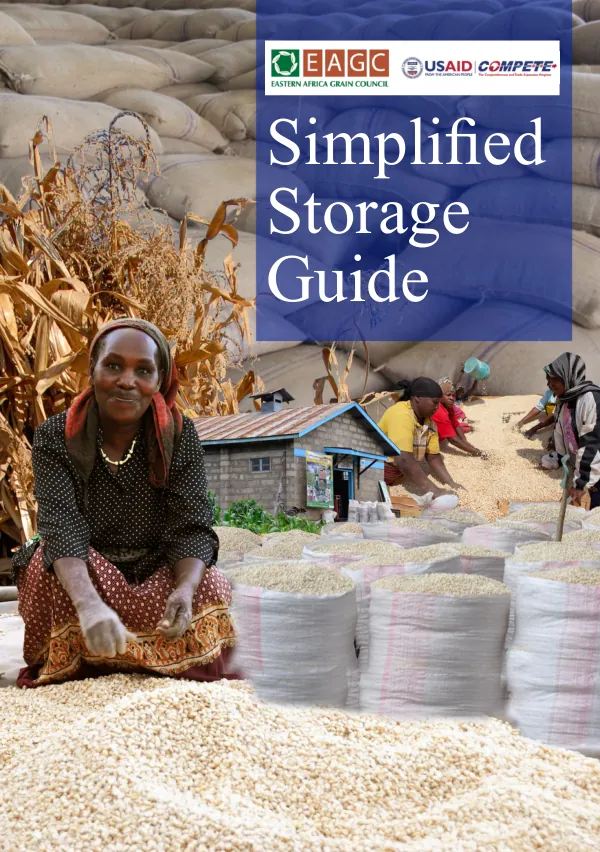
Simplified Storage Guide
The Competitiveness and Trade Expansion (COMPETE) program, funded by the U.S.
2013 · 26 pages
Sign in to readA free account is required to download.
Abstract
Agency for International Development (USAID), works to build the capacity of smallholder farmers in East and Central Africa. One of the key challenges faced by smallholder farmers is accessing commercial markets and earning the best possible prices for their commodities. This is due to low volumes and poor quality of production, which is often the result of weak post-harvest handling practices and insufficient storage. Proper storage and handling can significantly reduce crop losses, which can be as high as 40 percent in some cases. However, storage facilities in the East African Community (EAC) often suffer from poor management and weak controls. As a result, farmers are reluctant to trust storage operators and are skeptical of the value of these facilities, which often charge a lot while delivering very little. To address these challenges, COMPETE and its partner, the Eastern Africa Grain Council (EAGC), developed the Simplified Storage Guide. This guide provides storage operators with tips, techniques, and cost-effective solutions to improve operations, gain the trust of farmers, and encourage farmers to make deposits. The guide emphasizes that the best store is not necessarily the fanciest store, but rather the best-kept store. Good storage facility management does not have to be complicated and expensive. It requires attention to detail, a rigorous maintenance schedule, and careful recordkeeping. The guide provides practical advice on how to improve quality, reduce losses, and manage stocks that will help operators deliver valuable services to depositors and help them realize the benefits of storage, such as higher prices. The guide is divided into four sections: Post-Harvest Handling, Basic Storage Requirements, Store Management, and Pest Management. The first section covers harvesting and post-harvest handling, including tips on how to prepare grain for storage, moisture testing, and drying methods. The second section details basic store requirements and must-have equipment and materials, as well as illustrated descriptions of the different types of storage facilities. The third section provides an illustrated anthology of the common storage pests in the Eastern Africa region and outlines recommendations to manage and control each of them with an eye towards prevention and cost containment. The fourth section covers pest prevention routine, types of pests, and pest control. One of the key messages of the guide is that high moisture levels will result in lower prices, and grain needs to be at stipulated moisture levels before storage. The guide also emphasizes the importance of proper harvesting, drying, and storage practices to ensure the best quality product and highest prices. The Simplified Storage Guide provides a valuable resource for storage operators and smallholder farmers in East and Central Africa. By following the guide's tips and techniques, operators can improve their operations, gain the trust of farmers, and encourage farmers to make deposits, ultimately leading to higher prices and improved livelihoods for smallholder farmers.