INSTITUTO COLOMBIANO PARA EL BIENESTAR FAMILIAR
SITUATION OF CHILDREN AND ADOLESCENTS IN COLOMBIA
Colombia's situation regarding children and adolescents is a pressing concern.
2015 · 1 pages
Sign in to readA free account is required to download.
Abstract
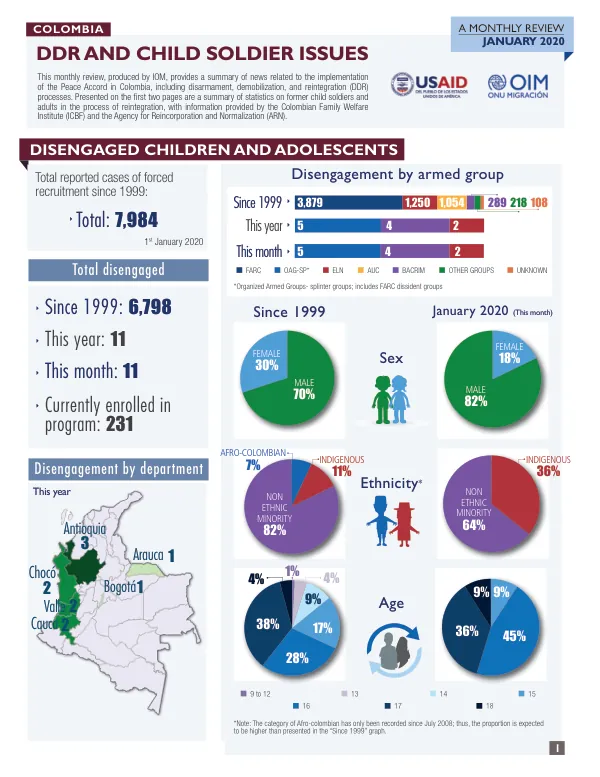
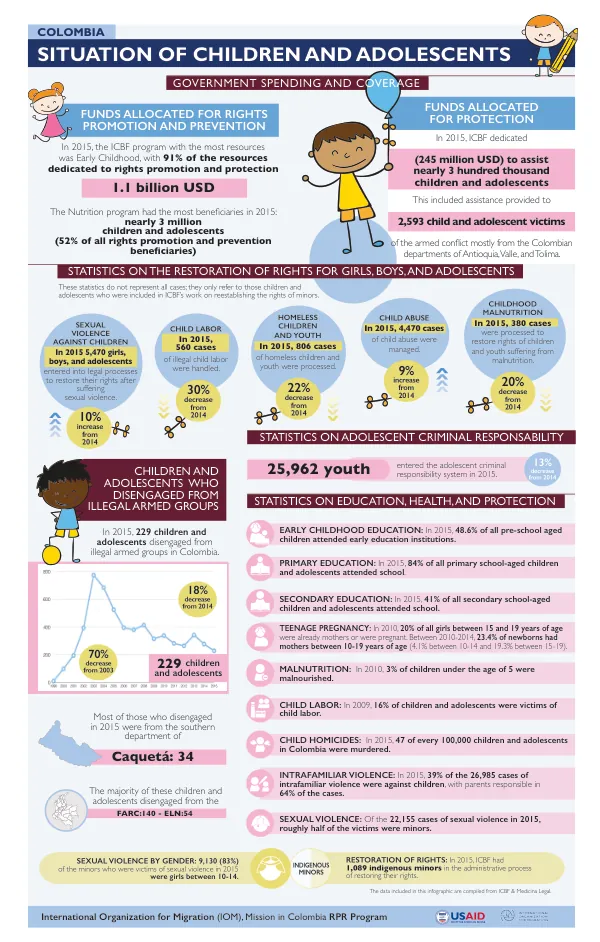
In 2015, the ICBF program with the most resources was Early Childhood, with 91% of the resources dedicated to rights promotion and protection, totaling 1.1 billion USD. This allocation enabled the program to reach nearly 3 million children and adolescents, with the Nutrition program having the most beneficiaries. The ICBF dedicated 245 million USD to assist nearly 300,000 children and adolescents, including 2,593 child and adolescent victims of the armed conflict, primarily from the Colombian departments of Antioquia, Valle, and Tolima. Government spending on the restoration of rights for girls, boys, and adolescents showed a 10% increase from 2014, with 5,470 girls, boys, and adolescents entering into legal processes to restore their rights after suffering sexual violence. Statistics on child labor indicate a 30% decrease from 2014, with 560 cases of illegal child labor handled in 2015. Childhood malnutrition cases decreased by 20% from 2014, with 380 cases processed to restore the rights of children and youth suffering from malnutrition. Homeless children and youth cases decreased by 22% from 2014, with 806 cases processed in 2015. Education statistics show that 84% of all primary school-aged children and adolescents attended school in 2015, while 41% of all secondary school-aged children and adolescents attended school. Teenage pregnancy rates were a concern, with 20% of all girls between 15 and 19 years of age already mothers or pregnant in 2010. Malnutrition rates among children under the age of 5 decreased from 3% in 2010 to an unspecified rate in 2015. Child labor rates decreased from 16% in 2009 to an unspecified rate in 2015. Child homicides occurred at a rate of 47 per 100,000 children and adolescents in Colombia in 2015. Intrafamilial violence cases showed that 39% of the 26,985 cases were against children, with parents responsible in 64% of the cases. Sexual violence cases showed that roughly half of the 22,155 victims were minors. Early childhood education enrollment increased to 48.6% of all pre-school aged children attending early education institutions in 2015. The majority of children and adolescents who disengaged from illegal armed groups in 2015 were from the southern department of Caquetá, with 229 children and adolescents disengaging from groups such as the FARC and ELN. The number of indigenous minors in the administrative process of restoring their rights increased to 1,089 in 2015.
Related documents