CHEMONICS
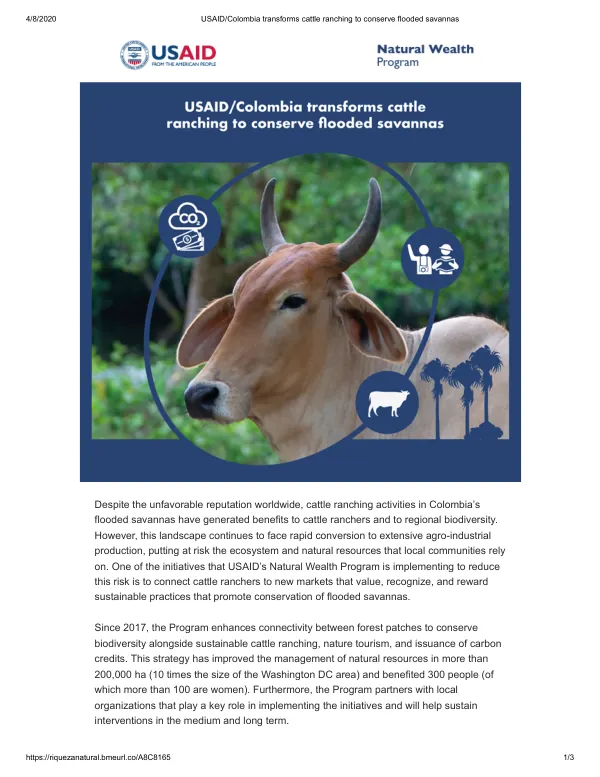
USAID/Colombia transforms cattle ranching to conserve flooded savannas
The Natural Wealth Program, implemented by USAID/Colombia, aims to transform cattle ranching in Colombia's flooded savannas to conserve biodiversity.
2020 · 3 pages
Sign in to readA free account is required to download.
Abstract
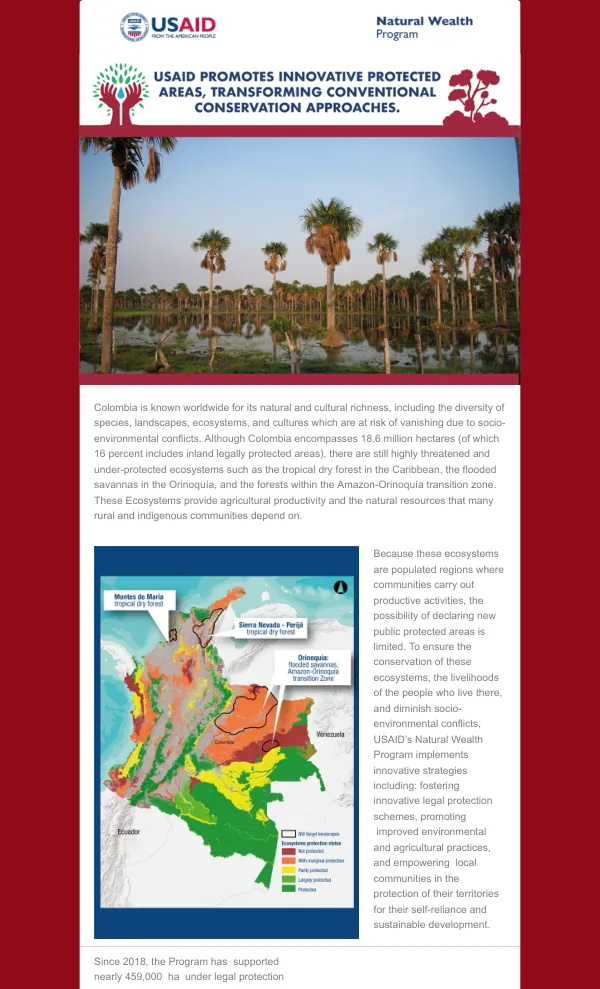
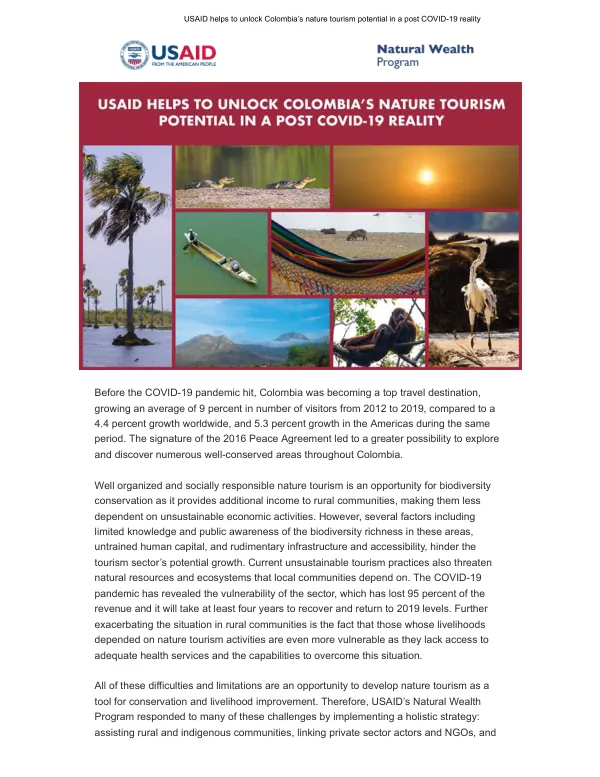
Despite the negative global reputation of cattle ranching, this practice has generated benefits for cattle ranchers and regional biodiversity in Colombia. However, the landscape is under threat from rapid conversion to extensive agro-industrial production, putting ecosystem and natural resources at risk. Since 2017, the Program has enhanced connectivity between forest patches to conserve biodiversity alongside sustainable cattle ranching, nature tourism, and the issuance of carbon credits. This strategy has improved the management of natural resources in over 200,000 hectares, benefiting more than 300 people, including over 100 women. The Program partners with local organizations to implement initiatives and sustain interventions in the medium and long term. To enable cattle ranchers to conserve biodiversity and access new markets, the Program supports three scenarios. The first scenario involves cattle ranching integrating biodiversity conservation, where improved environmental and agricultural practices have been implemented in over 100 farms. These practices include using local cattle breeds adapted to the region's climate and pastures, and improved water management. The local Chamber of Commerce is supporting the connection of a differentiated beef product with new markets, such as restaurants Takami and Sagal. The second scenario is nature tourism, where the Program has partnered with Awake Travel to promote cattle farms turned private natural reserves as travel destinations. Natural Wealth has built the capacity of farmers and advised them on how to strengthen their tourism services. Through the Awake online platform, farmers have been able to advertise and sell their travel packages. The third scenario involves payment for environmental services through the issuance of carbon credits, where Natural Wealth and local NGO Cataruben have devised an initiative to incentivize private companies to buy carbon credits from cattle ranchers who conserve forests and savannas. By promoting these three sustainable production scenarios, the Program is stimulating cost-effective investments, connecting supply to new markets, and providing proof of concept for a development strategy that enables local farmers to achieve self-reliance and a more sustainable, secure future.