GOVERNMENT OF INDONESIA
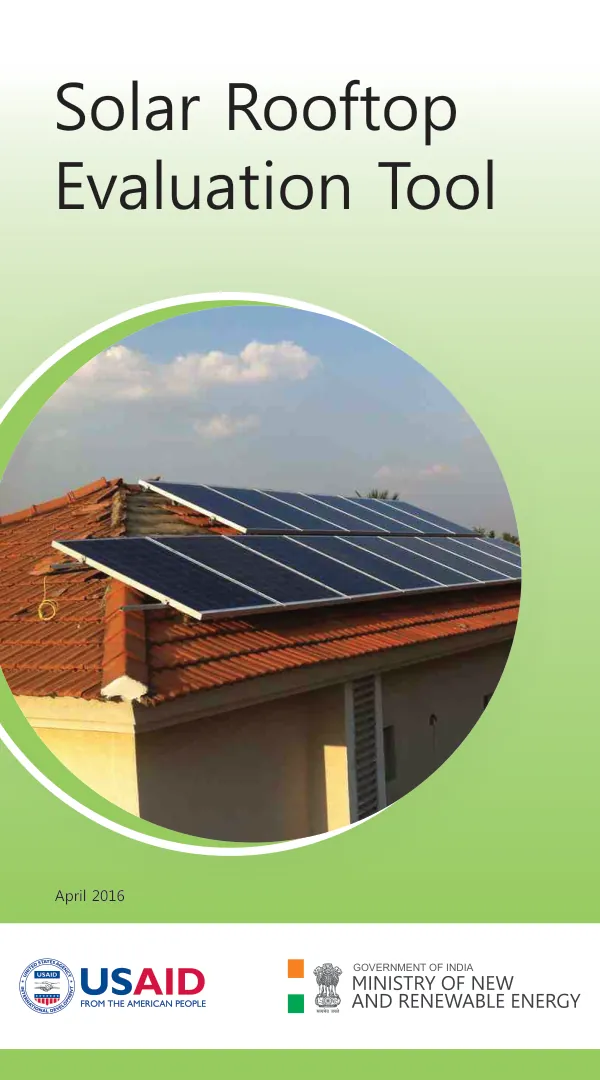
Solar Rooftop Evaluation Tool
The Government of India has set a target of 40 GW of solar PV rooftops by 2022, presenting a significant opportunity for manufacturers, project developers, and financial institutions.
2016 · 6 pages
Sign in to readA free account is required to download.
Abstract
However, financing for solar PV rooftop development has not taken off due to limited knowledge and understanding of the opportunities and risks involved. Banks and financial institutions lack exposure to solar PV rooftop financing, particularly for commercial and industrial projects undertaken in a third-party developer mode using non-recourse financing. The lack of understanding and capacity among banks and financial institutions on how to evaluate solar PV rooftop projects, identify their risk profiles, and determine credit worthiness is a major challenge. Additionally, there is a shortage of trained and experienced lenders, engineers, and project financing experts who understand solar PV rooftop projects and their unique risks and characteristics. The United States Agency for International Development (USAID) is working with stakeholders to accelerate the deployment of solar PV rooftops in India, recognizing the critical role that financing will play in meeting national targets. To address the challenge of limited financing for solar PV rooftops, the USAID Partnership to Advance Clean Energy – Deployment Technical Assistance (PACE-D TA) Program has developed the Solar Rooftop Evaluation Tool (SRET). The SRET aims to facilitate greater adoption of solar PV rooftop financing by banks and financial institutions by providing a framework for evaluating the viability and sustainability of commercial and industrial solar PV rooftop projects. The tool outlines the technical and commercial architecture of these projects and develops a detailed risk identification matrix to assist banks and financial institutions in making informed financing decisions. The SRET is a comprehensive tool that can be customized for the evaluation of any solar rooftop project, including urban residential and institutional projects. It allows for the evaluation of third-party power purchase agreement-based projects, self-owned self-consumption projects, and feed-in-tariff-based third-party developed projects. The tool incorporates existing regulations, policies, and financial guidelines and can be updated to reflect changes in these areas. The SRET is divided into three stages: evaluating commercial viability and risk, evaluating technical viability, and establishing eligibility. Each stage provides a framework for analyzing key commercial and technical risks and making informed decisions about project viability. The SRET is available for download from the USAID PACE-D website and is a valuable resource for banks and financial institutions looking to expand their consumer base and enhance their lending portfolios in the area of clean energy financing. The tool is part of the overall Partnership to Advance Clean Energy (PACE) initiative, a flagship program under the U.S.-India Energy Dialogue. The PACE-D TA Program has three key components: energy efficiency, renewable energy, and cleaner fossil technologies, and aims to accelerate the deployment and use of clean energy, expand U.S.-India trade and investment linkages, and facilitate the exchange of information and best practices.