AGA KHAN FOUNDATION
South Asia Newsletter March and April 2012
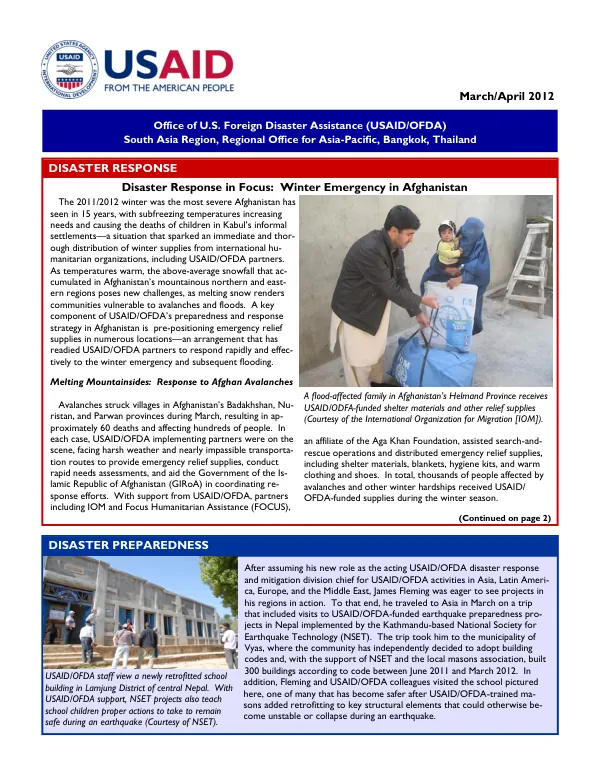
The 2011/2012 winter in Afghanistan was the most severe in 15 years, with subfreezing temperatures causing the deaths of children in Kabul's informal settlements.
2012 · 2 pages
Sign in to readA free account is required to download.
Abstract
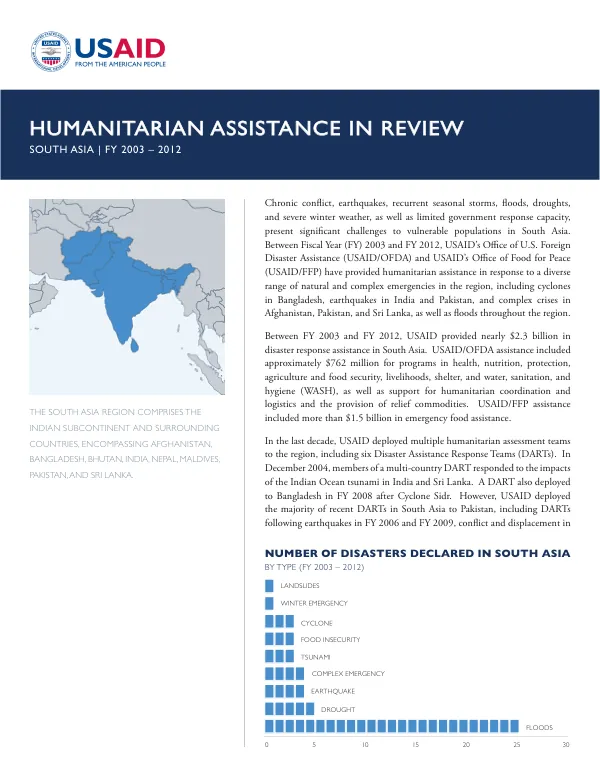
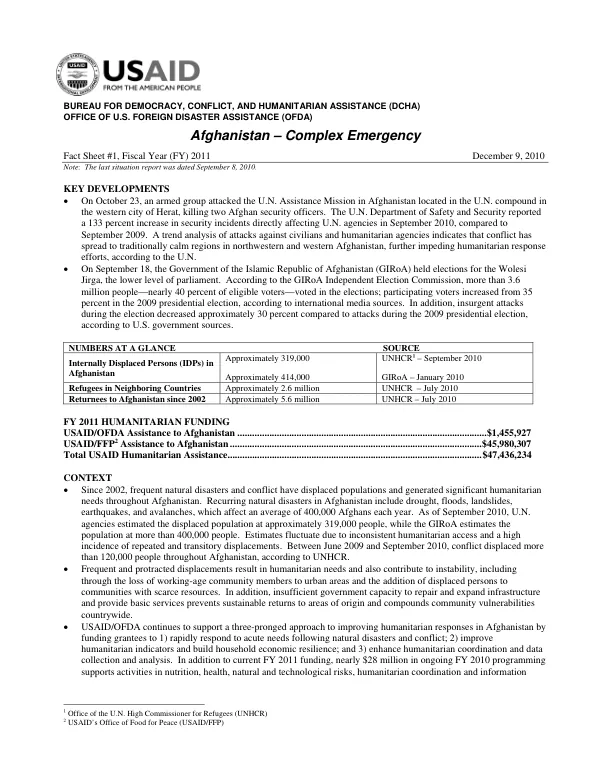
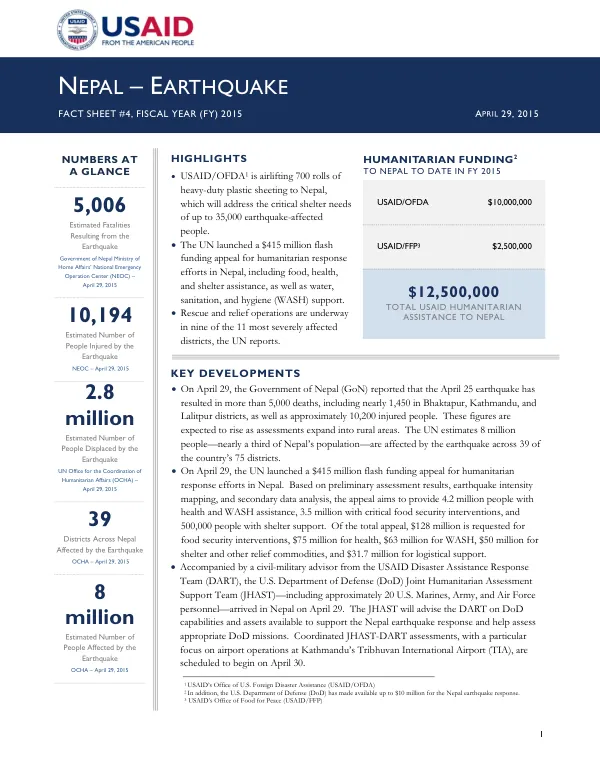
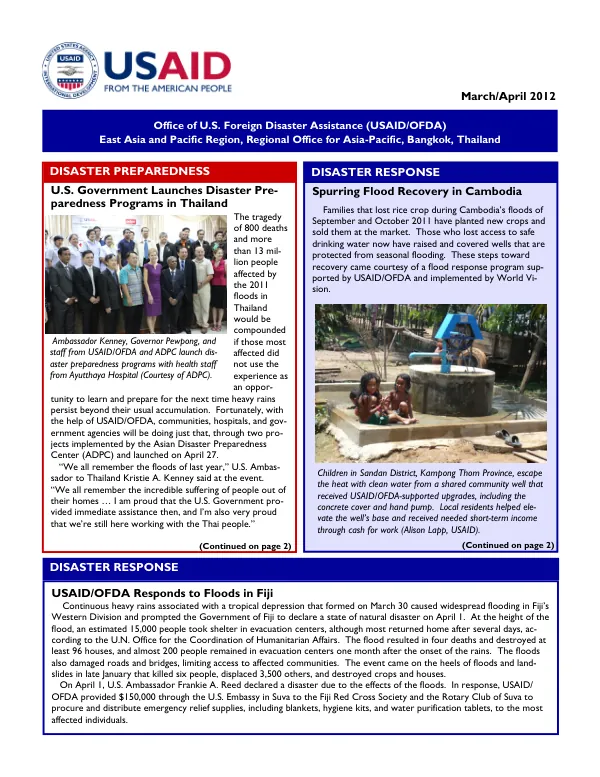
The situation prompted an immediate and thorough distribution of winter supplies from international humanitarian organizations, including USAID/OFDA partners. As temperatures warmed, above-average snowfall in Afghanistan's mountainous northern and eastern regions posed new challenges, including the risk of avalanches and floods. Avalanches struck villages in Afghanistan's Badakhshan, Nurestan, and Parwan provinces during March, resulting in approximately 60 deaths and affecting hundreds of people. USAID/OFDA implementing partners, including IOM and Focus Humanitarian Assistance (FOCUS), were on the scene to provide emergency relief supplies, conduct rapid needs assessments, and aid the Government of the Islamic Republic of Afghanistan (GIRoA) in coordinating response efforts. With support from USAID/OFDA, partners assisted search-and-rescue operations and distributed emergency relief supplies, including shelter materials, blankets, hygiene kits, and warm clothing and shoes. To address the risk of flooding, USAID/OFDA is in regular communication with partner OCHA as it develops a countrywide flood contingency plan and updates existing contingency plans down to the district level. Humanitarian agencies predict that flooding is more likely to impact livelihoods and food security than to cause extensive casualties. To address possible impacts on livelihoods, USAID/OFDA partner Information Management and Mine Action Programs (iMMAP) is participating in U.N. efforts to validate information on flood-prone areas and map gaps in potential humanitarian responses in agricultural regions. In April, iMMAP and the U.N. Food Security and Agriculture Cluster led two regional workshops with food security experts from relief agencies and the GIRoA. USAID/OFDA also has been in dialogue with the GIRoA and development colleagues at USAID/Afghanistan about the status of key dams, learning that several are under capacity and of potential use for flood control. In April, USAID/OFDA partner the International Rescue Committee completed emergency erosion repairs on the Surkhab dam in Logar Province to buttress it against any immediate flood threat. Localized floods have begun in some communities, with 18 of Afghanistan's 34 provinces experiencing localized flooding since mid-April. Due in part to preparedness measures taken by the GIRoA, relief agencies, and USAID/OFDA, all flood-related emergency humanitarian needs have been or are being addressed. Floods have destroyed homes and displaced individuals but have not caused mass fatalities to date. In conjunction with local authorities, USAID/OFDA partners, including IOM and Save the Children, have come to the aid of affected populations with distributions of emergency shelter kits and other urgently needed items drawn from pre-positioned stocks. In Bangladesh, the Amrao Pari project targets 50,000 people across 19 villages in Khulna and Barisal divisions of western and southern Bangladesh. The project aims to reduce the risk of disasters by training communities to form village help teams tasked with first response in case of a disaster, as well as infrastructure management committees responsible for identifying and shoring up key communal infrastructure in need of repair. In March, a USAID/OFDA regional advisor visited several villages that will benefit from the Amrao Pari project, meeting with village representatives and attending community meetings to identify and prioritize key village infrastructure for strengthening to increase its ability to withstand hydrometeorological disasters. The Amrao Pari project seeks to shape the determination of communities along the Bay of Bengal into a culture of preparedness. Community members in Kalapara subdistrict of Barisal Division reviewed village infrastructure priorities, identifying areas in need of repair and strengthening to increase resilience to disasters. The project's goal is to empower communities to take ownership of their disaster preparedness and response efforts, reducing their vulnerability to the impacts of climate change and disasters.
Related documents