ACTION AGAINST HUNGER
SPECIAL REPORT: Yida Camp Survey Results
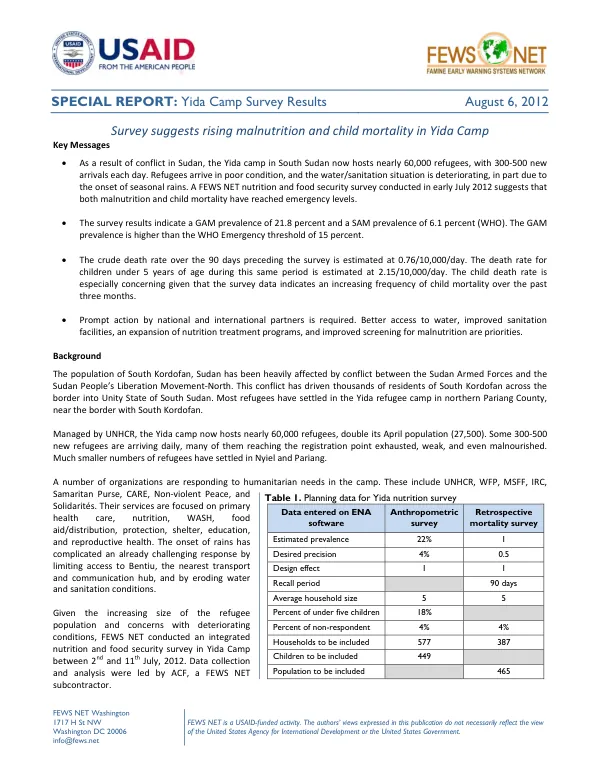
The Yida refugee camp in South Sudan hosts nearly 60,000 refugees, with 300-500 new arrivals each day.
2012 · 3 pages
Sign in to readA free account is required to download.
Abstract
The camp's population has doubled since April, with many refugees reaching the registration point exhausted, weak, and even malnourished. The water/sanitation situation is deteriorating, particularly due to the onset of seasonal rains. A FEWS NET nutrition and food security survey conducted in early July 2012 suggests that both malnutrition and child mortality have reached emergency levels. The survey results indicate a Global Acute Malnutrition (GAM) prevalence of 21.8 percent and a Severe Acute Malnutrition (SAM) prevalence of 6.1 percent, exceeding the World Health Organization's (WHO) Emergency threshold of 15 percent. The crude death rate over the 90 days preceding the survey is estimated at 0.76/10,000/day, with a child death rate of 2.15/10,000/day, particularly concerning given the increasing frequency of child mortality over the past three months. Health indicators among households with children under 5 years old reveal a concerning situation. Vitamin A coverage is low, with only 21.6 percent of children receiving the necessary vaccinations. Measles coverage is also inadequate, with only 80.3 percent of children having received the necessary vaccinations. Illnesses such as fever, cough, diarrhea, and skin infections are prevalent, with 74.5 percent of children experiencing at least one illness in the preceding two weeks. Treatment sought for these illnesses is often inadequate, with 61.5 percent of children receiving treatment at a primary health care center or primary health care unit. The main source of food for nearly all respondents is WFP food aid, with the main food groups eaten being cereals and pulses, with very limited protein sources, vegetables, or fruits. Nearly 90 percent of camp residents access water from seven boreholes, with the remainder reporting using streams and ponds. Waiting time at water points is a significant challenge, with 45 percent of respondent households spending more than two hours per day collecting water. A considerable proportion of the community (53.7 percent) uses unimproved sanitation facilities, designated and undesignated bush areas. The observed prevalence of acute malnutrition in Yida refugee camp is high, and mortality rates, especially in children below 5 years, are worrying. The poor sanitation and hygiene situation suggests that further deterioration is possible. Prompt action is required, including improvements to water access and water quality, additional latrine construction, sanitation and hygiene promotion activities in the camp, a scaling-up of nutrition interventions in the camp, increased screening of children for malnutrition and referral for early treatment, increased community mobilization activities, and continued creation of community awareness of malnutrition prevention, treatment, and OTP sites. Interventions to improve dietary diversity and offset high milling costs are also necessary.
Related documents