TETRA TECH
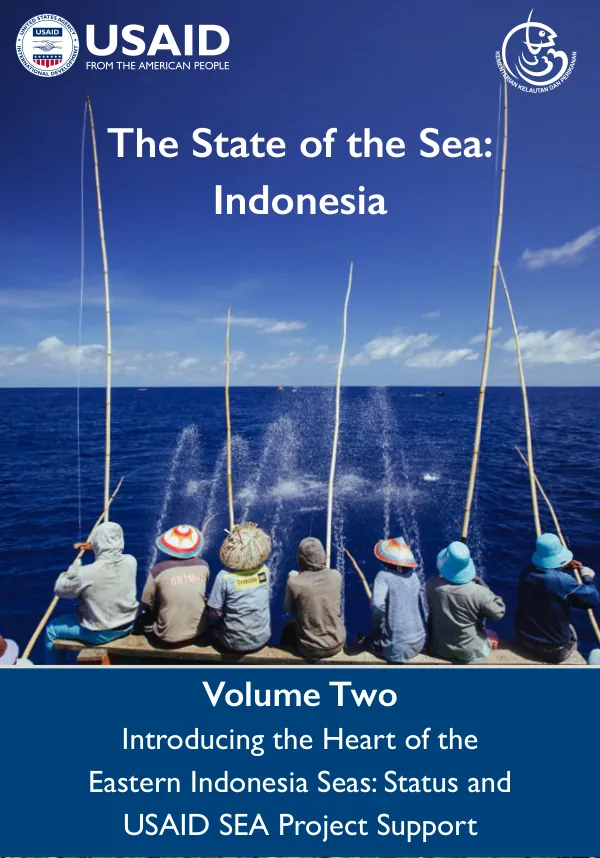
State of the Sea: Indonesia. Volume Two
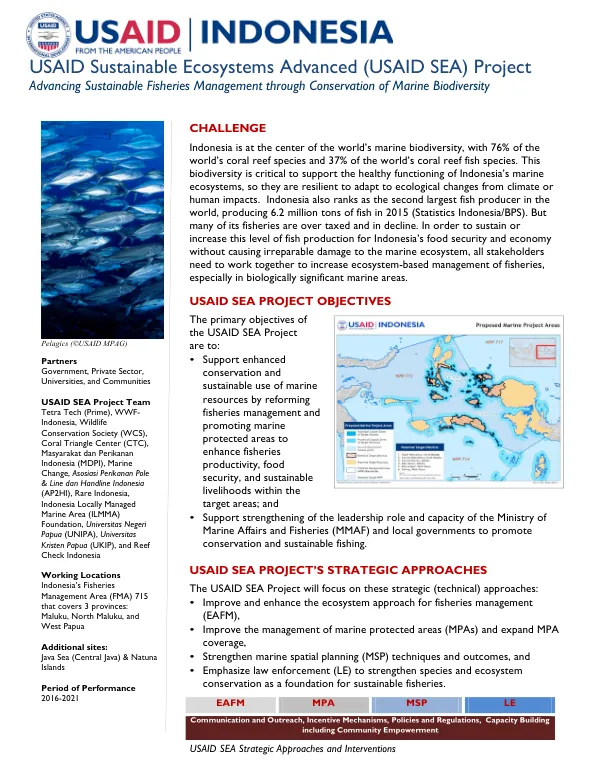
The USAID Sustainable Ecosystems Advanced (SEA) Project in Indonesia aims to improve the governance of fisheries and marine resources, and to conserve biological diversity at local, district, provincial, and national levels.
2018 · 130 pages
Sign in to readA free account is required to download.
Abstract
The project focuses its interventions in the North Maluku, Maluku, and West Papua provinces, located in fisheries management area (FMA) number 715. The objectives of the project are to support enhanced conservation and sustainable use of marine resources by reforming fishery management and promoting marine protected areas (MPAs) to enhance fishery productivity, food security, and sustainable livelihoods within the target areas. The project supports and strengthens the leadership role and capacity of the Ministry of Marine Affairs and Fisheries (MMAF) and local governments to promote conservation and sustainable fishing. At the end of five years, USAID assistance through the USAID SEA Project will have improved the conservation and management of Indonesia's marine biodiversity through increased capacity and the application of marine conservation and sustainable fisheries management. The high-level results that must be achieved by the completion of the project include the establishment of a robust and effective fisheries management system, the creation of a network of marine protected areas, and the improvement of the livelihoods of fishing communities. The project is implemented in collaboration with the MMAF and local governments, and involves a range of activities, including the development of fisheries management plans, the establishment of marine protected areas, and the provision of training and capacity-building programs for fishing communities. The project also supports the development of a national fisheries management system, and provides technical assistance to the MMAF and local governments to improve their capacity to manage fisheries and marine resources. The project has a strong focus on community engagement and participation, and involves the establishment of community-based marine protected areas and the provision of training and capacity-building programs for fishing communities. The project also supports the development of sustainable livelihoods for fishing communities, through the provision of training and capacity-building programs in areas such as fisheries management, marine conservation, and sustainable fishing practices. The project is being implemented in three provinces: North Maluku, Maluku, and West Papua. These provinces are located in fisheries management area (FMA) number 715, and are characterized by a high level of marine biodiversity and a significant fishing industry. The project is being implemented in collaboration with the MMAF and local governments, and involves a range of activities, including the development of fisheries management plans, the establishment of marine protected areas, and the provision of training and capacity-building programs for fishing communities. The project has a strong focus on monitoring and evaluation, and involves the establishment of a robust monitoring and evaluation system to track progress and identify areas for improvement. The project also involves the provision of technical assistance to the MMAF and local governments to improve their capacity to manage fisheries and marine resources. The project is being implemented over a period of five years, and is expected to have a significant impact on the conservation and management of Indonesia's marine biodiversity.