USAID DEC
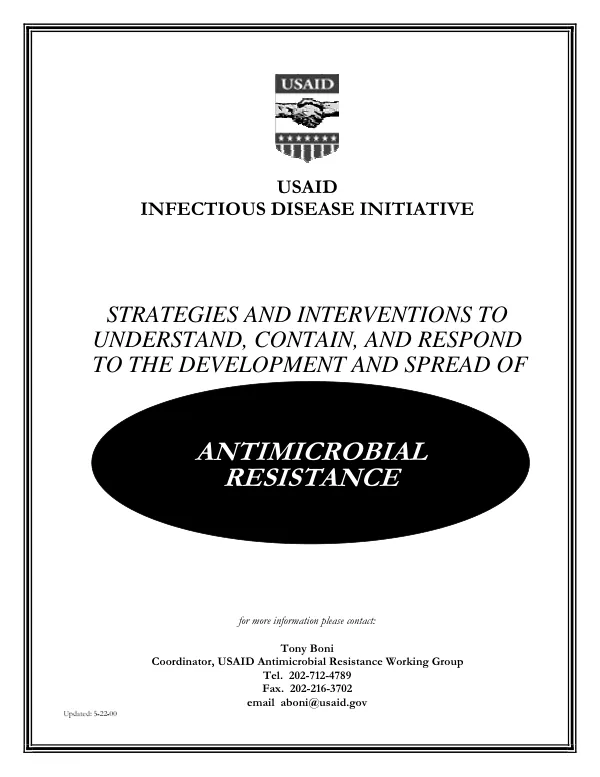
STRATEGIES AND INTERVENTIONS TO UNDERSTAND, CONTAIN, AND RESPOND TO THE DEVELOPMENT AND SPREAD OF ANTIBIOTIC RESISTANCE
Sign inUSAID DEC
STRATEGIES AND INTERVENTIONS TO UNDERSTAND, CONTAIN, AND RESPOND TO THE DEVELOPMENT AND SPREAD OF ANTIBIOTIC RESISTANCE
The USAID Global Bureau: Antimicrobial Resistance initiative aims to address the growing threat of antimicrobial resistance (AMR) globally.
42 pages
Sign in to readA free account is required to download.
Abstract
The initiative focuses on understanding, containing, and responding to the development and spread of AMR. Initial assessments conducted in various regions identified key challenges, including the overuse and misuse of antimicrobial agents, inadequate infection control practices, and limited access to diagnostic and treatment services. These challenges contribute to the emergence and spread of AMR, compromising the effectiveness of antimicrobial treatments and posing significant risks to public health. Implementation of the initiative involves several key interventions, including the development of national action plans to address AMR, strengthening of laboratory capacity to detect and track AMR, and enhancement of infection control practices in healthcare settings. Additionally, the initiative supports the development of new antimicrobial agents and diagnostic tools, as well as the implementation of policies and regulations to promote responsible use of antimicrobials. The initiative also focuses on building partnerships and collaborations among governments, healthcare providers, researchers, and other stakeholders to share knowledge, expertise, and resources to combat AMR. This includes the development of global guidelines and standards for antimicrobial stewardship, as well as the establishment of surveillance systems to monitor the emergence and spread of AMR. The initiative has made significant progress in addressing AMR, including the development of national action plans in several countries, the strengthening of laboratory capacity, and the enhancement of infection control practices. However, more work is needed to address the complex and multifaceted nature of AMR, and to ensure that the initiative's goals and objectives are met. The initiative's geographic focus is global, with a particular emphasis on regions with high burdens of AMR. The initiative's timeframes are flexible, with a focus on long-term sustainability and impact. Recommendations for the initiative include continued investment in research and development of new antimicrobial agents and diagnostic tools, as well as the implementation of policies and regulations to promote responsible use of antimicrobials. Overall, the USAID Global Bureau: Antimicrobial Resistance initiative is a critical effort to address the growing threat of AMR globally. By understanding, containing, and responding to the development and spread of AMR, the initiative aims to protect public health and promote the effective use of antimicrobial agents.