USAID
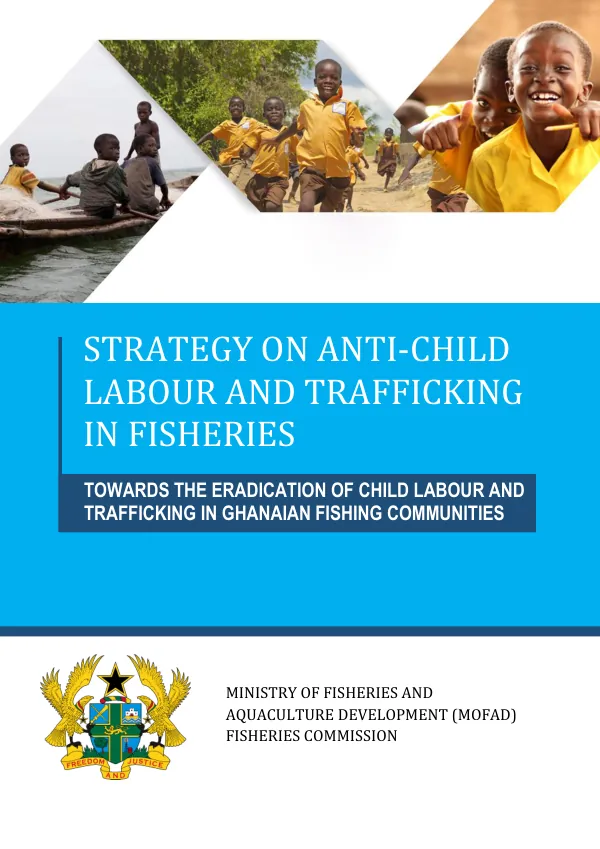
Strategy on Anti-Child Labour and Trafficking in Fisheries
The Ministry of Fisheries and Aquaculture Development (MOFAD) has developed a strategy to eradicate child labour and trafficking in Ghanaian fishing communities.
2018 · 58 pages
Sign in to readA free account is required to download.
Abstract
The strategy is a result of active participation and consultation with key stakeholders, including government ministries, civil society organizations, and development partners. The goal of the strategy is to promote a child labour and trafficking-free fisheries sector in Ghana through effective protection of children and prosecution of offences related to child labour and trafficking. The strategy identifies five priority areas: public awareness and advocacy, health, welfare, and social protection; education, training, and capacity building; social development, decent work, and reintegration; governance, legislation, and enforcement; and community awareness and behaviour change communication. The strategy also outlines withdrawal and rescue strategies, rehabilitation strategies, integration strategies, preventive strategies, and institutional strengthening and capacity building strategies. The strategy implementation arrangements involve various stakeholders, including central government, local government and decentralized departments, employers' organizations, trade unions, and worker associations. The strategy also emphasizes the importance of community involvement, with community child protection committees and district child protection committees playing key roles in the implementation process. The strategy is based on the National Plan of Action against the Worst Forms of Child Labour in Ghana, which recognizes the need for special efforts and attention in addressing the underlying problems that make children in fishing communities vulnerable to exploitation. The strategy aims to eliminate child labour and trafficking in the fisheries sector by 2020, in line with the Sustainable Development Goals (SDGs). The strategy implementation plan includes a logical framework, which outlines the objectives, indicators, and targets for each priority area. The plan also includes a monitoring and evaluation framework, which will be used to track progress and identify areas for improvement. The strategy is supported by the USAID/Ghana Sustainable Fisheries Management Project, which has provided financial and technical support to the development of the strategy. The Government of Ghana, along with all stakeholders, is committed to the successful implementation of the strategy. The strategy has been developed in accordance with international and regional legislation, including the United Nations Convention on the Rights of the Child (UNCRC) and the Economic Community of West African States (ECOWAS) Convention on the Fight against Trafficking in Human Beings. The strategy also takes into account the recommendations of the International Labour Organization (ILO) and the United States Department of Labour (USDOL). The strategy is a critical step towards eliminating child labour and trafficking in the fisheries sector in Ghana. It provides a framework for action and a roadmap for implementation, and it is expected to contribute to the achievement of the SDGs and the elimination of child labour and trafficking in Ghana.