USAID DEC
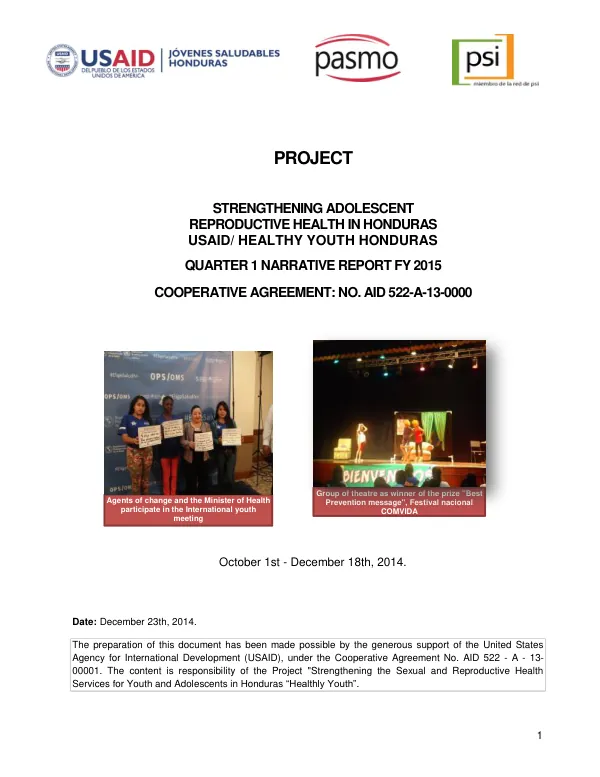
Strengthening Adolescent Reproductive Health in Honduras: USAID/Healthy Youth Honduras Quarterly Narrative Report FY 2015
Sign inMINISTRY OF EDUCATION
Strengthening Adolescent Reproductive Health in Honduras: USAID/Healthy Youth Honduras Quarterly Narrative Report FY 2015
The project "Strengthening Adolescent Reproductive Health in Honduras" began in 2012 with funding from the United States Agency for International Development (USAID) through the Central America Regional Security Initiative (CARSI).
2015 · 39 pages
Sign in to readA free account is required to download.
Abstract
The project aimed to improve adolescent sexual and reproductive health in Honduras, with a focus on both schooled and non-schooled adolescents. The project's objectives were to increase access to information and services on adolescent sexual and reproductive health, improve the capacity of schools and community organizations to provide these services, and reduce the incidence of adolescent pregnancy and sexually transmitted infections. During the period from October to December 2014, the project achieved several key milestones. A total of 5,317 schooled and non-schooled adolescents and young people were exposed to messages on pregnancy prevention through various educational interventions. This included 4,616 schooled adolescents and young people who were exposed to messages on pregnancy prevention through the Methodology Guides "Caring for My Health and My Life" in the classroom. Additionally, 701 non-schooled adolescents and young people were exposed to messages on pregnancy prevention through educational interventions in coordination with community organizations and CARSI partners. Twenty-six adolescents were trained as agents of change in the Municipality of Tela, Atlántida, and 35 educational centers developed 340 work plans for the implementation of the Methodological Guides "Caring for Health and My Life" in 2015. The project also finalized the facility assessment of youth-friendly services in 24 health centers. The project's financial information will be updated on January 20, 2014, according to the financial report of PSI/PASMO. The national context in Honduras is characterized by a high teen birth rate, with 26 percent of women under 18 years old having given birth. Only 14.1 percent of women between the ages of 15 and 19 report using modern methods of family planning. The population mostly affected by HIV in Honduras is the group of 15 to 29 years of age. The average age for sexual initiation in young people from ages 15 to 24 is 14.7 years. Despite high levels of awareness of condom use as an effective method of HIV prevention, only 9 percent of youngsters report using condoms during their first sexual intercourse experience, and 61 percent used condoms during their last sexual intercourse experience. The Ministry of Education attributes the lack of education in "sexual and reproductive health among teenagers" in schools as responsible for this situation. Low rates of school enrollment in the country also contribute to the problem, with only 75.5 percent of youth between the ages of 12 and 14 attending school, and this figure dropping to 45.2 percent for teenagers between the ages of 15 and 19. Recent political changes in the country have created a suitable environment for sexual and reproductive health among teenagers. The Ministry of Health's declaration advocates for the inclusion of SRH in schools, and the government's position concerning youth-friendly services has improved. The project's implementation focused on several key areas, including creating strategic alliances, developing research to provide evidence-based information to influence program decisions, reviewing and adapting methodologies and intervention strategies for non-schooled teenagers, and implementing educational activities with non-schooled young people. The project also coordinated with schools and strengthened the capacity of teachers to implement the "Caring for My Health and My Life" Methodological Guides. Educational activities were implemented in schools, and out-of-school and in-school youth were targeted through various interventions. Mass media and social network campaigns were also implemented to reach a wider audience. Community mobilization activities were designed and implemented on special event days with other organizations. Friendly condom points of sale were established to increase access to condoms. The project's monitoring and evaluation activities were ongoing, with challenges and proposed solutions being identified and addressed. The project's coordination with other partners was also an important aspect of its implementation. The project's gender component was a key area of focus, with efforts made to ensure that the project's activities were inclusive and responsive to the needs of both male and female adolescents. The project's financial report was updated regularly, and lessons learned were documented and shared with stakeholders. Key findings from the project included the importance of targeting both schooled and non-schooled adolescents, the need for a comprehensive approach to adolescent sexual and reproductive health, and the importance of community engagement and participation in project implementation.
Related documents
Documents in this collection
 2016
2016USAID DEC
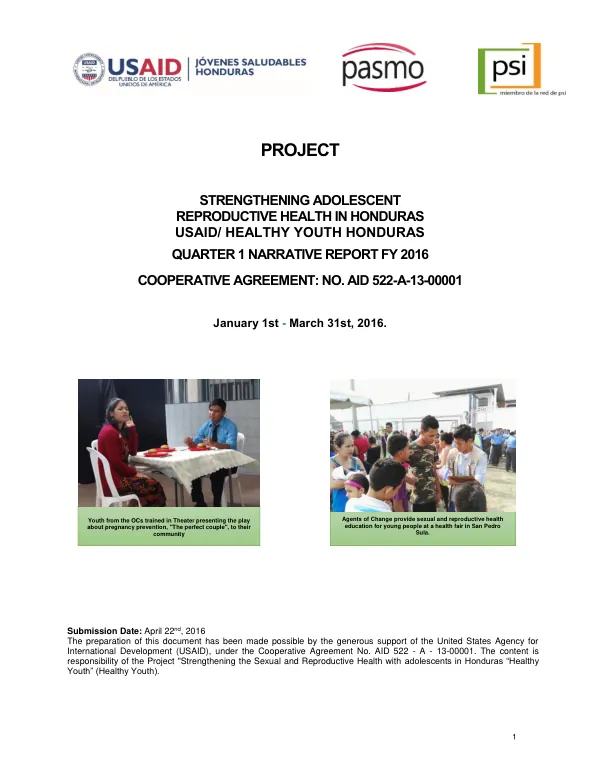
Strengthening Adolescent Reproductive Health in Honduras: USAID/Healthy Youth Honduras Quarterly Narrative Report FY 2016
Open record 2021
2021USAID DEC