USAID DEC
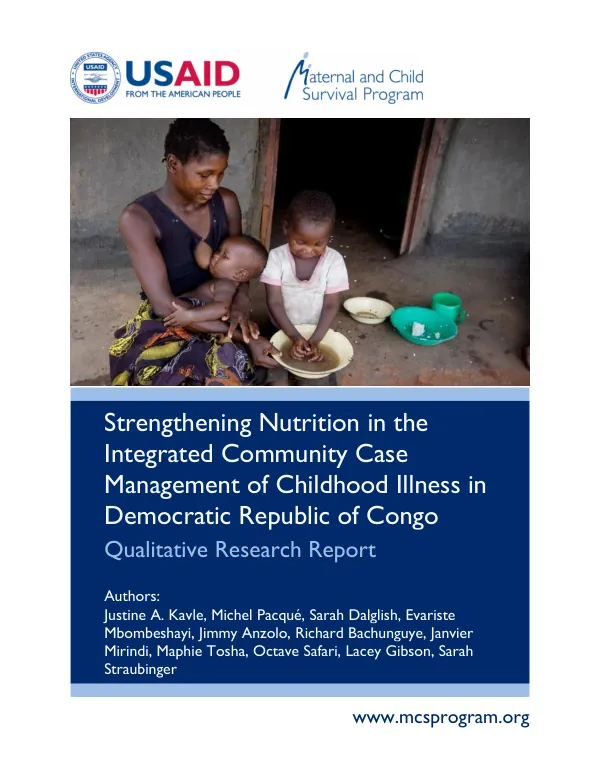
Strengthening Nutrition in the Integrated Community Case Management of Childhood Illness in Democratic Republic of Congo, Qualitative Research Report
Sign inJOHN SNOW INTERNATIONAL
Strengthening Nutrition in the Integrated Community Case Management of Childhood Illness in Democratic Republic of Congo, Qualitative Research Report
Nutrition and child health are critical concerns in the Democratic Republic of the Congo (DRC), where high rates of malnutrition and child mortality persist.
2018 · 63 pages
Sign in to readA free account is required to download.
Abstract
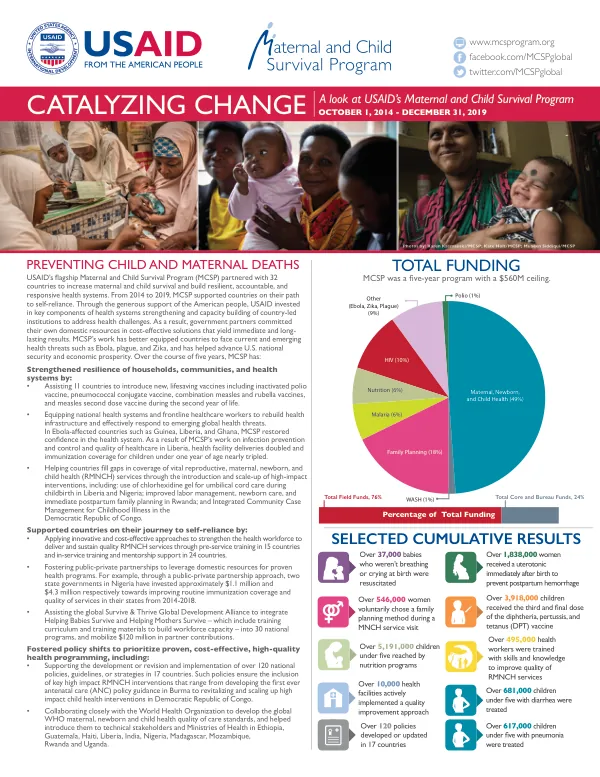
The Maternal and Child Survival Program (MCSP) is a global initiative to introduce and support high-impact health interventions in 25 priority countries, including the DRC. MCSP supports programming in maternal, newborn, and child health, immunization, family planning and reproductive health, nutrition, health systems strengthening, water/sanitation/hygiene, malaria, prevention of mother-to-child transmission of HIV, and pediatric HIV care and treatment. This study, conducted in October 2018, aimed to strengthen the integration of nutrition into integrated community case management (iCCM) of childhood illness in the DRC. The study was made possible by the generous support of the American people through USAID under the terms of the Cooperative Agreement AID-OAA-A-14-00028. The study's principal investigators were Michel Pacqué, MD, MPH, DTMH, and Justine A. Kavle, PhD, MPH. The study was conducted in Tshopo Province, where community perceptions of child health, growth, and well-nourishment were assessed. The results showed that exclusive breastfeeding and early introduction of foods were common practices, but continued breastfeeding and complementary feeding were often inadequate. Care seeking for childhood illness was also a concern, with many families seeking care from traditional healers or pharmacies rather than health facilities. The study identified several key factors associated with stunting, including inadequate breastfeeding, poor complementary feeding, and frequent illness. The study also found that fathers and grandmothers played important roles in prevention and care seeking for child illness, but that there were significant gaps in providing optimal care for child illness. The study's findings have important implications for the integration of nutrition into iCCM in the DRC. The study recommends that national-level policies and protocols be developed to support the integration of nutrition into iCCM, and that provincial- and health zone-level recommendations be made to improve the quality of care for child illness. The study also recommends that community health workers be trained to provide nutrition counseling and support to families, and that health facilities be equipped to provide adequate care for child illness. The study's results are based on data collected from 36 children aged 6-59 months, as well as from health providers and community members. The study's methodology included a combination of qualitative and quantitative data collection methods, including interviews, focus groups, and anthropometric measurements. Overall, the study highlights the importance of integrating nutrition into iCCM in the DRC, and provides recommendations for improving the quality of care for child illness. The study's findings have important implications for policymakers, program managers, and health care providers working to improve child health and nutrition in the DRC. The study's results are presented in a series of tables and figures, including Table 1, which presents nutritional indicators in the DRC, and Figure 2, which illustrates the factors associated with stunting. The study's methodology is described in detail, including the data collection methods and sampling strategy. The study's recommendations are based on the study's findings and are presented in a clear and concise manner. The study's conclusions are drawn from the data and are supported by the study's methodology. The study's limitations are acknowledged, and the study's implications for policy and practice are discussed. The study's authors acknowledge the contributions of several individuals and organizations, including USAID Democratic Republic of the Congo and USAID Washington, as well as the communities of Tshopo Province and key Ministry of Public Health personnel. The study's authors also acknowledge the support of the Maternal and Child Survival Program (MCSP) and the John Snow Inc. and PATH organizations.
Related documents