USAID DEC
Stronger Land Rights and Inclusion in the PepsiCo Supply Chain for West Bengalese Women Farmers
Sign inTETRA TECH
Stronger Land Rights and Inclusion in the PepsiCo Supply Chain for West Bengalese Women Farmers
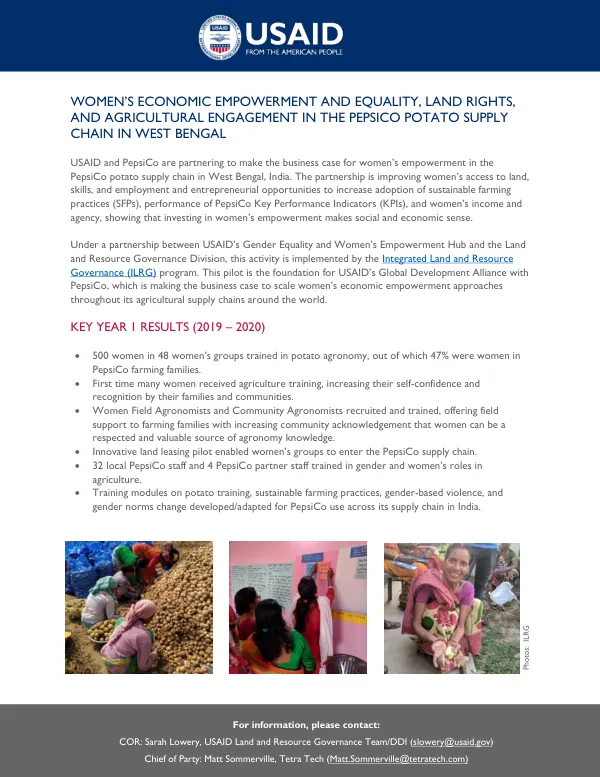
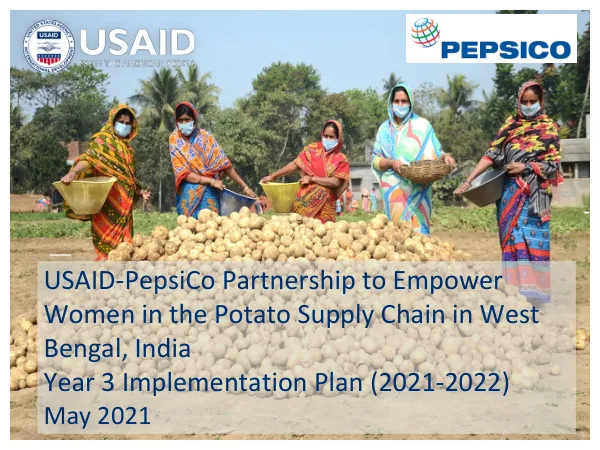
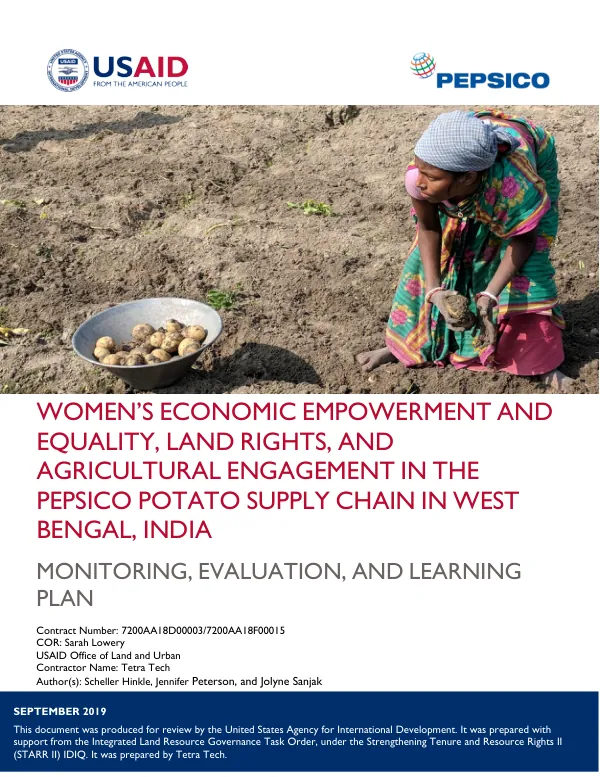
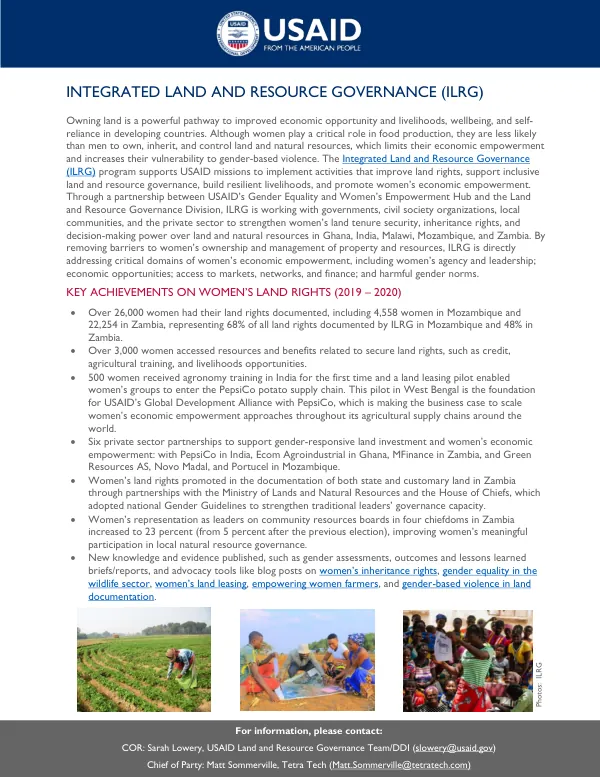
The USAID-PepsiCo partnership aims to improve women's access to land, skills, and employment opportunities in the PepsiCo potato supply chain in West Bengal, India.
2021 · 1 pages
Sign in to readA free account is required to download.
Abstract
This initiative is part of a broader effort to increase adoption of sustainable farming practices, enhance performance of PepsiCo's Key Performance Indicators, and boost women's income and agency. The partnership demonstrates that investing in women's empowerment makes good social, economic, and environmental sense. The partnership is implemented by the Integrated Land and Resource Governance (ILRG) program, which is a collaboration between USAID's Gender Equality and Women's Empowerment Hub and the Land and Resource Governance Division. This pilot project serves as the foundation for a USAID-PepsiCo Global Development Alliance, which aims to scale women's economic empowerment approaches throughout PepsiCo's agricultural supply chains worldwide. In the second year of the partnership (2020-2021), significant progress was made. One thousand and sixty-seven women were trained in potato agronomy and sustainable farming practices, while forty-one PepsiCo staff members received training in gender equality and women's roles in agriculture. Two women's land leasing groups gained access to land and entered the PepsiCo supply chain as independent producers, achieving yields of 250-255 bags per acre, which is above the average in their areas. Additionally, a land leasing group managed a women-led PepsiCo demonstration farm, showcasing agricultural technology, sustainable farming practices, and women's leadership in farming. The partnership also increased PepsiCo's capacity to reach and support women, as well as community acceptance of women as valuable sources of agricultural knowledge. Twelve community agronomists and three women field agronomists were trained to support women farmers. Indicators of improved business performance have been observed, including above-average productivity by women's land leasing groups, increased brand loyalty, and potential expansion of the farming supply base for PepsiCo. Evidence of women's economic empowerment is emerging, with women showing improved self-image, confidence, mobility, access to knowledge and resources, income, and decision-making power, as well as increased acceptance by family and community members, and collective agency.