NATIONAL PLANNING DEPARTMENT
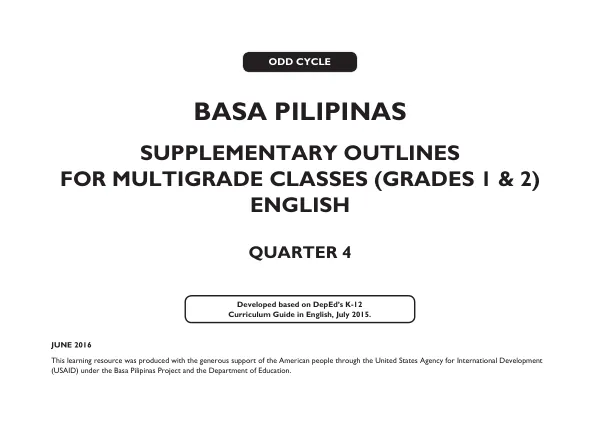
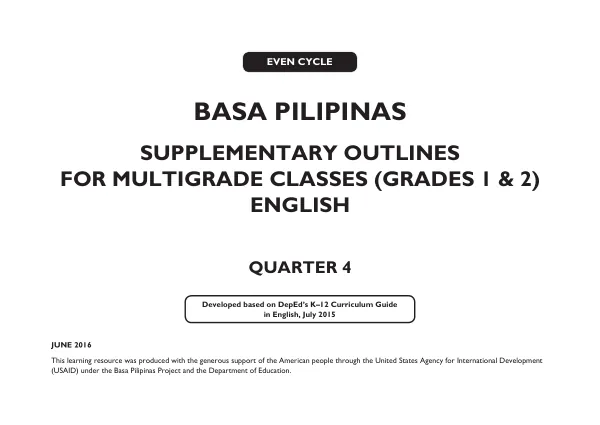
Supplementary Outlines for Multigrade English (Grades 1 & 2) Quarter 4
The Basa Pilipinas Project is a learning resource developed with the support of the American people through the United States Agency for International Development (USAID).
2016 · 151 pages
Sign in to readA free account is required to download.
Abstract
The project aims to improve the quality of education in the Philippines, particularly in multigrade classes. Multigrade classes consist of two or more different grade levels taught by one teacher in a single classroom. In the Philippines, multigrade classes are commonly found in rural and isolated communities, where schools often have limited resources and a scattered population. The Basa Pilipinas Project recognizes the challenges of teaching in multigrade classes and has developed a framework to support teachers in handling multiple grade levels. The framework is based on the principle that pupils learn and work at different levels of competence, and teachers are expected to differentiate instruction to meet the needs of each grade level. The Basa Pilipinas multigrade plan involves spreading the units of curriculum content across two grades over two years, rather than one. This approach allows learners to work through the same general topic or theme, while instruction is differentiated to meet the needs of each grade level. The project produces two sets of multigrade outlines, one for even years and another for odd years, to cater to the needs of different grade levels. The supplementary outlines for multigrade English classes (grades 1 and 2) are designed to support teachers in implementing the Basa Pilipinas multigrade plan. The outlines provide a two-week instructional sequence for each grade level, with activities and tasks tailored to meet the needs of each grade level. The outlines also include a selection of stories, poems, and pictures to support language learning and literacy development. The Basa Pilipinas Project has developed a range of resources to support teachers in multigrade classes, including teacher guides, leveled readers, and listening stories. The project has also conducted training for multigrade teachers to help them prepare for the challenges of teaching in multigrade classes. The project's approach to multigrade education is based on the principle that all learners, regardless of their grade level, have the right to access quality education. The Basa Pilipinas Project's multigrade framework is designed to be flexible and adaptable to the needs of different schools and communities. The project's resources and training programs are intended to support teachers in developing their skills and confidence in teaching in multigrade classes. By providing a supportive framework and resources, the Basa Pilipinas Project aims to improve the quality of education in the Philippines and ensure that all learners have access to quality education, regardless of their grade level. The project's approach to multigrade education is based on the principles of inclusivity, equity, and quality. The project recognizes that all learners have the right to access quality education, regardless of their grade level or background. The project's resources and training programs are designed to support teachers in developing their skills and confidence in teaching in multigrade classes, and to ensure that all learners have access to quality education. The Basa Pilipinas Project's multigrade framework is designed to be implemented in a range of settings, from rural and isolated communities to urban and suburban areas. The project's resources and training programs are intended to support teachers in developing their skills and confidence in teaching in multigrade classes, and to ensure that all learners have access to quality education. By providing a supportive framework and resources, the Basa Pilipinas Project aims to improve the quality of education in the Philippines and ensure that all learners have access to quality education, regardless of their grade level.