TETRA TECH
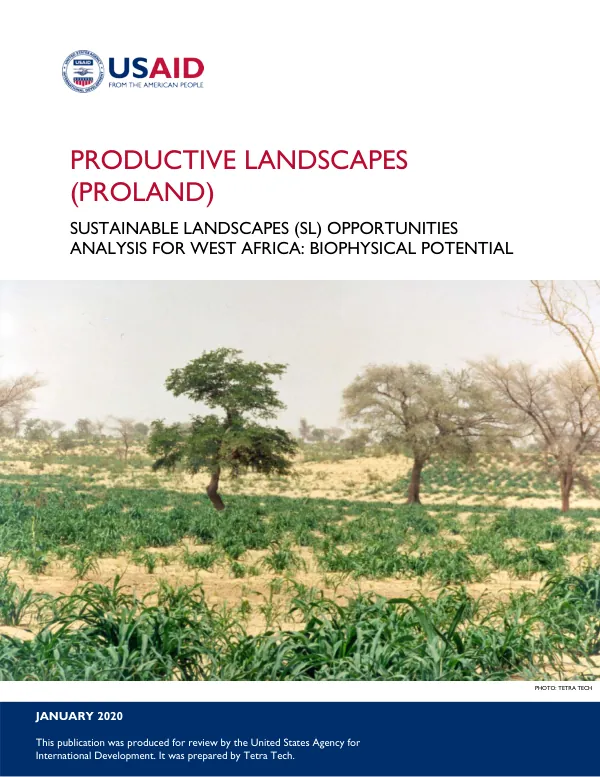
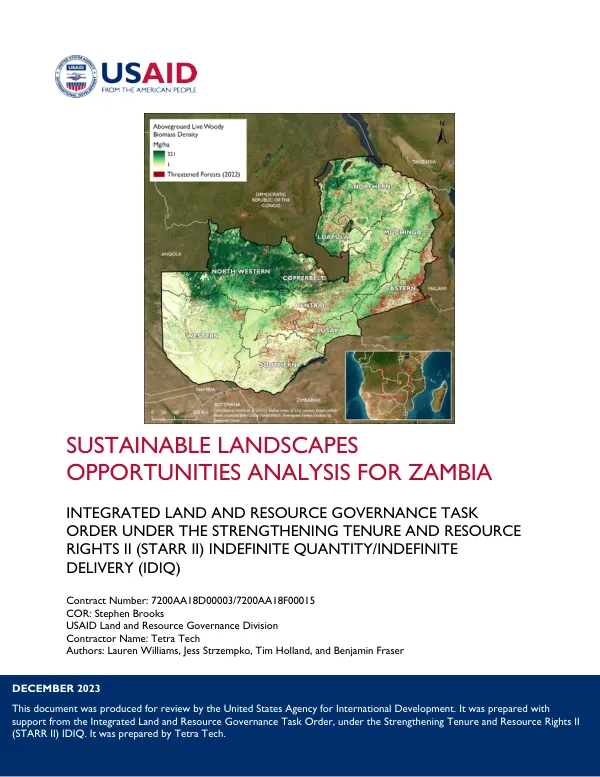
Sustainable Landscapes Opportunities Analysis for Zambia
Sustainable Landscapes Opportunities Analysis for Zambia emphasizes the importance of effective land and resource governance for climate mitigation efforts, particularly in the forest sector.
2023 · 47 pages
Sign in to readA free account is required to download.
Abstract
The report combines biophysical analysis with an evaluation of policy and institutional frameworks to ensure that sustainable landscape investments effectively support local systems and address governance challenges. Zambia's greenhouse gas emissions are predominantly land-based, with 85 percent emanating from agriculture, forestry, and land-use change. The land-use change and forestry sector alone accounted for 60.41 percent of the country's emissions in 2020, while agriculture contributed an additional 24.24 percent. Two Natural Climate Solutions (NCS) assessments found that reforestation and avoided forest conversion were the mitigation pathways with the largest overall cost-effective potential. Reforestation and avoided forest conversion were estimated to represent 75.2 percent of the total land-based mitigation potential in Zambia. Enhancing tree cover in agricultural lands and improving fire management in savannas contribute an additional 14.1 percent together. The report highlights the importance of addressing governance challenges and strengthening local ownership of interventions to ensure the effectiveness of sustainable landscape investments. The analysis reviewed national data and literature to ascertain the relevance and potential of each priority mitigation option. The report emphasizes the need for a comprehensive approach that considers the social, economic, and environmental aspects of land-based climate mitigation efforts. By prioritizing sustainable landscape investments, Zambia can effectively reduce its greenhouse gas emissions and promote sustainable development. The report identifies several key insights for strategies for conservation and management of high-value forest areas, including the importance of community-led forest management and the need for effective policy and institutional frameworks. For resilient landscapes, the report highlights the potential of reforestation, restoration, and trees in agricultural lands, as well as reduced woodfuel harvest and use and improved fire management in savannas. The analysis also emphasizes the need for a coordinated approach that involves multiple stakeholders, including government agencies, civil society organizations, and local communities. By working together, Zambia can effectively address the challenges of land-based climate mitigation and promote sustainable development.