USAID DEC
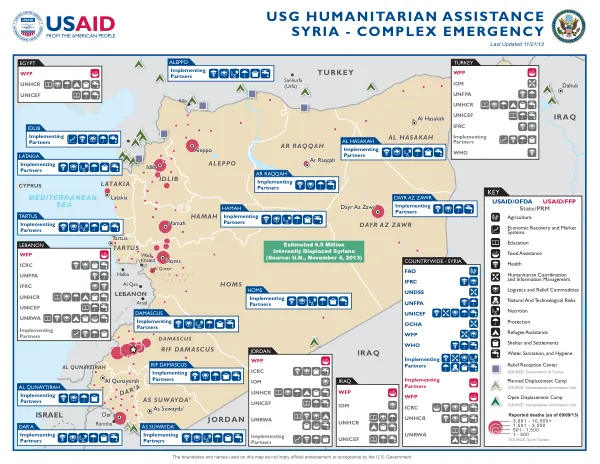
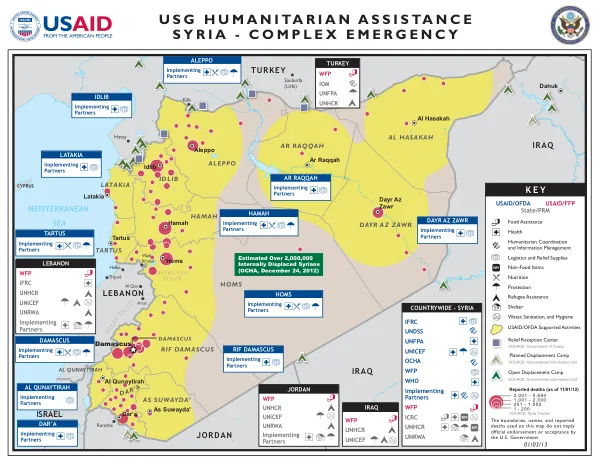
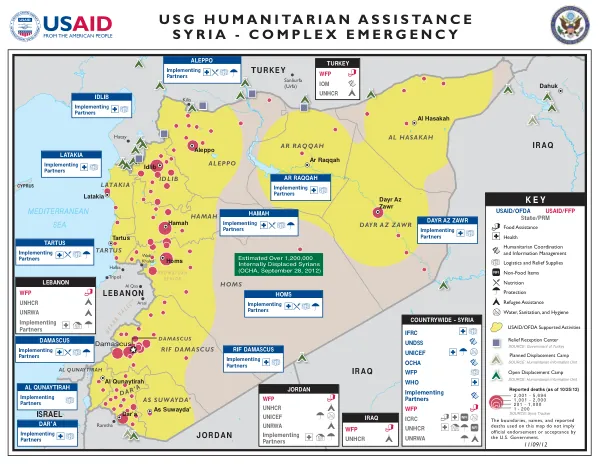
U S G H U M A N I TA R I A N A S S I S TA N C E S Y R I A - C O M P L E X E M E R G E N C Y
Sign inICRC
U S G H U M A N I TA R I A N A S S I S TA N C E S Y R I A - C O M P L E X E M E R G E N C Y
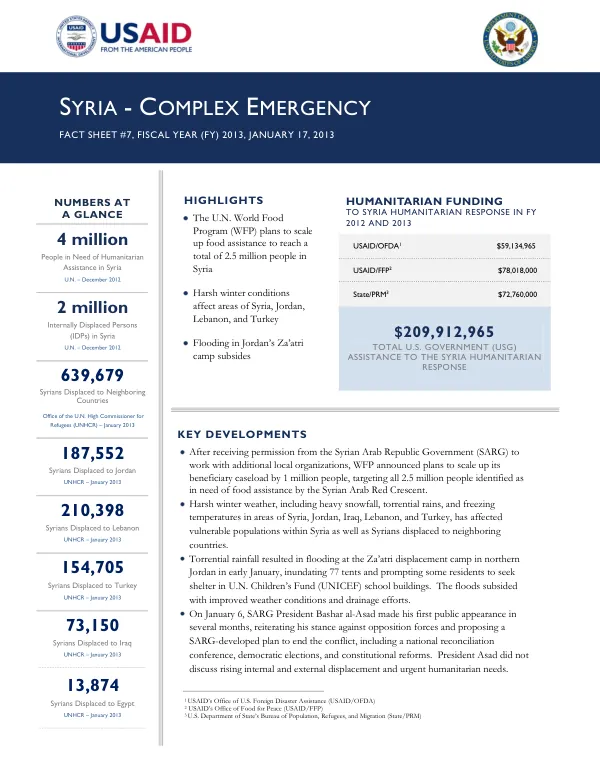
The humanitarian crisis in Syria began in 2011, resulting in a massive displacement of people within the country and across its borders.
2012 · 1 pages
Sign in to readA free account is required to download.
Abstract
As of September 28, 2012, an estimated 1,200,000 internally displaced Syrians were in need of assistance. The crisis has been characterized by widespread violence, including reported deaths, which as of October 25, 2012, ranged from 1 to 5,694 in various regions. The Syrian government and international organizations have established several relief reception centers and planned displacement camps to provide assistance to affected populations. In Turkey, the government has set up relief reception centers, while in Lebanon, Jordan, and other countries, planned displacement camps have been established to accommodate those fleeing the conflict. The United Nations and its implementing partners, including the World Food Programme (WFP), the International Committee of the Red Cross (ICRC), the United Nations High Commissioner for Refugees (UNHCR), and the United Nations Relief and Works Agency for Palestine Refugees in the Near East (UNRWA), have been working to provide humanitarian assistance to those affected by the crisis. Humanitarian assistance has been provided in various forms, including food assistance, health services, humanitarian coordination and information management, logistics and relief supplies, non-food items, nutrition, protection, refugee assistance, and water, sanitation, and hygiene services. The United States Agency for International Development (USAID) has provided support for these activities through its Office of U.S. Foreign Disaster Assistance (OFDA) and its Food for Peace (FFP) program. The U.S. Government has also provided humanitarian assistance through the Department of State's Bureau of Population, Refugees, and Migration (PRM). The humanitarian situation in Syria remains complex and challenging, with ongoing violence and displacement affecting large numbers of people. The international community continues to provide humanitarian assistance to those affected by the crisis, with a focus on meeting the immediate needs of affected populations and supporting their recovery and resilience.
Related documents