ICRC
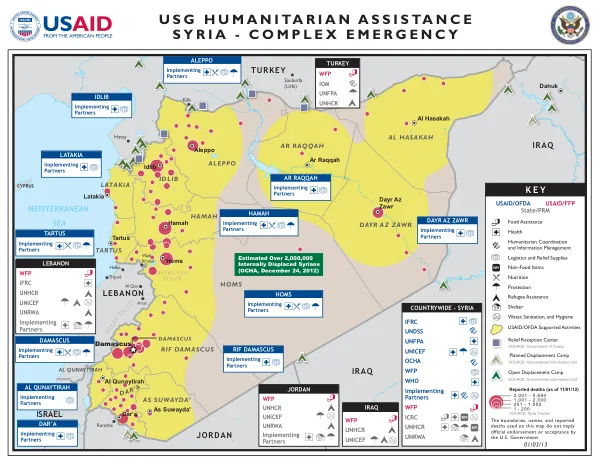
Syria Public Fact Sheet map
The humanitarian crisis in Syria began in 2011, with widespread displacement and violence affecting the country's population.
2013 · 1 pages
Sign in to readA free account is required to download.
Abstract
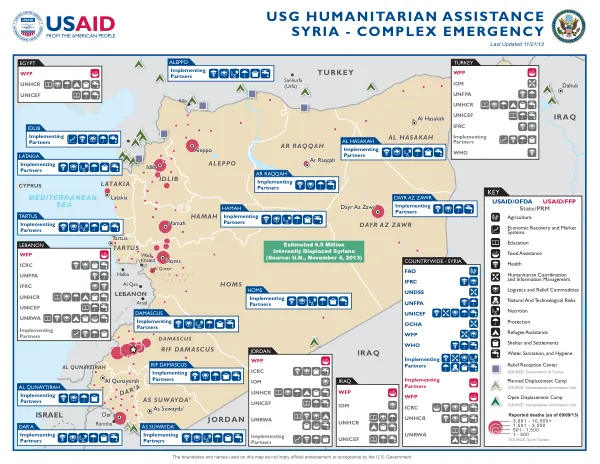
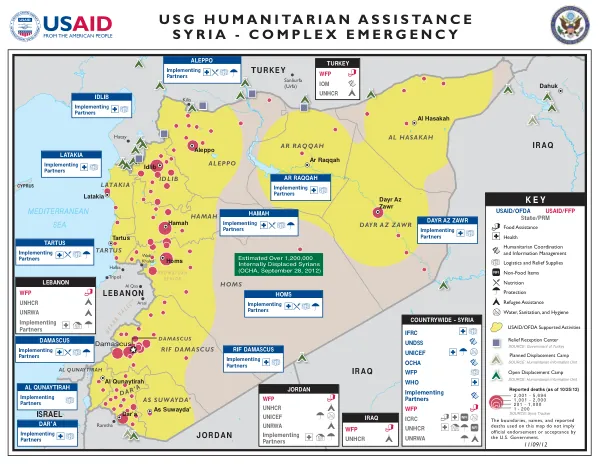
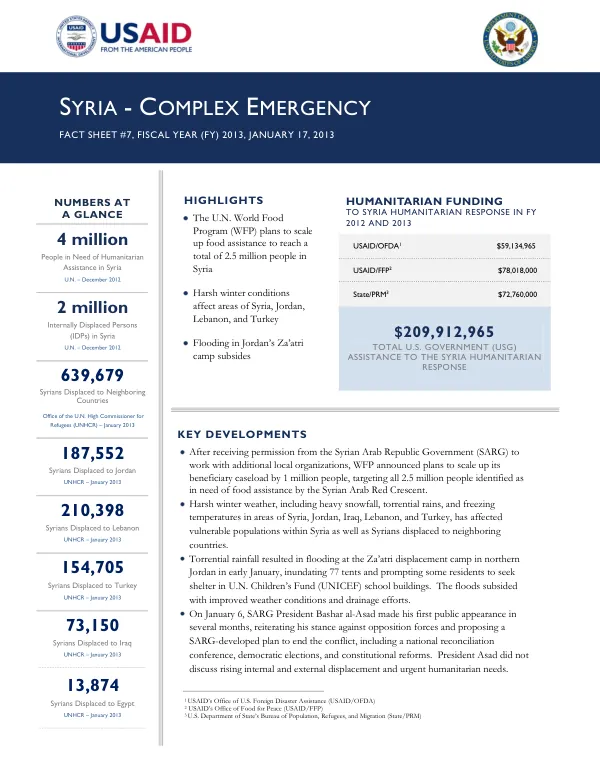
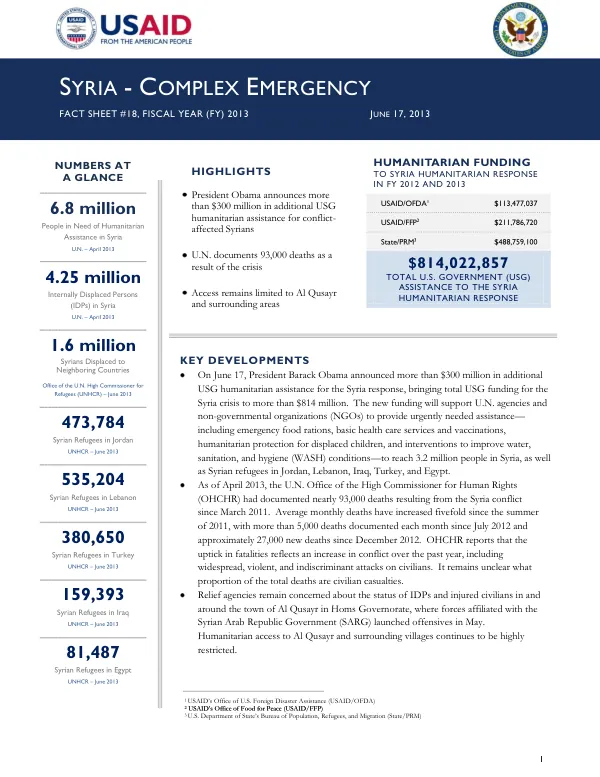
As of December 24, 2012, an estimated 2 million internally displaced Syrians required assistance. The crisis led to a complex emergency situation, necessitating a coordinated response from various humanitarian organizations. The United Nations Office for the Coordination of Humanitarian Affairs (OCHA) played a key role in coordinating the response, working closely with implementing partners such as the International Federation of Red Cross and Red Crescent Societies (IFRC), the United Nations Development Programme (UNDP), and the World Food Programme (WFP). Other key partners included the International Committee of the Red Cross (ICRC), the United Nations High Commissioner for Refugees (UNHCR), and the United Nations Relief and Works Agency for Palestine Refugees in the Near East (UNRWA). The humanitarian response in Syria focused on providing food assistance, health services, humanitarian coordination and information management, logistics and relief supplies, non-food items, nutrition, protection, refugee assistance, shelter, and water, sanitation, and hygiene services. USAID's Office of U.S. Foreign Disaster Assistance (OFDA) and the U.S. Department of State's Bureau of Population, Refugees, and Migration (PRM) provided critical support to these efforts. The crisis affected various regions in Syria, including Aleppo, Ar Raqqah, As Suwayda', Damascus, Dayr Az Zawr, Dar'a, Hama, Homs, Idlib, Latakia, and Tartus. The humanitarian response was also extended to neighboring countries, including Turkey, Jordan, Lebanon, and Iraq, where refugees and displaced persons sought safety and assistance. The humanitarian situation in Syria remained dire, with ongoing violence and displacement affecting the population. The response efforts continued to evolve, with a focus on providing critical assistance to those in need and addressing the root causes of the crisis.
Related documents