CORNELL UNIVARSITY INTERNATIONAL
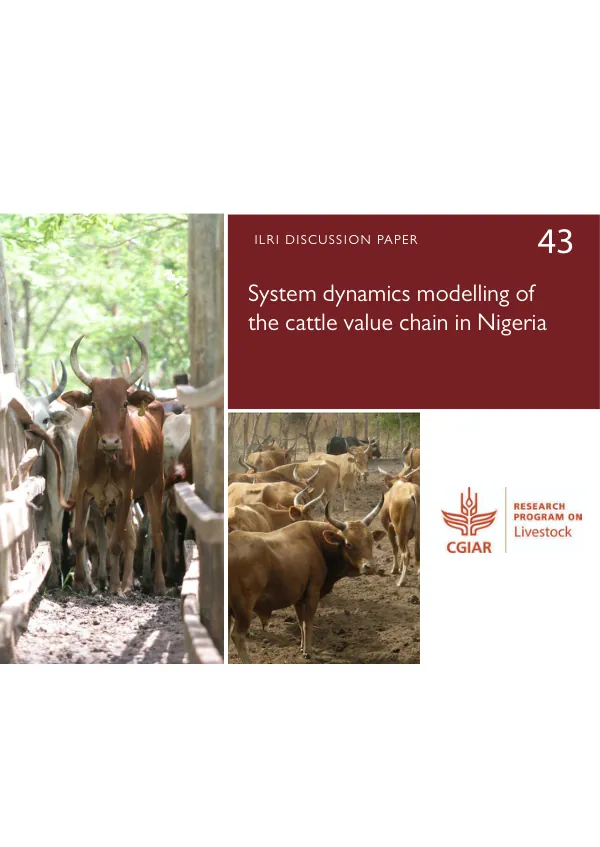
System dynamics modelling of the cattle value chain in Nigeria
The cattle value chain in Nigeria is a complex system governed by interactions among feedback loops between production, trade, and financial performance.
2021 · 18 pages
Sign in to readA free account is required to download.
Abstract
The system dynamics modelling approach was used to identify the key feedback loops influencing the structure and behaviour of trade dynamics in Nigeria's cattle value chain. The model highlighted the loop sets containing the feedback loops, which are primarily upstream-focused and revolve around economic and bioeconomic factors. The feedback loops include the price that cattle wholesalers (assemblers) are willing to pay for cattle, the proportion of producers' cattle supply to assemblers, the delay in the maturation of heifers into productive cows, and abattoirs' carcass inventory levels. These loops are influenced by the structure of the cattle market, which is determined by trade flows and is complex when considering the dynamic flows of cattle among different heterogeneous chain actors. The inefficiencies of the cattle market affect the supply of beef, which in turn shapes the structure of the cattle market. A complex set of feedback loops governs the interaction among different sectors (production, trade, and performance) of the value chain, dictating how the sector evolves. The findings provide foundational understanding of the feedback loops governing the cattle value chain in Nigeria and provide practical strategies that can be adopted to improve the performance of the sector. The cattle value chain in Nigeria is characterized by a prominent beef consumption culture, with cattle being an important livestock in the country. Cattle are used in important ceremonies and are seen as a guarantee for secured food supply in pastoral areas. However, domestic production is unable to meet the growing demand in-country, resulting in a reliance on imports. The structure of the cattle market influences the performance of the value chain, with trade flows being complex and influenced by the dynamic flows of cattle among different heterogeneous chain actors. The system dynamics modelling approach has been used in the past to map the feedback structure and conduct ex-ante impact assessment in the livestock sector. This includes application of SD to model the impact of foot-and-mouth disease on cattle herds and international trade in Botswana and Namibia, African swine fever and market hubs on peri-urban pig value chains in Uganda, and artificial insemination and market hubs in dairy value chains in Tanzania and Nicaragua. The findings of this study provide practical strategies that can be adopted to improve the performance of the cattle value chain in Nigeria. These strategies include regulating the supply of cattle to other distribution channels other than wholesalers through online marketing platforms and regulating the timing and proportion of sales, which requires investments in cattle inventory management and marketing. The study also highlights the importance of understanding the feedback loops governing the cattle value chain in Nigeria and provides a foundational understanding of the sector.