RARE, INC.
Taking Indonesia’s Fisheries Management to the Next Level
The USAID Sustainable Ecosystems Advanced (USAID SEA) Project is working to strengthen Indonesia's fisheries management using an ecosystem-based approach for sustainable fisheries and coastal resources.
2018 · 24 pages
Sign in to readA free account is required to download.
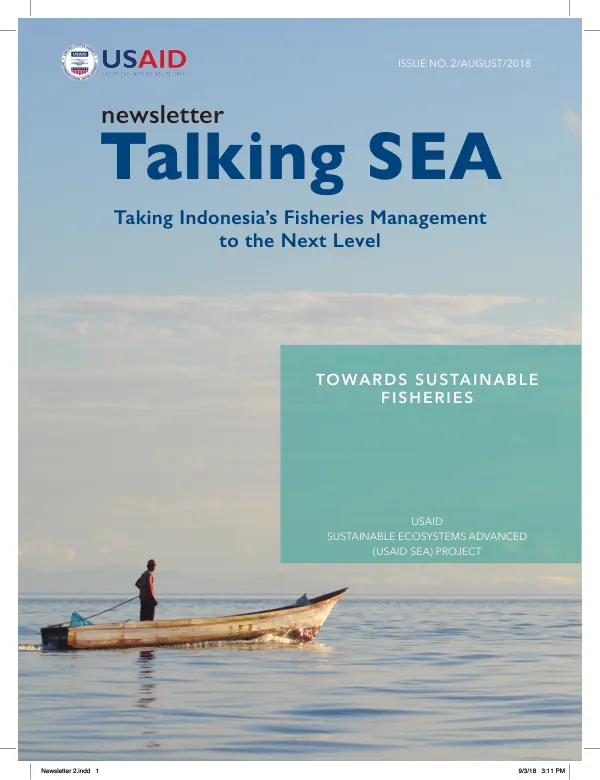
Abstract
Indonesia's rich marine resources play a crucial role in the world's fisheries, with the country being the world's second-largest marine fisheries producer. Indonesian fisheries production is 80% consumed by the domestic market and contributes to state revenue through the export of 20%. However, Indonesian fisheries must counter serious threats from overfishing and particularly from Illegal, Unreported and Unregulated (IUU) fishing. Aimed at addressing shortcomings in fisheries management, USAID SEA's Ecosystem Approach to Fisheries Management (EAFM) holistic approach works closely with the Government of Indonesia and stakeholders to focus on improving overall catch management, managing supply and demand, promoting a more evidence-based fishery policy and regulation regime, with the ultimate outcome of a sound harvest strategy. The activities will address fish landing monitoring, fishing logbook for small-scale fishers, national-provincial fishing vessel data integration, fish stock assessment, the Fishery Management Area 715 Management Unit establishment, and efforts to improve the capacities of fishery stakeholders at national and provincial levels. To further enhance the capabilities of researchers for harvest strategy development, the USAID SEA project supported two essential training events. One for 25 researchers in Jakarta in April 2017 was followed by a two-week intensive course in September 2017 for five leading MMAF fishery researchers who traveled to the Northwest Fisheries Science Center of NOAA in Seattle, USA. These researchers benefitted from the world-known experts of NOAA Fisheries and strengthened their partnership with public, private, and non-government organizations in fish landing monitoring. Fish landing data is a challenge for Indonesian fishery management due to the multiple landing sites and the chronic state of underreported fish catch. Many actors are involved in collecting landing data, and to improve their capacity, USAID SEA works with partners WWF-Indonesia, Wildlife Conservation Society (WCS), RARE, Masyarakat dan Perikanan Indonesia (MDPI), Universitas Kristen Papua (UKIP), Universitas Negeri Papua (UNIPA), and Asosiasi Perikanan Pole & Line dan Handline Indonesia (AP2HI) as well as fishing associations to facilitate fish landing data collection for stock assessment for specific fish groups and invertebrates. The USAID SEA project facilitated a fish data collection workshop in late February 2018 for government, NGOs, and the private sector that helped PUSRISKAN to train data enumerators. This joint effort provides a platform for a public-NGO-private sector partnership to overcome the challenge of Indonesian fishery data collection for fish stock assessment. The project also works directly with the Fisheries Research Center of MMAF (PUSRISKAN) as its key counterpart on stock assessment to build national capacity in fish data collection and analysis. The EAFM approach aims to balance environmental, human, and social well-being within improved governance frameworks. By addressing the shortcomings in fisheries management, USAID SEA's EAFM holistic approach can help to improve the sustainability of Indonesia's fisheries and contribute to the country's economic development. The project's efforts to strengthen the partnership between public, private, and non-government organizations in fish landing monitoring can also help to improve the effectiveness of fishery management policies and regulations.
Related documents
Documents in this collection
 2018
2018USAID DEC
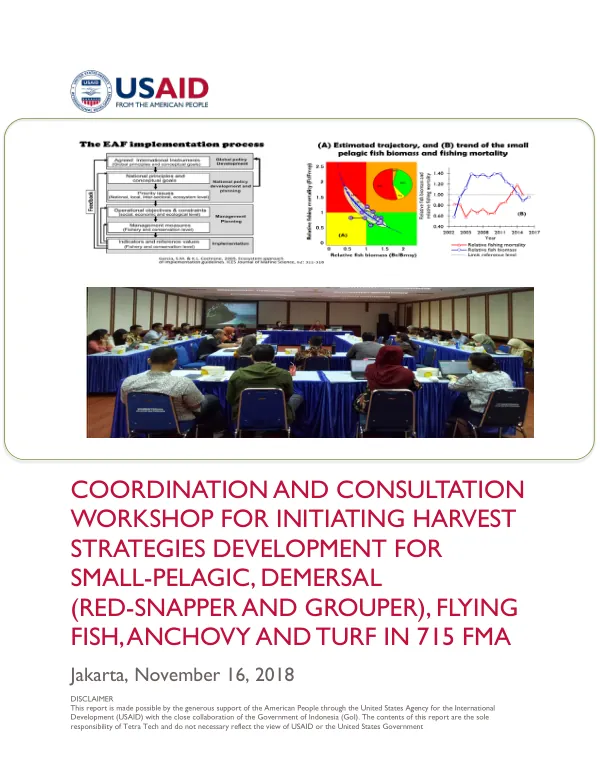
Coordination and Consultation Workshop for Initiating Harvest Strategies Development for Small-Pelagic, Demersal, Flying Fish, Anchovy, and Turf in 715 FMA
Open record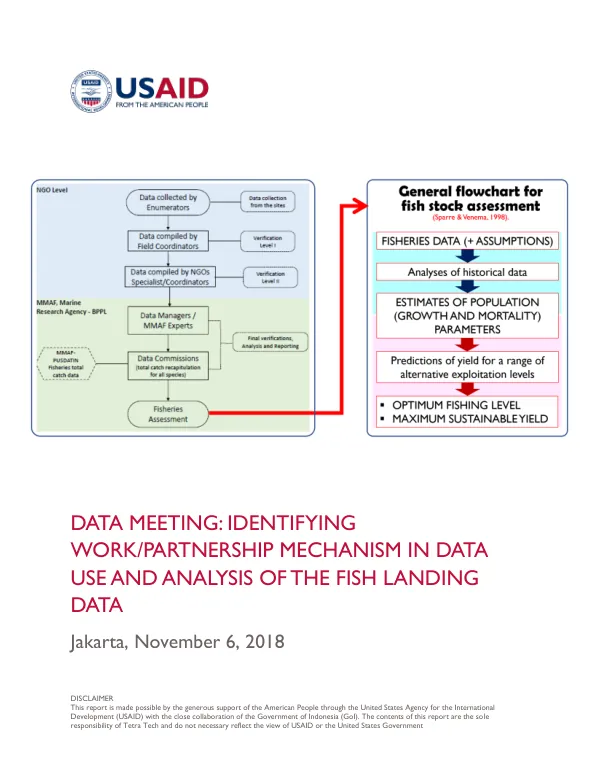 2018
2018USAID DEC
Data Meeting: Identifying Work/Partnership Mechanism in Data Use and Analysis of Fish Landing Data
Open record