FINTRAC
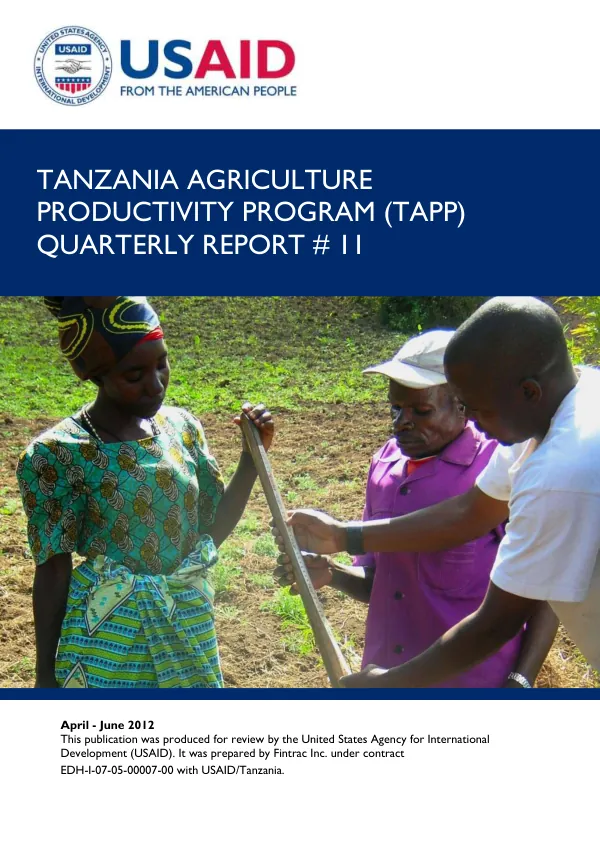
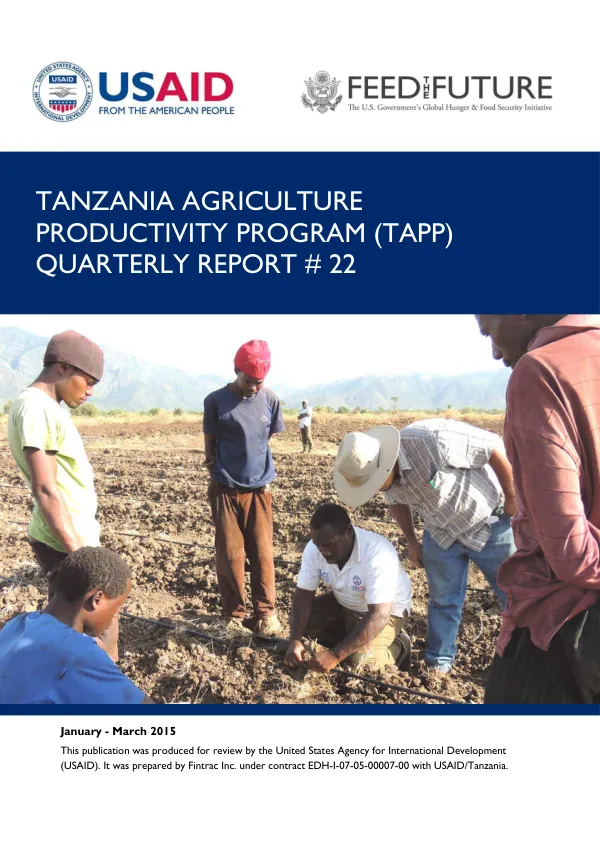
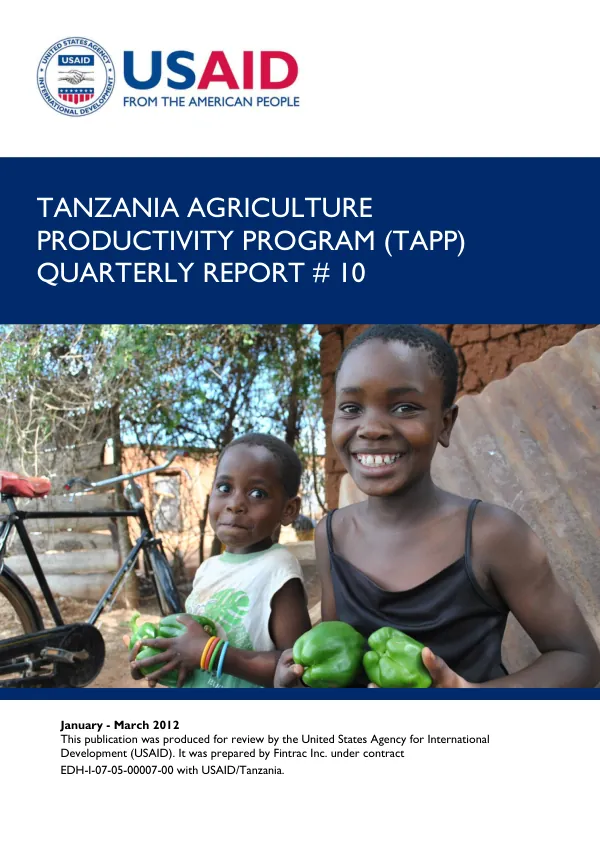
Tanzania Agriculture Productivity Program (TAPP) Quarterly Report #10
The Tanzania Agriculture Productivity Program (TAPP) is a five-year initiative aimed at increasing smallholder farmer incomes through enhanced productivity and improved domestic and export marketing of agricultural products.
2012 · 26 pages
Sign in to readA free account is required to download.
Abstract
The program is supported by the United States Agency for International Development (USAID) and is part of the US government's global hunger and food security initiative, Feed the Future. The overall goal of TAPP is to raise rural incomes, improve nutrition, and expand markets, with a focus on benefiting 19,000 rural families. TAPP's efforts to address the impact of HIV/AIDS in rural communities are integrated into activities, and there is a strong emphasis on encouraging women and youth to better understand the potential of horticulture as a business. The principles of good agricultural practices (GAPs) guide all cropping programs to ensure that the environment is protected and enhanced. To achieve these goals, TAPP staff trained 2,071 unique participants on topics relating to income generation, health and nutrition, and improved markets in Tanzania and the Isles of Zanzibar. Training was conducted through one-on-one technical assistance visits and group field days held by TAPP and partner agronomists. Training focused on equipping farmers with the skills and knowledge needed to improve productivity, expand markets, and improve overall household health and nutrition. The training participants included 3,659 smallholder farmers, with 2,071 of them being unique training participants. To improve productivity, TAPP introduces a core package of low-cost, easy-to-follow technologies that have been proven to reduce crop loss, increase overall yields, and improve crop quality. This quarter, all TAPP beneficiary farmers were introduced to and began implementing this package of technologies through trainings and technical assistance visits by TAPP staff. The technologies included in this package are seed trays, raised beds, and drip irrigation systems. Seed trays are an easy and affordable way to ensure that the right amounts of soil and water are used when germinating plants, which reduces seedling loss. TAPP promotes seed trays to ensure the production of strong and healthy seedlings for planting. Raised beds are a free way to create a conducive environment for plant growth and improve soil health. Drip irrigation systems are a water-efficient way to deliver water directly to the roots of plants, reducing evaporation and runoff. This quarter, TAPP staff conducted 173 training events, with a particular focus on planting, production, and nutrition activities. The training events were held in various regions, including Arusha, Dar es Salaam, Kilimanjaro, Morogoro, Pwani, Tanga, and Zanzibar. The training participants included technicians, farmers, and other stakeholders who were equipped with the skills and knowledge needed to improve productivity, expand markets, and improve overall household health and nutrition. TAPP's efforts to improve market access and trade development are also underway. This quarter, TAPP partner Golden Food Products (GFP) exported 133MTs of lemongrass and black and white pepper sourced from more than 100 smallholder farmers. TAPP is also assisting project partners Arusha Blooms and Multiflower in expanding their export-oriented smallholder production programs into the SAGCOT region of Tanzania. In addition to productivity and market development, TAPP is also addressing crosscutting themes such as HIV/AIDS, gender issues, and youth development. This quarter, 510 unique individuals were trained in HIV/AIDS awareness and prevention. TAPP also initiated partner fund awards with four new commercial enterprises, which will incorporate a further 4,245 farmers into commercial production activities. Overall, TAPP's efforts are focused on improving the lives of smallholder farmers in Tanzania by increasing their productivity, improving their market access, and enhancing their overall well-being. The program's success will depend on the continued support of its partners and stakeholders, as well as the commitment of its staff to achieving its goals.
Related documents