FINTRAC
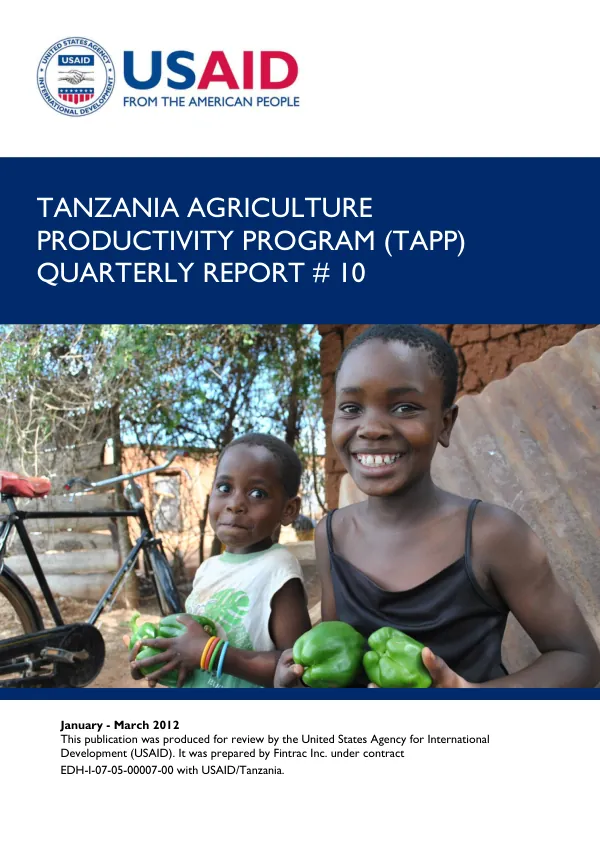
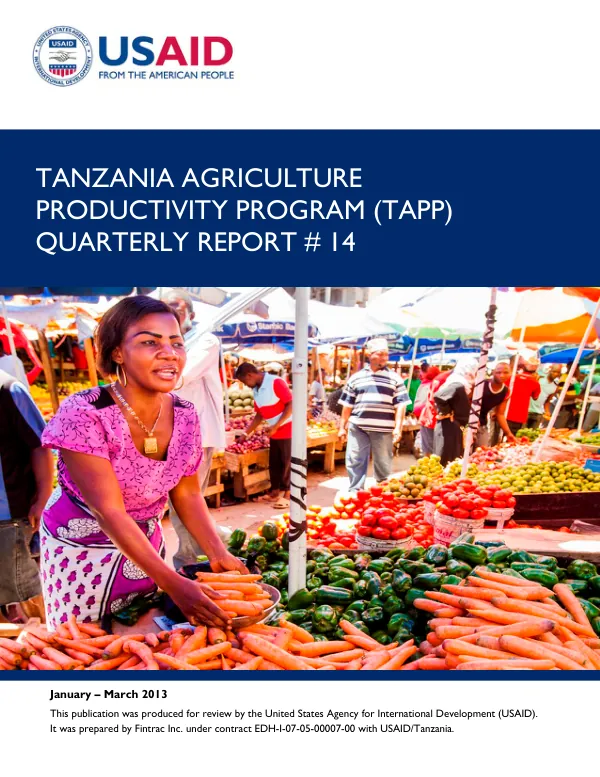
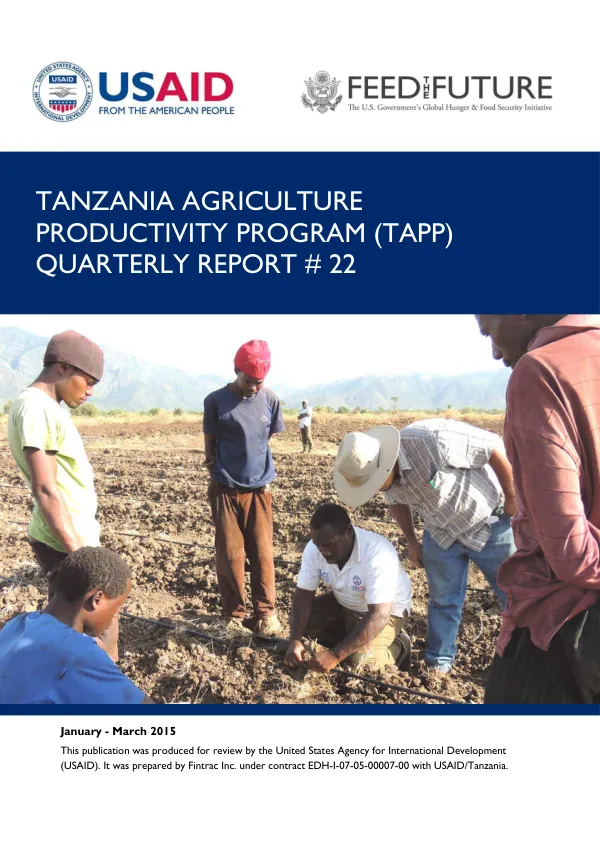
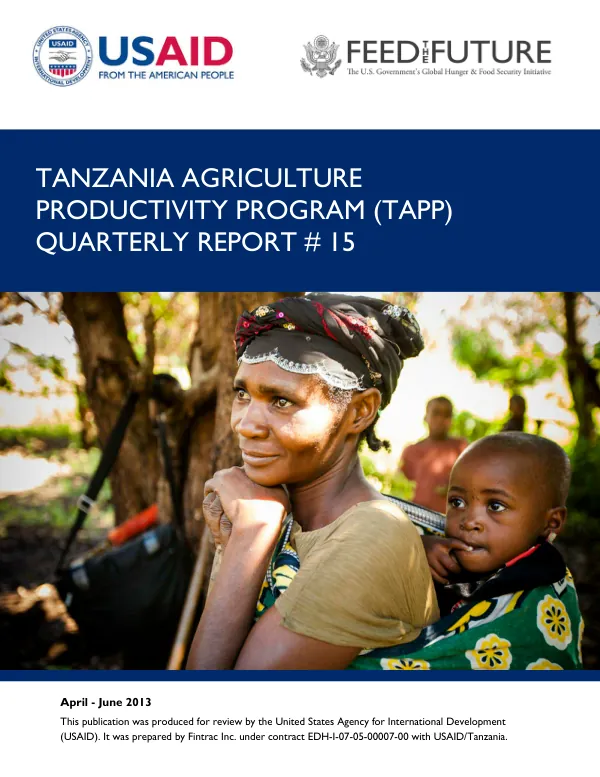
Tanzania Agriculture Productivity Program (TAPP) Quarterly Report #11
The Tanzania Agriculture Productivity Program (TAPP) is a five-year initiative aimed at increasing smallholder farmer incomes through enhanced productivity and improved domestic and export marketing of agricultural products.
2012 · 22 pages
Sign in to readA free account is required to download.
Abstract
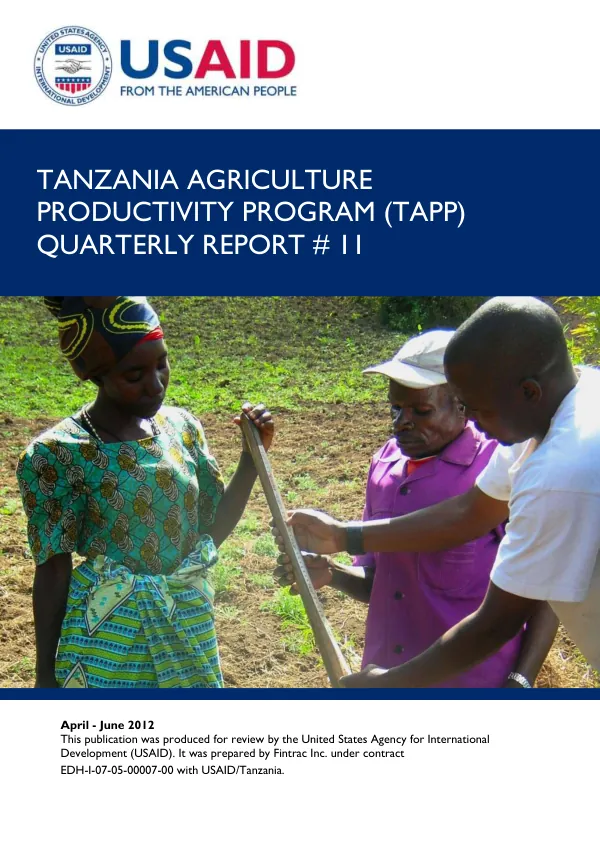
The program is supported by the United States Agency for International Development (USAID) and is part of the US government's global hunger and food security initiative, Feed the Future. USAID-TAPP is working to raise rural incomes, improve nutrition, and expand markets. The program will benefit 19,000 rural families by effectively transferring technology and business skills to farmers, attaining sustainable increases in rural incomes, and enhancing institutional capacity in the public and private sectors. Efforts to address the impact of HIV/AIDS in rural communities are integrated into activities, and there is a strong emphasis on encouraging women and youth to better understand the potential of horticulture as a business. During the quarter of April to June 2012, USAID-TAPP staff trained 6,836 smallholder farmers on topics related to income generation, health and nutrition, and improved markets in Tanzania and the Isles of Zanzibar. The training was conducted through one-on-one technical assistance visits and group field days held by USAID-TAPP and partner agronomists. Training focused on equipping farmers with the skills and knowledge needed to improve productivity, expand markets, and improve overall household health and nutrition. The training participants were from various regions, with the highest number coming from Morogoro, followed by Arusha and Mbeya. The training covered a range of topics, including good land preparation practices, which involve plot selection, soil preparation, and soil amendment. These practices allow more air and water to penetrate the soil and increase nutrients available to plants, resulting in improved productivity, quality, and land conservation. In addition to training, USAID-TAPP expanded its activities further into the Southern Agricultural Growth Corridor (SAGCOT), with new producer groups identified in Iringa, Mbeya, and Njombe. The program also introduced a core package of low-cost, easy-to-follow technologies that have been proven to reduce crop loss, increase overall yields, and improve crop quality. The program's achievements this quarter include the expansion of activities into new regions, the training of over 6,800 smallholder farmers, and the introduction of new technologies to improve productivity. The program's focus on gender integration is also notable, with 35 percent of training participants being women. Overall, USAID-TAPP is making significant progress in its efforts to increase smallholder farmer incomes and improve nutrition and markets in Tanzania. The program's emphasis on technology transfer, business skills, and institutional capacity building is expected to have a lasting impact on rural communities in Tanzania. USAID-TAPP's activities are also contributing to the development of the agricultural sector in Tanzania. The program's focus on export marketing is expected to increase the country's exports and improve its trade balance. The program's emphasis on good agricultural practices is also expected to improve the quality of agricultural products and reduce the environmental impact of farming. The program's success is also reflected in the establishment of new partnerships and the expansion of existing ones. USAID-TAPP has initiated partner fund awards with four new commercial enterprises, which will incorporate a further 9,176 farmers into commercial production activities. The program has also established five new partner fund agreements with commercial enterprises, bringing an additional 9,176 farmers into commercial production activities.
Related documents