FINTRAC
USAID-TAPP Quarterly Report #14 January – March 2013
The Tanzania Agriculture Productivity Program (TAPP) is a USAID-funded initiative aimed at increasing smallholder incomes, improving nutrition, and expanding markets.
2013 · 21 pages
Sign in to readA free account is required to download.
Abstract
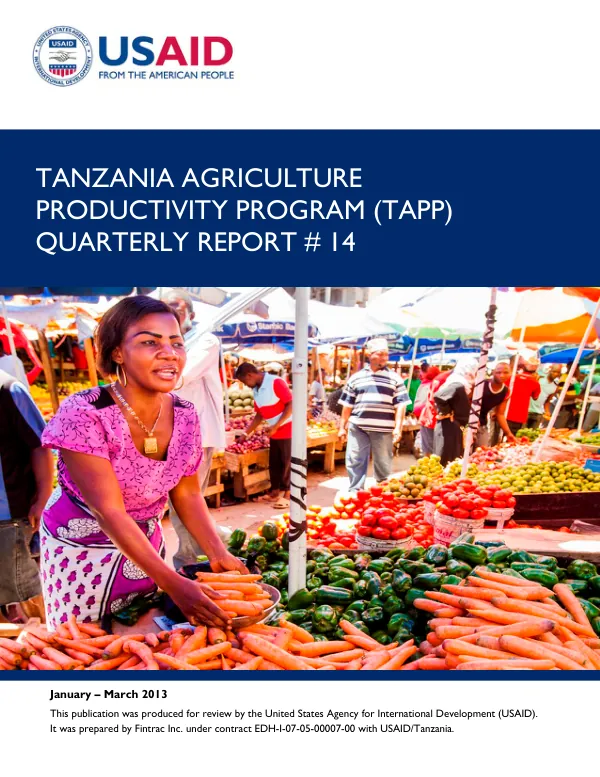
The program is part of the Feed the Future initiative, a global hunger and food security initiative to break the cycle of hunger and poverty in the developing world. TAPP is focusing its efforts on the Southern Agricultural Growth Corridor (SAGCOT), a region identified by the Tanzanian government as conducive for agricultural growth. TAPP's overall goal is to raise rural incomes, improve nutrition, and expand markets. The program will benefit over 20,000 rural families by effectively transferring technology and business skills to farmers, attaining sustainable increases in rural incomes, and enhancing institutional capacity in the public and private sectors. Efforts to address the impact of HIV/AIDS in rural communities are integrated into activities, and there is a strong emphasis on encouraging women and youth to better understand the potential of horticulture as a business. The principles of good agricultural practices (GAPs) guide all cropping programs to ensure that the environment will be protected and enhanced. In the second quarter of FY 2013, TAPP stayed on track towards both annual and overall program goals. Program achievements to date include expanding its farmer base, with a total of 572 new rural households joining the program across Tanzania and the Isles of Zanzibar. To date, 15,460 rural households are benefiting from TAPP interventions. Additionally, over 80,000 participants have received training from TAPP on agricultural sector productivity, health, nutrition, and business management, which is more than 100% over the projected overall target of 37,000. TAPP's training events included both one-on-one technical assistance and group field days facilitated by project and partner agronomists. Each event focused on providing farmers with the skills necessary to increase productivity, expand markets, and improve household health and nutrition. In addition, through trainings in business skills, TAPP helps farmers analyze the costs and benefits of all technologies so that they can make informed investment decisions and become less dependent on donor funds to increase availability of inputs and financial products. During the quarter, TAPP marketing specialists thoroughly explored and analyzed the major markets in Zanzibar, Dar es Salaam, and Morogoro. These markets include Mwanakwerekwe and Darajani in Zanzibar, and Kariakoo, Nyandira, Mlali, Doma, Dumila, Turiani, Kilombero, Ruaha, Mbuyuni, and Morogoro town in the Eastern Zone. A wide range of market contacts have been established, and valuable feedback has been provided to TAPP agronomists on the most promising opportunities for farmers. TAPP improved access to domestic markets by assisting farmers in making direct links to buyers. Farmers were linked to cucumber, tomato, avocado, sweet pepper, and Irish potato buyers. TAPP has developed a buyer database which provides farmers with contact information of pre-screened buyers in different markets. The current status of all project indicators is presented in the Annex section of this report.