USAID
Tanzania Electoral Process Observation (TEPO) Program, 2020-2021 Final Report
The Tanzania Electoral Process Observation (TEPO) Program was implemented from 2020 to 2021, with the goal of observing the 2020-2021 electoral processes in Tanzania.
2021 · 48 pages
Sign in to readA free account is required to download.
Abstract
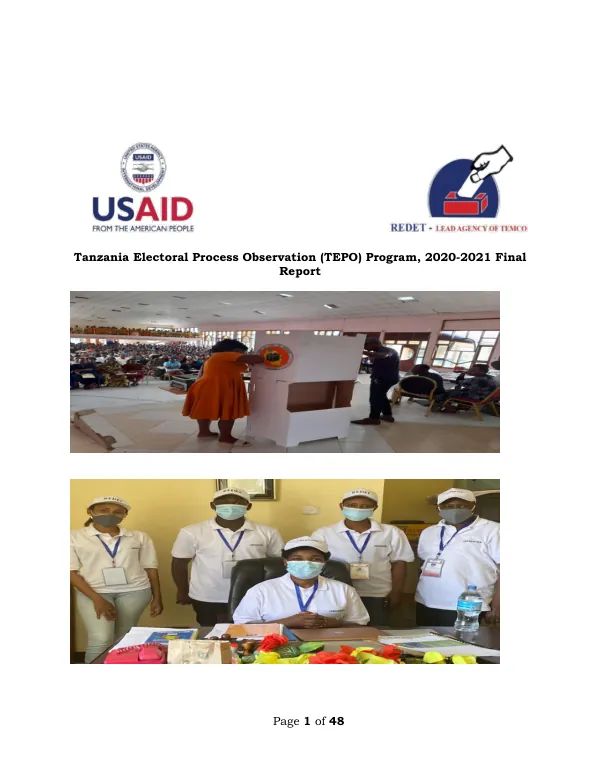
The program was accredited by the National Electoral Commission (NEC) and aimed to assess the extent to which the electoral processes were free, fair, and peaceful, in line with national and international standards for democratic elections. The program achieved all five key results during the planned period of implementation. These results included the deployment of 200 long-term observers (LTOs) to 200 constituencies, deployment of 2,353 short-term observers (STOs) to sampled polling stations, production of an interim observation report and a comprehensive final report, dissemination of the reports through various mediums, and submission of well-informed recommendations to the NEC, ZEC, and other electoral stakeholders. The program also enhanced the capacity of observers in conducting credible and non-partisan election observation, using proven methodology to collect election-related data. The program's comprehensive observation of the Union and Zanzibar general elections was the most experienced and largest contingent of LTOs, with over 160 LTOs deployed under the TEPO-supported grant and 40 LTOs deployed under the Dabida grant. However, the program encountered several challenges, including a cumbersome accreditation process through the web-based Observers Management System (OMS) introduced by the NEC, unexpected disruptions to internet connectivity during and after the poll day, and inability to access detailed information on the EMBs' handling of aspirants' objections and appeals regarding the election exercise. The program also faced mistrust of election observers by some candidates and political parties' officials, non-adherence to electoral timetables by contestants, and successful applicants for STOs' posts dropping out at the eleventh hour. Additionally, the program was unable to hold a final report validation workshop and experienced delays in fulfilling milestones. Lessons learned from the program include the need to conduct orientation workshops on data quality assessment before implementing technical projects, close collaboration with local government authorities at the constituency level to create a conducive environment for electoral observation, regular communication between REDET and USAID staff to improve project performance, and the importance of conducting internal data quality assessments before undertaking external data quality assessments. The program also highlighted the need to prepare a contingency exit plan for areas deemed as volatile, such as Zanzibar, and to reconsider transport rates for observers deployed in relatively remote areas. Furthermore, there is a need to prepare a contingency exit plan for areas deemed as volatile, such as Zanzibar, and to reconsider transport rates for observers deployed in relatively remote areas.