THE WORLD BANK
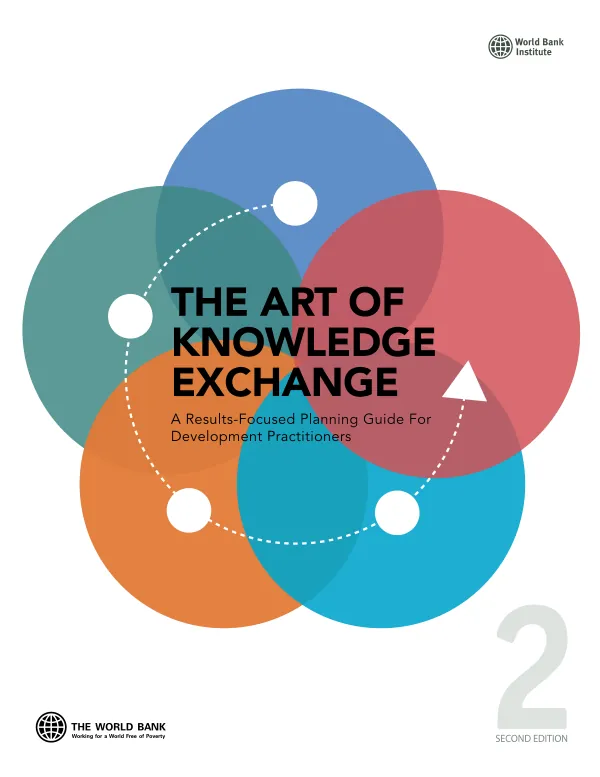
The Art of Knowledge Exchange
The Art of Knowledge Exchange is a planning guide designed to help individuals and organizations design, implement, and measure results-oriented knowledge exchange initiatives.
174 pages
Sign in to readA free account is required to download.
Abstract
The guide is intended for those who broker knowledge exchange by connecting and facilitating engagements between knowledge seekers and providers. The guide follows a strategic approach to learning, breaking down the knowledge exchange process into five simple steps: Anchor, Define, Design & Develop, Implement, and Measure & Report the Results. This approach enables knowledge brokers to consider knowledge exchange within a broader programmatic and development context, ensure stakeholder ownership and demand-driven initiatives, and determine the challenges to reaching a solution. The guide is based on lessons learned from over 100 exchanges financed by the World Bank South-South Facility, analytical work conducted by the World Bank Institute and the Task Team for South-South Cooperation, and the experiences of dozens of World Bank Group staff, learning professionals, government officials, and other international development practitioners who have brokered and participated in South-South knowledge exchange activities. Knowledge exchange, or peer-to-peer learning, is a powerful way to share, replicate, and scale up what works in development. Development practitioners want to learn from the practical experience of others who have gone through, or are going through, similar challenges. They want to be connected to each other and have ready access to practical knowledge and solutions. When done right, knowledge exchange can build the capacity, confidence, and conviction of individuals and groups to act. Examples of direct results or intermediate outcomes from a knowledge exchange include technical water specialists in Bangladesh learning new skills to replicate good practices for building and maintaining a safe water supply, dairy sector and ministry of agriculture officials in Tanzania reaching agreement on a blueprint of potential dairy sector reforms, and farmers in Kenya adopting an innovative rice growing methodology to increase the yield from their land. These direct results from knowledge exchange can also influence results at the institutional and even systemic levels. Participants of successful knowledge exchanges are empowered and motivated to make things happen, seeking to change the environment in which they operate, affect policies and norms that influence the way people behave, and strengthen the institutions where they work. The guide provides a framework for knowledge brokers to design and implement knowledge exchange initiatives that achieve tangible results. It includes tools and resources to help knowledge brokers navigate the knowledge exchange process, from identifying development goals and institutional challenges to measuring and reporting results. The guide is organized into five main sections: Anchor, Define, Design & Develop, Implement, and Measure & Report the Results. Each section provides a detailed overview of the key steps involved in the knowledge exchange process, including identifying development goals and institutional challenges, defining the ideal participant profiles and intermediate outcomes, designing and developing the knowledge exchange initiative, implementing the initiative, and measuring and reporting the results. The guide also includes a glossary of key terms and concepts related to knowledge exchange, as well as a toolbox of resources and tools to help knowledge brokers navigate the knowledge exchange process.