USAID DEC
The Time is Now to Accelerate Women's Public Procurement: Snapshot: World Bank We-Fi Public Procurement Project in Senegal
Sign inU.N. WOMEN
The Time is Now to Accelerate Women's Public Procurement: Snapshot: World Bank We-Fi Public Procurement Project in Senegal
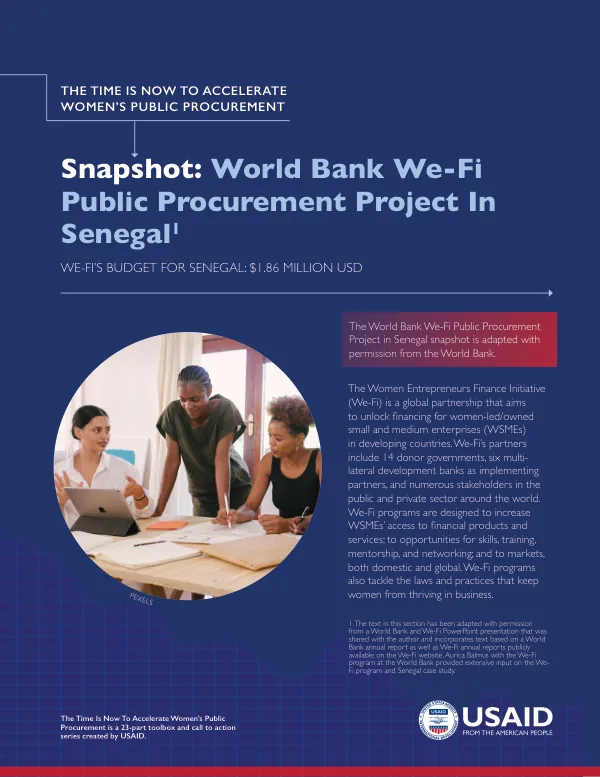
The World Bank We-Fi Public Procurement Project in Senegal is a global initiative aimed at increasing access to public procurement opportunities for women-led and owned small and medium enterprises (WSMEs).
2021 · 3 pages
Sign in to readA free account is required to download.
Abstract
The project is part of the Women Entrepreneurs Finance Initiative (We-Fi), a global partnership of 14 donor governments, 14 multi-lateral development banks, and numerous stakeholders in the public and private sector. We-Fi's primary goal is to unlock financing for WSMEs in developing countries, providing them with access to financial products and services, skills, mentorship, and mentorship opportunities, as well as markets, both domestic and global. The World Bank Group (WBG) is a key partner in the We-Fi program, leveraging public and private sector interventions to support WSMEs. The WBG approach is organized around three pillars: strengthening entrepreneurial ecosystems, expanding financial services, and improving market access. The WBG We-Fi program provides solutions at scale to address the full range of barriers faced by women entrepreneurs. The World Bank We-Fi Public Procurement Project in Senegal aims to catalyze access to public procurement opportunities for WSMEs, enhancing their growth and access to other markets and economic opportunities. The project focuses on increasing WSMEs' awareness of public procurement market opportunities, eligibility criteria, and requirements, as well as supporting certification and registration processes. The initiative is implemented in partnership with the United Nations and relevant government agencies in Senegal, including training civil servants on improving engagement with WSMEs and setting up gender-responsive procurement processes. The project involves several activities, including a survey of 1,200 SMEs to assess supply opportunities and barriers preventing WSMEs from participating in public procurement, the adoption of regulations integrating gender dimensions into public procurement processes, and assistance to the Senegal public procurement authority in operationalizing gender-responsive procurement processes. Additionally, the project provides technical and behavioral capacity building to WSMEs on procurement processes, eligibility requirements, and opportunities, as well as managerial and social skills to empower women to interact with buyers and suppliers. The expected development impact of the project includes the development and adoption of gender-affirmative procurement regulations, improved access to the public procurement market for WSMEs, and strengthened business performance. The project also aims to sensitize civil servants to gender-affirmative procurement and provide support services for WSMEs.