USAID DEC
The unmet health needs and health priorities of the urban poor: Generating the evidence-base for urban community health worker programs in South Africa
Sign inNORTH CAROLINA A&T STATE UNIVERSITY
The unmet health needs and health priorities of the urban poor: Generating the evidence-base for urban community health worker programs in South Africa
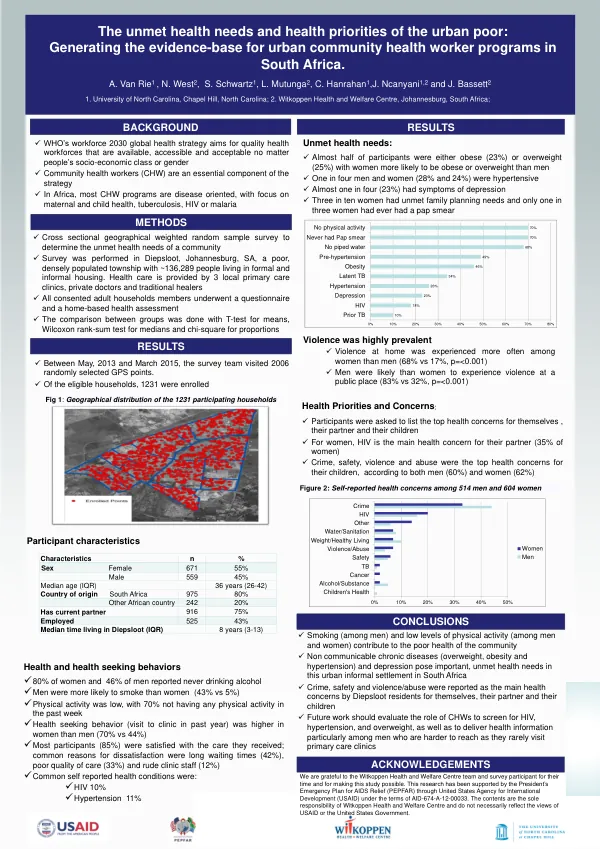
The unmet health needs and health priorities of the urban poor in South Africa's Diepsloot township were identified through a cross-sectional survey conducted between May 2013 and March 2015.
2013 · 1 pages
Sign in to readA free account is required to download.
Abstract
The study aimed to generate evidence for urban community health worker programs in South Africa. A total of 1231 households were enrolled in the survey, with 671 females and 559 males participating. The survey revealed that smoking and low levels of physical activity were significant contributors to the poor health of the community. Non-communicable chronic diseases, such as overweight, obesity, and hypertension, and depression posed important unmet health needs in the community. The top health concerns for participants was crime, safety, and violence/abuse, with 60% of men and 62% of women citing these concerns for their children. The survey also found that 43% of men and 5% of women reported smoking, with 70% of participants not engaging in physical activity in the past year. Health-seeking behavior was higher among women than men, with 70% of women and 44% of men visiting a clinic in the past year. The most common self-reported health conditions were HIV (10%), hypertension (11%), and depression. Almost half of the participants were either obese (14%) or overweight (21%), with women more likely to be obese or overweight than men. One in four men and women had symptoms of hypertension, and three in ten women had unmet family planning needs. Only one in three women had ever had a pap smear. The survey also highlighted the importance of community health workers in addressing the unmet health needs of the community. The World Health Organization's workforce 2030 global health strategy aims to have a quality health workforce available, accessible, and accessible to all, regardless of socio-economic class or gender. Community health workers are an essential component of this strategy, particularly in Africa, where most CHW programs focus on maternal and child health, HIV, or malaria. The survey was conducted in a poor, densely populated township with 96,289 people living in informal and formal housing. Health care is provided by three local primary care clinics, private doctors, and traditional healers. The survey team visited 2006 randomly selected GPS points between May 2013 and March 2015, with 1231 eligible households enrolled in the survey. The survey used a questionnaire and home-based health assessment to collect data from all consenting adult households. The comparison between groups was done using T-test for means, Wilcoxon test for medians, and chi-square for proportions. The survey found that 70% of women and 44% of men reported never drinking alcohol, with men more likely to smoke than women (43% vs 5%). Health-seeking behavior was higher among women than men, with 70% of women and 44% of men visiting a clinic in the past year. The survey also found that 80% of women and 46% of men reported never having had a pap smear, with 68% of women and 17% of men experiencing violence at home. Men were more likely to experience violence at a public place than women (44% vs 32%). The survey highlighted the importance of addressing the unmet health needs of the community, particularly in terms of non-communicable chronic diseases and depression. The survey's findings suggest that community health workers can play a crucial role in addressing the unmet health needs of the community, particularly in terms of health-seeking behavior, non-communicable chronic diseases, and depression. The survey also highlights the importance of addressing the social determinants of health, such as crime, safety, and violence/abuse, in order to improve the health and well-being of the community.
Related documents