USAID DEC
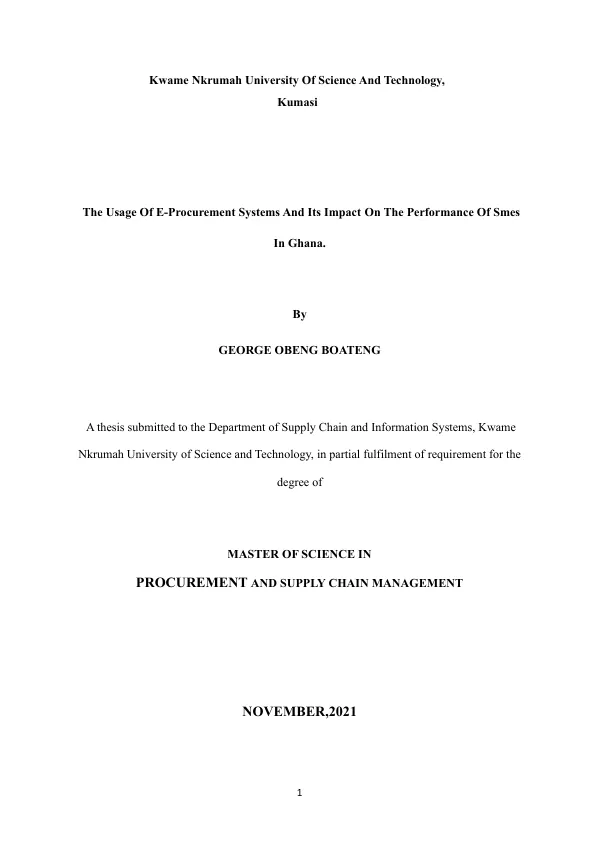
The Usage Of E-Procurement Systems And Its Impact On The Performance Of Smes In Ghana
Sign inKWAME NKRUMAH UNIVERSITY OF SCIENCE AND TECHNOLOGY
The Usage Of E-Procurement Systems And Its Impact On The Performance Of Smes In Ghana
The usage of e-procurement systems and its impact on the performance of SMEs in Ghana is the focus of a research study conducted by George Obeng Boateng.
2021 · 69 pages
Sign in to readA free account is required to download.
Abstract
The study aimed to determine the extent of e-procurement use among SMEs in Ghana, its impact on the productivity of Ghanaian SMEs, and the primary challenges associated with adopting e-procurement in Ghana. A quantitative research approach was employed, with primary data collected from 100 respondents using an online survey. The study found that the current procurement system in use is the e-procurement technique, which is used by the vast majority of SMEs on a consistent basis. The majority of respondents had a good understanding of e-procurement and were comfortable with its dynamics. The adoption of e-procurement techniques was found to contribute to a rise in the performance, effectiveness, and efficiency of organizations, resulting in an increase in their total production. However, individuals have unfavorable opinions of e-procurement due to some significant obstacles involved with its use. Internet access and inadequate internet connection were among the key issues mentioned, as were data system hacking, training needs, availability, and technological and skill gaps, among others. The study recommends that steps be taken to update internet choices to 4G, software prices should be subsidized, e-procurement users should have greater access to technology, and frequent user training should be provided to ensure that the system is as effective as possible. The study also found that the usage of e-procurement has a positive impact on the productivity variables of SMEs in Ghana. The impact on performance, effectiveness, efficiency, and productivity was found to be significant. Additionally, the study found that the usage of e-procurement has several benefits, including reduced cost of transaction, accessibility, reduced manpower, management information benefits, and compliance benefits. The study identified several challenges associated with the usage of e-procurement, including technology, internet access, knowledge and skills, cost of acquiring e-procurement software, and implementation problems. The study recommends that these challenges be addressed to ensure the effective adoption and usage of e-procurement systems by SMEs in Ghana. The research study conducted by George Obeng Boateng provides valuable insights into the usage of e-procurement systems and its impact on the performance of SMEs in Ghana. The study highlights the benefits and challenges associated with the usage of e-procurement and provides recommendations for its effective adoption and usage by SMEs in Ghana.
Related documents
Documents in this collection
 2021
2021USAID DEC
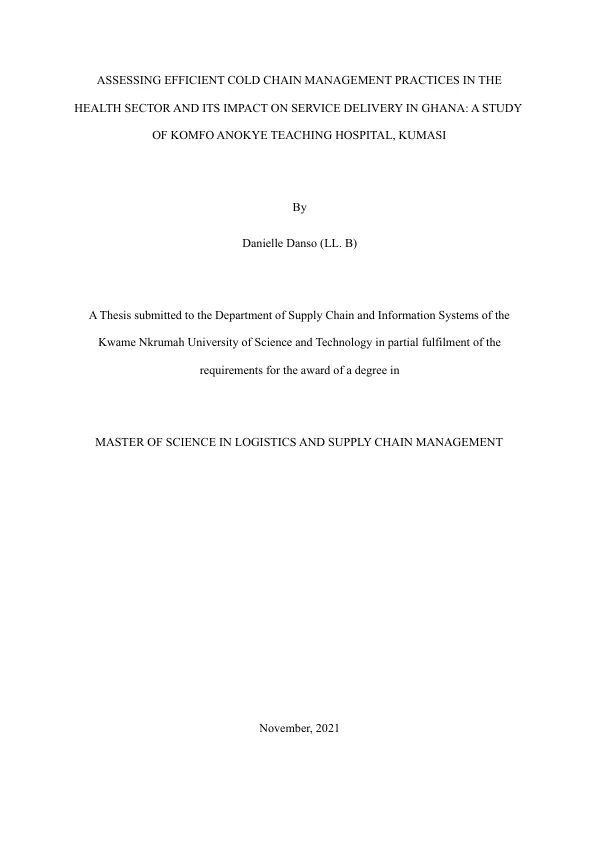
Assessing Efficient Cold Chain Management Practices in the Health Sector and Its Impact on Service Delivery in Ghana: A Study of Komfo Anokye Teaching Hospital, Kumasi
Open record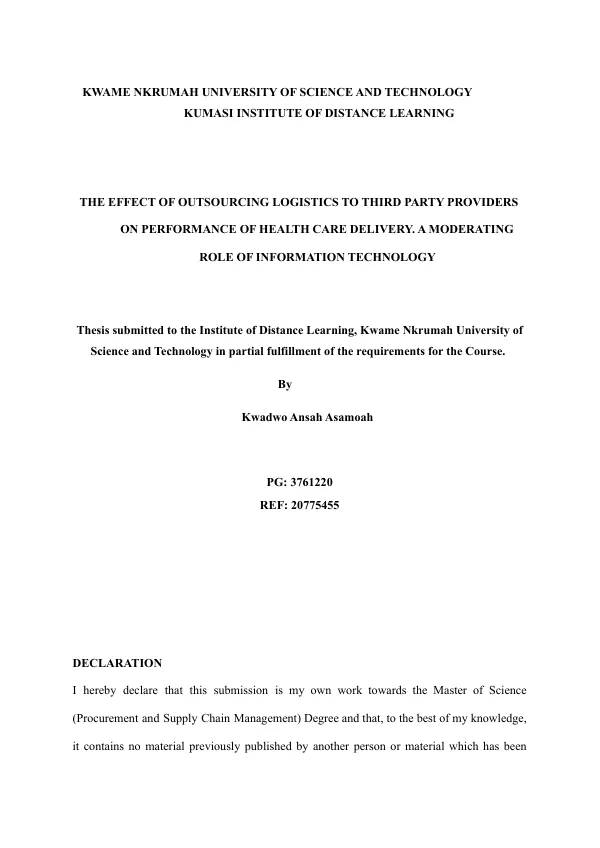
USAID DEC
The Effect of Outsourcing Logistics to Third Party Providers on Performance of Health Care Delivery. A Moderating Role of Information Technology
Open record