USAID DEC
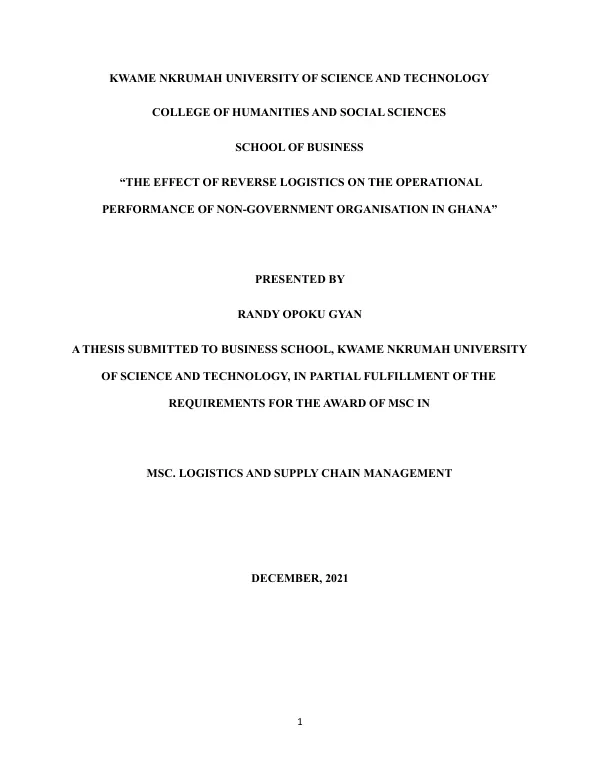
The Effect of Reverse Logistics on the Operational Performance of Non-Government Organisation in Ghana
Sign inBEARING POINT, INC.
The Effect of Reverse Logistics on the Operational Performance of Non-Government Organisation in Ghana
The study investigated the impact of inventory management and reverse logistics on the operational performance of Non-governmental organizations (NGOs) in Ghana.
2021 · 97 pages
Sign in to readA free account is required to download.
Abstract
The research adopted a quantitative research method and a sample size of 200 respondents. The study aimed to establish inventory management practices used by NGOs in Ghana, the nature of reverse logistics in NGOs, the relationship between inventory management practices and reverse logistics on the operational performance of NGOs, and the challenges faced by NGOs in implementing inventory management and reverse logistics practices. Inventory management practices used by NGOs in Ghana include the use of just-in-time inventory systems, inventory turnover analysis, and inventory valuation methods. The study found that NGOs in Ghana use a combination of these practices to manage their inventory. Reverse logistics in NGOs in Ghana involves the management of returns, repairs, and recycling of products. The study found that NGOs in Ghana perceive reverse logistics as an important management practice due to its impact on the social environment and operational performance. The study found a significant relationship between inventory management practices and reverse logistics on the operational performance of NGOs in Ghana. The study also found that NGOs in Ghana face challenges in implementing inventory management and reverse logistics practices, including limited resources, lack of expertise, and inadequate infrastructure. The study used a quantitative approach, which limited the extent to which respondents could provide extended opinions about their experiences. However, the approach was deemed appropriate due to the need to gather more data from management. The study also included a few open-ended questions to gather additional information. The study was limited to NGOs in Ghana, which facilitated easy access to respondents. The researcher faced difficulties in the theoretical and conceptual aspect of the study due to limited access to data, journals, and articles. The study concluded that inventory management and reverse logistics are critical practices for NGOs in Ghana to improve their operational performance. The study recommended that NGOs in Ghana should invest in inventory management and reverse logistics practices to improve their social and environmental impact. The study also suggested that future research should be conducted with a larger population to provide a greater perspective on the impact of inventory management and reverse logistics on the operational performance of NGOs in Ghana. The study found that NGOs in Ghana use a combination of inventory management practices, including just-in-time inventory systems, inventory turnover analysis, and inventory valuation methods. The study also found that NGOs in Ghana perceive reverse logistics as an important management practice due to its impact on the social environment and operational performance. The study concluded that inventory management and reverse logistics are critical practices for NGOs in Ghana to improve their operational performance.
Related documents
Documents in this collection
 2021
2021USAID DEC
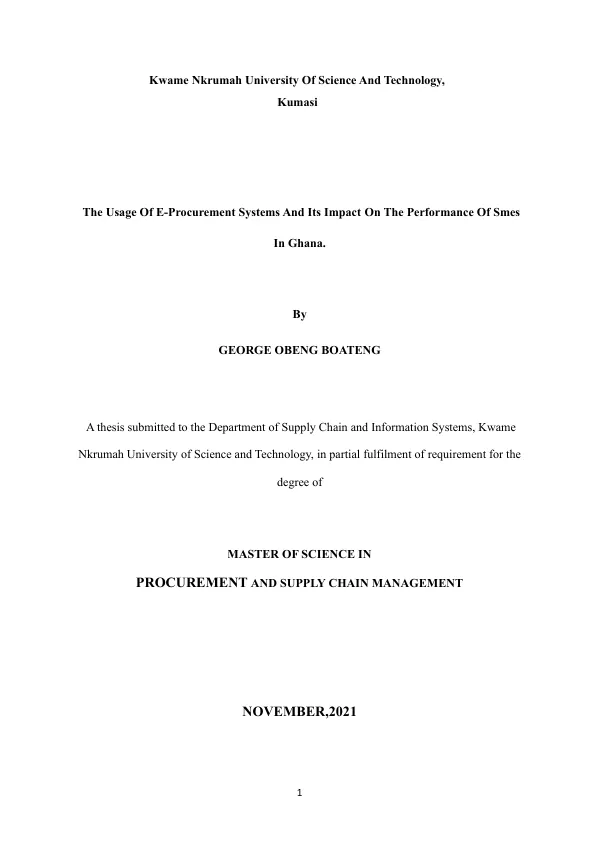
The Usage Of E-Procurement Systems And Its Impact On The Performance Of Smes In Ghana
Open record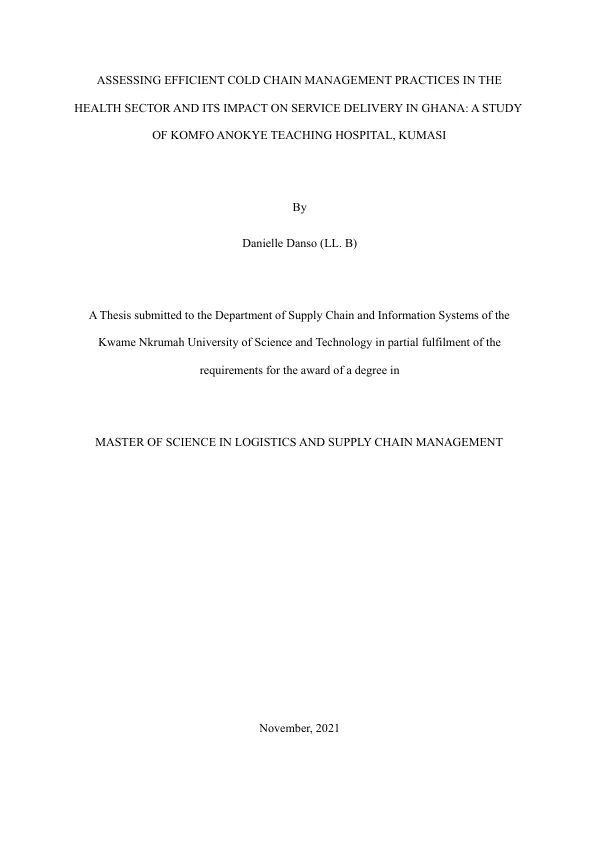 2021
2021USAID DEC
Assessing Efficient Cold Chain Management Practices in the Health Sector and Its Impact on Service Delivery in Ghana: A Study of Komfo Anokye Teaching Hospital, Kumasi
Open record