USAID DEC
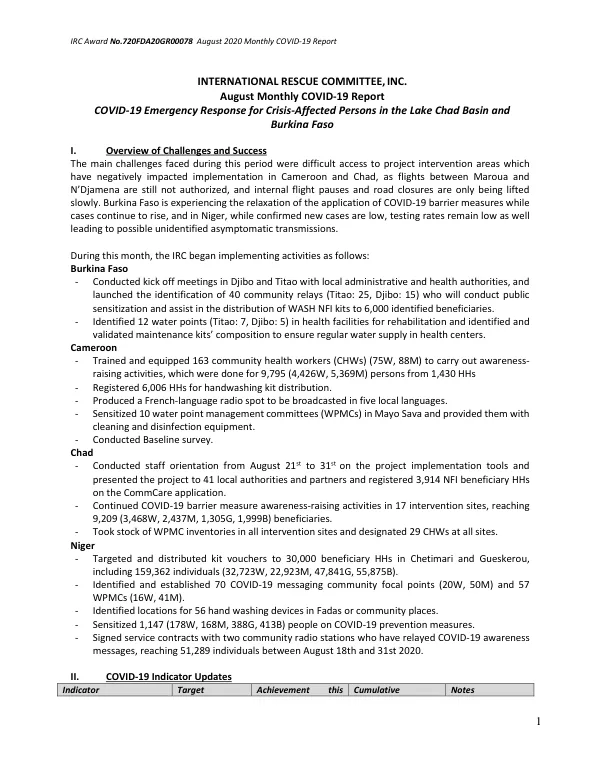
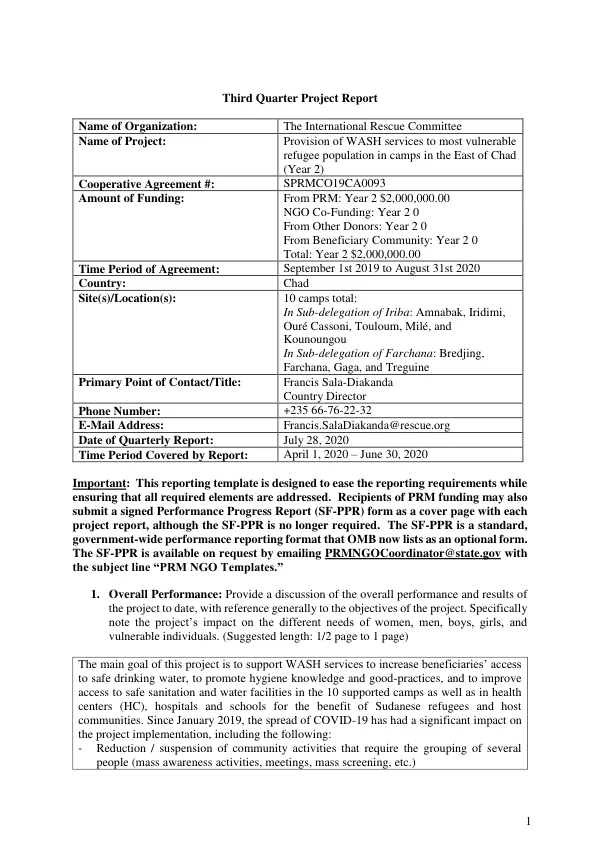
Third Quarter Project Report: Provision of WASH services to most vulnerable refugee population in camps in the East of Chad (Year 2)
Sign inUSAID DEC
Third Quarter Project Report: Provision of WASH services to most vulnerable refugee population in camps in the East of Chad (Year 2)
The provision of WASH services to the most vulnerable refugee population in camps in the East of Chad is a critical initiative aimed at increasing beneficiaries' access to safe drinking water, promoting hygiene knowledge and good-practices, and improving access to safe sanitation and water facilities.
2020 · 15 pages
Sign in to readA free account is required to download.
Abstract
The project, implemented by the International Rescue Committee (IRC), focuses on 10 camps in the Iriba and Farchana sub-delegations, with a total of 10 health centers, 2 hospitals, and 48 schools also benefiting from the initiative. The project's main goal is to ensure that all households have access to a minimum of 15 liters of water per person per day, following SPHERE standards. To achieve this objective, the IRC has implemented various activities, including the rehabilitation of water distribution networks, the installation of solar pumping systems, and the construction and rehabilitation of water points. The project has also focused on capacity building of technicians and refugees in all camps to manage water systems. In addition to improving access to safe water, the project has also aimed to improve access to safe sanitation facilities for persons of concern in the 10 camps. The IRC has worked with sanitation cooperatives to collect and recycle abandoned latrine slabs, distribute waste bins to households, and promote cleanliness of public places, markets, and butcheries. The results reported during the third quarter indicate that more than 90% of households in eight camps have access to a safe latrine, and more than 60% of households in eight camps are disposing of solid household waste in a safe dedicated place. The project has also focused on enabling persons of concern to adopt hygiene practices to protect themselves from WASH-related diseases in the 10 camps. The IRC has continued to raise awareness through daily home visits conducted by health promoters and promote good practices of hygiene in households with materials in Arabic. The project has also established community health clubs in each camp to discuss hygiene and sanitation-related issues. The project's implementation has been impacted by the COVID-19 pandemic, which has led to the suspension of community activities, limitation of movement of people between different sites, and disruption of the national and international supply chain. However, the IRC has developed a strategy to mitigate the impact of the pandemic, focusing on ensuring the security of personnel, continuation of current activities, and preparation of additional outbreak response activities. The project has made significant progress in improving access to safe water, sanitation facilities, and hygiene promotion in the 10 camps, 10 health centers, 2 hospitals, and 48 schools. The results reported during the third quarter indicate that the project has achieved its objectives, with more than 90% of households in eight camps having access to a safe latrine, and more than 60% of households in eight camps disposing of solid household waste in a safe dedicated place. The project has also enabled persons of concern to adopt hygiene practices to protect themselves from WASH-related diseases in the 10 camps. The project's impact on the different needs of women, men, boys, girls, and vulnerable individuals has been significant. The project has enabled women and girls to access safe water and sanitation facilities, reducing their time spent on fetching water and allowing them to allocate more time to take care of their children, breastfeeding, or engaging in social or professional activities. The project has also promoted cleanliness of public places, markets, and butcheries, reducing the risk of exposure to assault by women and girls during water fetching. The project's implementation has been successful, with the IRC achieving its objectives and making significant progress in improving access to safe water, sanitation facilities, and hygiene promotion in the 10 camps, 10 health centers, 2 hospitals, and 48 schools. The project's impact on the different needs of women, men, boys, girls, and vulnerable individuals has been significant, and the project is expected to continue making progress in the coming quarters.