FRIENDS OF THE NATION
Training for MOFAD Regional and Fisheries Officers on Anti-Clat Strategy
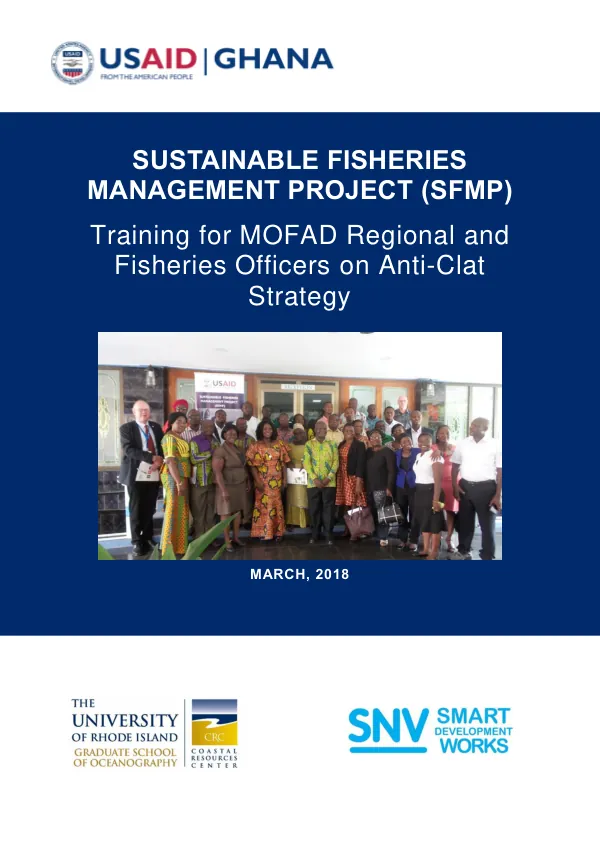
The Sustainable Fisheries Management Project (SFMP) in Ghana conducted a training for Ministry of Fisheries and Aquaculture Development (MoFAD) Regional and Fisheries Officers on the Anti-Child Labor (Anti-Clat) Strategy in March 2018.
2018 · 27 pages
Sign in to readA free account is required to download.
Abstract
The training aimed to equip participants with knowledge and skills to effectively implement the CLaT strategy, which focuses on eliminating child labor and trafficking in the fisheries sector. The training objectives included increasing awareness and understanding of the CLaT concept, identifying priority areas for intervention, and developing strategies for eliminating child labor and trafficking. The expected outcomes of the training were to enhance the capacity of MoFAD officials to implement the CLaT strategy, improve the working conditions of fishermen, and reduce the incidence of child labor and trafficking in the fisheries sector. The training method involved presentations, group discussions, and sharing of success stories. The venue for the training was not specified, but it was attended by MoFAD Regional and Fisheries Officers, as well as other stakeholders. The training proceedings included a keynote address by Hon. Elizabeth Naa Afoley Quaye, Minister of MoFAD, and presentations on the CLaT strategy and shared success stories. The training focused on understanding the CLaT concept, expectations of participants, and shared CLaT experiences. It also covered creating CLaT awareness, operationalizing the strategy priority areas, and elimination strategies. The training proceedings were facilitated by Maurice Knight, Chief of Party SFMP, and other experts in the field. The training resulted in the operationalization of the CLaT strategy capacity of MoFAD/FC, with participants pledging to work towards eliminating child labor and trafficking in the fisheries sector. The evaluation of the training highlighted key learnings and recommendations for future training programs. The CLaT strategy priority areas included improving working conditions, increasing awareness, and enhancing enforcement. The elimination strategy involved identifying and addressing the root causes of child labor and trafficking, as well as providing support to victims and their families. The training also emphasized the importance of collaboration and coordination among stakeholders to effectively implement the CLaT strategy. The training was facilitated by experts from the SFMP, MoFAD, and other organizations, including SNV, CEWEFIA, DAA, Friends of the Nation, Hen Mpoano, and Resonance Global. The training proceedings were documented through photographs and reports, which are available on the CRC/URI website. The SFMP is a USAID-funded project that aims to improve the sustainability of the fisheries sector in Ghana. The project focuses on promoting responsible fishing practices, improving working conditions, and reducing the incidence of child labor and trafficking in the fisheries sector. The project is implemented by the Coastal Resources Center (CRC) at the University of Rhode Island, in collaboration with local organizations and stakeholders.