CARE NEPAL
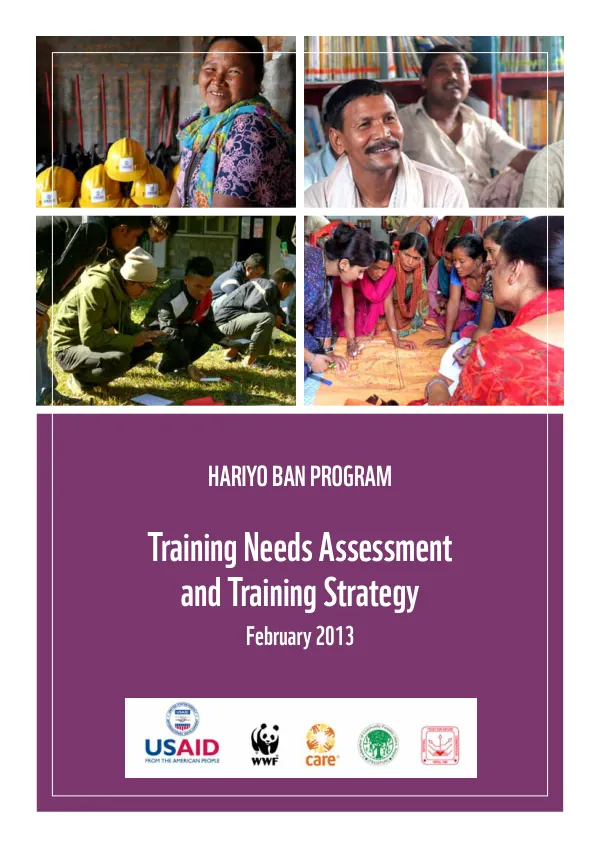
Training Needs Assessment and Training Strategy for Hariyo Ban Program
The Hariyo Ban Program is a capacity building initiative that aims to promote sustainability and achieve its objectives in biodiversity conservation, sustainable landscapes, and climate adaptation.
2013 · 78 pages
Sign in to readA free account is required to download.
Abstract
The program is implemented in Nepal and focuses on building the capacity of priority beneficiaries and stakeholders at different levels, from local to national. Capacity building is integral to all three thematic components and three cross-cutting components of the program. The program conducted a training needs assessment to identify priority training needs and recommend a training strategy, along with suggested training packages to meet needs and gaps in the thematic and cross-cutting components. The assessment team collected field data, undertook analysis, and drafted the training needs assessment and training strategy. The team consisted of Mr. Basu Dev Neupane, Anju Upadhyaya, Bishnu Hari Poudyal, and Bed Sapkota. The assessment found that the majority of stakeholders at the central and district levels had some understanding of basic concepts such as biodiversity, climate change adaptation, REDD+, payments for ecosystem services, and sustainable landscape management. However, there remain significant knowledge gaps regarding the implementation of REDD+ initiatives. The survey also found that the Ministry of Forests and Soil Conservation runs and coordinates forestry-related training courses through its network of regional training centers, but topics such as biodiversity identification and documentation, forest conservation, and scientific forest management are not covered. The assessment identified training needs at the central, landscape/district, and local levels. The team interviewed 184 respondents ranging from senior government officials to representatives of Community Forest User Groups, Buffer Zone Management Committees, and other community groups and cooperatives. The assessment found that training support is an indispensable part of capacity building to optimize the efficiency and effectiveness of planned activities. The recommended training packages include biodiversity conservation training, sustainable landscapes training, climate change adaptation training, and training on cross-cutting themes. The training packages aim to address the knowledge and skills needs of communities, government, and civil society for conserving biodiversity and addressing adverse impacts of climate change in Nepal. The report reflects the views and suggestions of government representatives, development partners, local bodies, the media, key informants, and local community groups. The Hariyo Ban Program aims to build the capacity of priority beneficiaries and stakeholders as needed, at different levels, through training, orientation, mobilization, and strengthening of management systems for program implementation. The program's capacity building initiative is integral to achieving its objectives and promoting sustainability. The training needs assessment and training strategy report is expected to significantly contribute to addressing the knowledge and skills needs of communities, government, and civil society for conserving biodiversity and addressing adverse impacts of climate change in Nepal.