USAID. MISSION TO TUNISIA
Tunisia computer technology
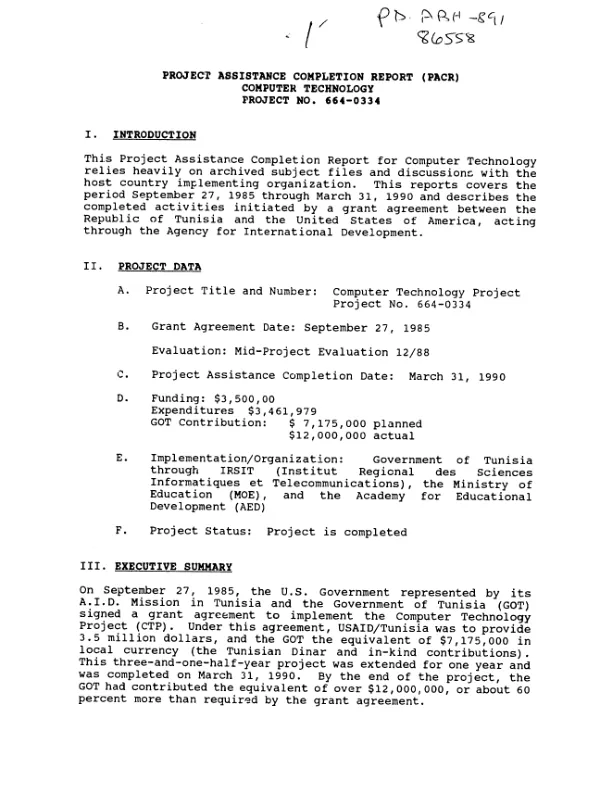
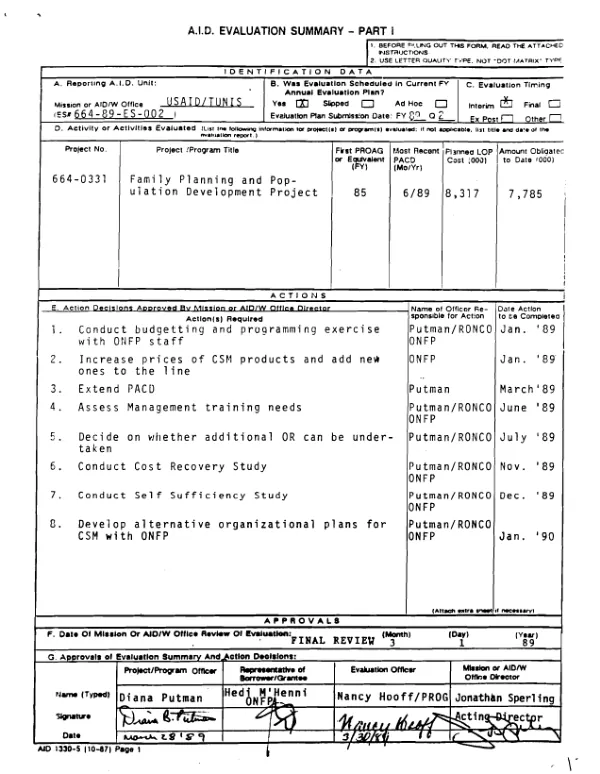
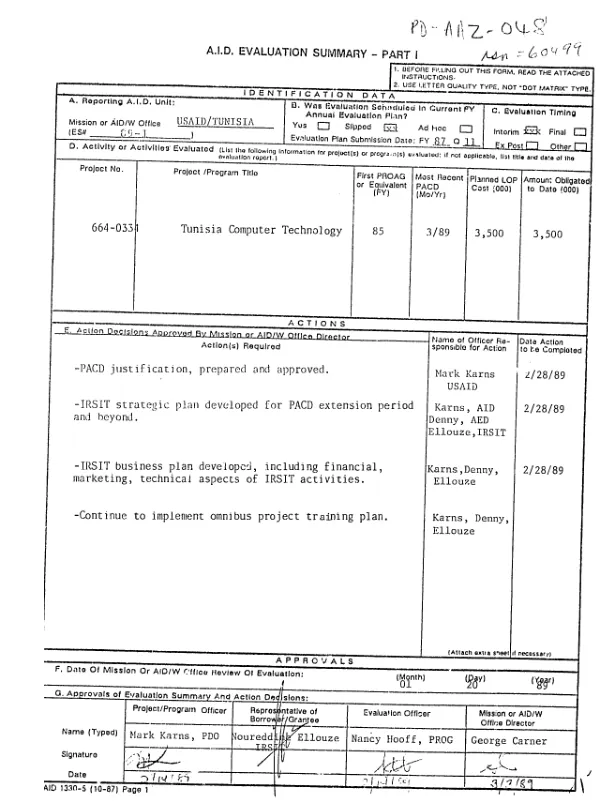
Summarizes external interim (1985-3/89) evaluation of a project to promote the adoption of computer technology in Tunisia by supporting the Government of Tunisia"s (GOT) Regional Institute for Information Sciences and Telecommunications (IRSIT).
1989
Sign in to readA free account is required to download.
Abstract
The project began slowly. The original resident advisor changed his mind about participating while on the way to Tunisia, and even when his replacement arrived, 8 months later, IRSIT had only 3 staff members and had not yet been legally chartered. The advisor was thus forced to engage in basic institution building, a function which had been (inadvisedly) neglected by the project paper - which in fact failed to acknowledge that IRSIT did not at the time exist. These caveats noted, IRSIT is making reasonable progress toward establishing pilot projects in telecommunications, arabization, and sectoral areas. Although none of the projects have gotten far beyond the task definition stage, IRSIT has made good progress in defining manageable projects and its staff are enthusiastic and well-qualified. Most of the projects involve technology transfer, not research, a focus which is probably appropriate (although it contradicts how the GOT views IRSIT). In another deviation from the PP, most of the projects are being performed directly by IRSIT, rather than through grants to other Tunisian institutions: IRSIT feels strongly that it should act as a research institute, not a foundation. Whether the projects will give IRSIT enough experience to be self-financing is uncertain. Some clients seem willing to partially defray the cost of IRSIT"s services, but this may be because A.I.D. subsidies make IRSIT less expensive than commercial firms. In other areas: (1) the project"s research and education components are totally separate from each other and should be kept so; and (2) project funding for overseas travel has been essential in IRSIT"s efforts to develop linkages with U.S. institutions and personnel; however, IRSIT needs to show more initiative in developing and maintaining such linkages. IRSIT is still a young organization, with major weaknesses in organizational structure and management; these problems are being addressed (though the advisor"s suggestions proved unwelcome to IRSIT), but change will not come fast. IRSIT needs better business management skills and it needs to develop criteria for selecting clients and determining their ability to pay. Hiring and retaining qualified staff is another problem, as IRSIT is having difficulties competing with private employers with respect to salary and job security. Also, contrary to the hopes expressed in the PP, IRSIT does not have a major role to play in informatics policy in the near future - most GOT functions in this arena are already clearly assigned to other institutions. If USAID/T wishes IRSIT to continue work in this area, additional support will be needed. The evaluation team wholly supports USAID/T"s extension of the PACD.