USAID DEC
Understanding the Dynamics of Concurrent Sexual Partnerships in Malawi and Tanzania: A Qualitative Study
Sign inTHE INFO PROJECT AT THE JOHNS HOPKINS BLOOMBERG SCHOOL OF PUBLIC HEALTH, CENTER FOR COMMUNICATION PROGRAMS
Understanding the Dynamics of Concurrent Sexual Partnerships in Malawi and Tanzania: A Qualitative Study
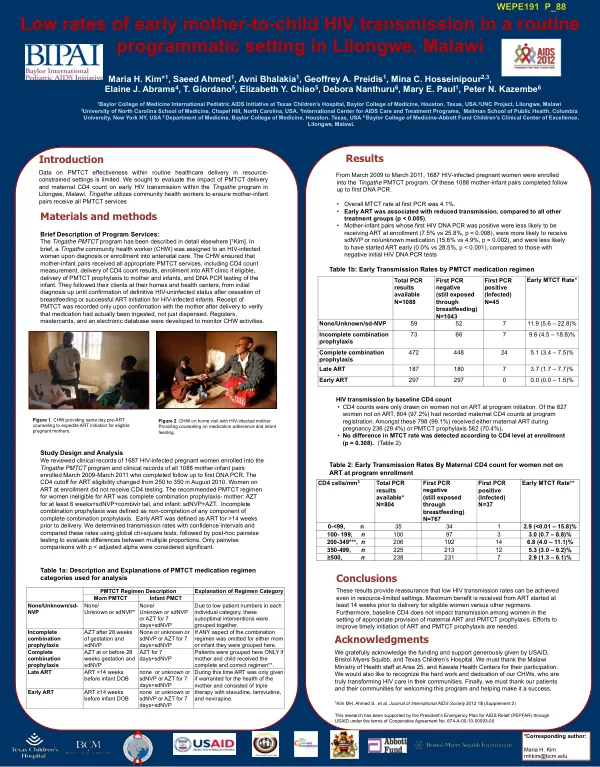
Concurrent sexual partnerships are a significant factor contributing to high rates of HIV transmission in sub-Saharan Africa.
2011 · 2 pages
Sign in to readA free account is required to download.
Abstract
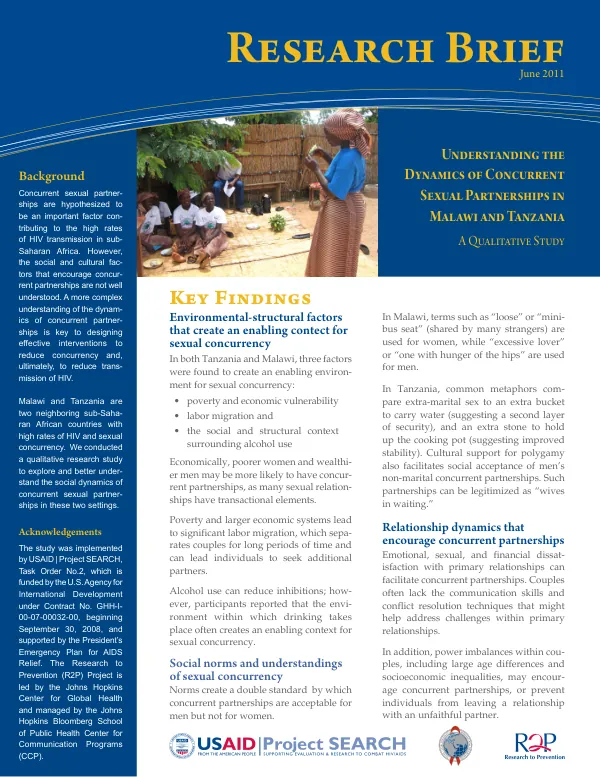
Research conducted in Malawi and Tanzania identified three key environmental-structural factors that create an enabling context for sexual concurrency: poverty and economic vulnerability, labor migration, and the social and structural context surrounding alcohol use. Poverty and economic vulnerability can lead to transactional elements in sexual relationships, where poorer women and wealthier men may engage in concurrent partnerships. Labor migration, often driven by larger economic systems, separates couples for extended periods, increasing the likelihood of individuals seeking additional partners. The social and structural context of alcohol use can also facilitate concurrency, as drinking can reduce inhibitions and create an environment that enables concurrent partnerships. Social norms and understandings of sexual concurrency play a crucial role in shaping individual behaviors. In Malawi and Tanzania, norms create a double standard, where concurrent partnerships are acceptable for men but not for women. Cultural metaphors and terms used to describe concurrency, such as "loose" or "mini-bus seat" for women and "excessive lover" or "one with hunger of the hips" for men, reinforce these norms. Cultural support for polygamy also facilitates social acceptance of men's non-marital concurrent partnerships. Relationship dynamics that encourage concurrent partnerships include emotional, sexual, and financial dissatisfaction with primary relationships. Couples often lack communication skills and conflict resolution techniques, making it difficult to address challenges within primary relationships. Power imbalances within couples, including large age differences and socioeconomic inequalities, may also encourage concurrent partnerships or prevent individuals from leaving a relationship with an unfaithful partner. A qualitative research study conducted in Malawi and Tanzania aimed to explore and better understand the social dynamics of concurrent sexual partnerships. The study involved 72 focus group discussions, 36 in-depth interviews, and 18 key informant interviews with community members and leaders. The research identified several avenues for interventions to reduce concurrency, including addressing environmental-structural factors, unequal gender norms, and promoting partner communication and conflict resolution strategies. Interventions aiming to reduce concurrency must work within complex existing social and structural systems to enact change. Recommendations include addressing poverty and economic vulnerability through microfinance and job training interventions, reducing the risk associated with labor migration through housing for migrant workers or changes to work schedules, and targeting the general population with messages on the risk of alcohol. Strengthening injunctive norms against concurrent partnerships requires addressing larger gender norms that support gender inequalities, and promoting partner communication and conflict resolution strategies can improve the quality of relationships and reduce interest in outside partners. Developing parenting skills to discourage concurrency is also essential, as some parents model concurrency behavior to their children or send conflicting messages about sex and relationships. Programs should focus on developing parenting skills across various dimensions, including connectedness, behavioral control, respect for individuality, modeling appropriate behavior, and provision and protection. In conclusion, concurrent partnerships are complex sexual behaviors embedded within larger social and economic systems that intersect with cultural and gender norms to influence individual behaviors. To effectively reduce concurrent partnerships, interventions must acknowledge this complexity and intervene at multiple levels to address the larger socio-economic factors influencing individual behaviors.