USAID DEC
Understanding the Ecological, Economic and Social Context of Conservancies in Zimbabwe
Sign inAFRICAN WILDLIFE FOUNDATION
Understanding the Ecological, Economic and Social Context of Conservancies in Zimbabwe
The African Wildlife Foundation (AWF) conducted extensive research on the wildlife sector in Zimbabwe, the role of conservancies in Zimbabwe and Africa, and potential business and structural models for conservancies in Zimbabwe to achieve long-term conservation and economic sustainability.
2012 · 39 pages
Sign in to readA free account is required to download.
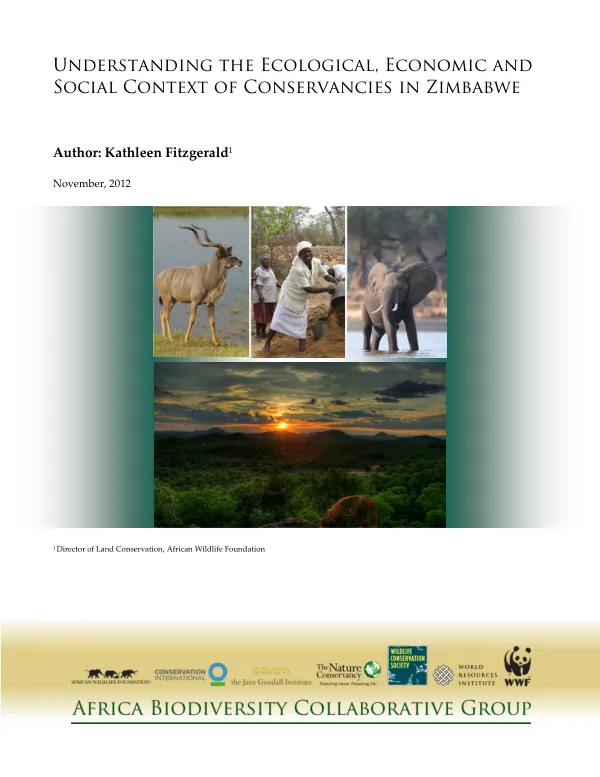
Abstract
This research was conducted at the request of the Zimbabwe Parks and Wildlife Management Authority (ZPWMA) with support from the Africa Biodiversity Collaborative Group (ABCG) and the United States Agency for International Development (USAID). Wildlife in Zimbabwe's protected areas, CAMPFIRE areas, and conservancies is declining and at great risk. Habitat throughout Zimbabwe's conservation areas has been severely degraded over the past decade, and sources of revenue to support conservation are limited due to the economic and political situation in Zimbabwe and the corresponding decline in photographic and hunting tourism. Conservancies throughout Africa play vital ecological, social, and economic roles, with the meaningful integration of surrounding communities being a key ingredient for success and sustainability. In 2007, Zimbabwe adopted the Indigenisation and Economic Empowerment Act (IEEA) with a goal to support the economic empowerment of indigenous Zimbabweans. Private conservancies in Zimbabwe should integrate the surrounding communities to meet the requirements of the IEEA where feasible, as this is the model that has succeeded throughout Africa. User rights must be clarified in a legal framework, and responsibilities institutionalized. AWF conducted field research, a desktop analysis, a legal analysis, community assessments, and consulted with a diversity of stakeholders for this research. While AWF developed a proposed model for conservancies, this model is still under discussion with relevant parties. Zimbabwe was a global leader in conservation and has an opportunity to reclaim this standing by showcasing a viable conservancy and community model at the United Nations World Tourism Organization General Assembly scheduled to take place in Victoria Falls in 2013. The African Wildlife Foundation (AWF) is a 51-year-old international conservation organization focused solely on Africa, with its headquarters in Kenya. AWF's mission is to work together with the people of Africa to ensure that Africa's wildlife and wildlands endure forever. AWF firmly believes that Africa's conservation must be led and implemented by Africans, with 85% of AWF's staff comprised of African nationals. AWF works in large landscapes called Heartlands, and is currently working in nine Heartlands covering 14 countries in east, central, southern, and west Africa. In each Heartland, AWF implements five main programs: applied conservation science, land and habitat conservation, conservation enterprise, capacity and leadership development, and climate change. AWF has been successful in Africa facilitating sustainable conservation outcomes by brokering agreements between communities, government, private landowners, and private sector. AWF empowers communities across Africa using a diversity of approaches and tools, not because of policy requirements but because it makes economic, social, and ecological sense. Three of AWF's Heartlands include Zimbabwe: Limpopo, which stretches into the Lowveld area of Zimbabwe; Kazungula, which includes Hwange National Park region; and Zambezi, which includes Mana Pools National Park. Conservancies may be based on community-owned land, privately-owned land, or a collection of private and community-owned land, and in some cases a combination of these with government land. While conservancies vary in ownership, size, and structure, they play a vital ecological, social, and economic role in many African countries. The benefits of conservancies throughout Africa are universal, including complementing state-owned and managed protected areas, diversifying the tourism economy, diversifying land management, and enabling the direct engagement and empowerment of communities and private landowners. The Zimbabwe Parks and Wildlife Management Authority (ZPWMA) solicited AWF's help to assess the CAMPFIRE program, conservancies, and Zimbabwe protected areas, and to advise how to improve the conservation estates. AWF completed an assessment of the conservation status of protected areas, CAMPFIRE areas, and conservancies, which it presented to ZPWMA in 2011. AWF found that throughout all three land categories, wildlife was declining and at risk, habitat integrity was severely threatened, and sources of revenue to support conservation were minimal.
Related documents
Documents in this collection
 2012
2012USAID DEC
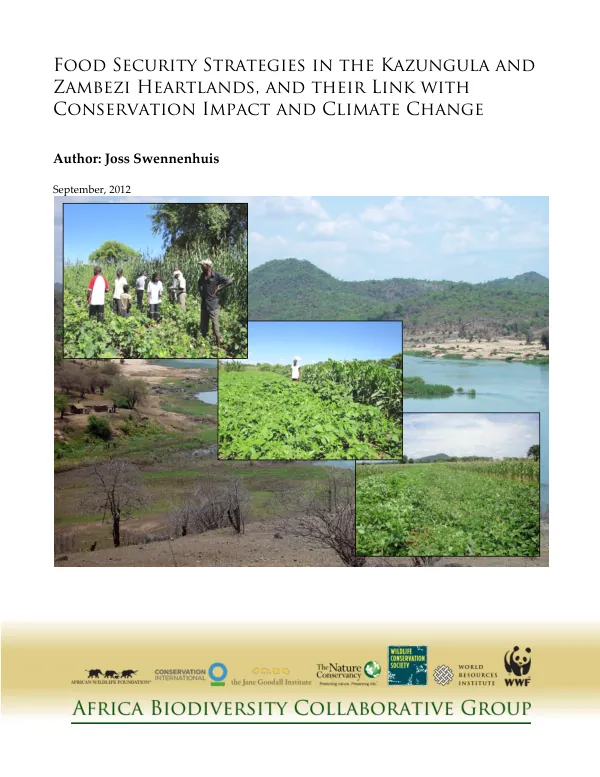
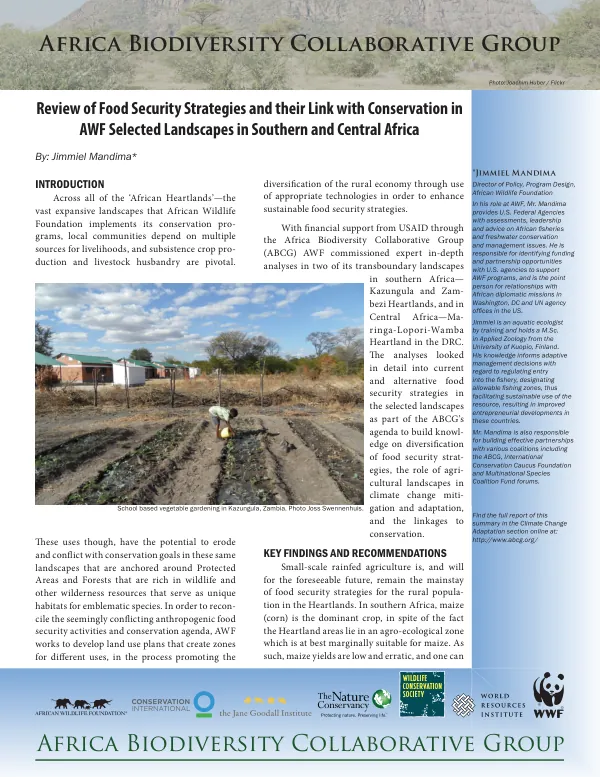
Review of Food Security Strategies and their Link with Conservation in AWF Selected Landscapes in Southern and Central Africa
Open record 2011
2011USAID DEC