USAID DEC
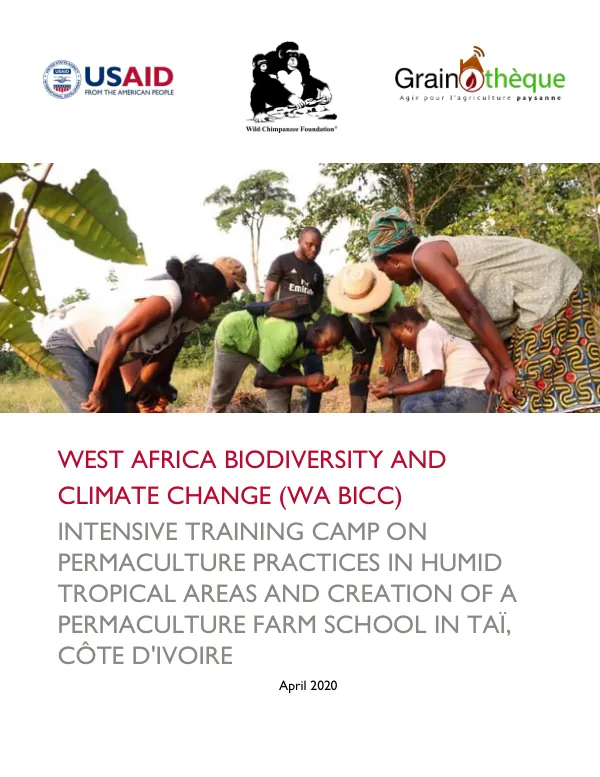
West Africa Biodiversity and Climate Change: Intensive Training Camp on Permaculture Practices in Humid Tropical Areas and Creation of a Permaculture Farm School in Taï, Côte d'Ivoire
Sign inTETRA TECH
West Africa Biodiversity and Climate Change: Intensive Training Camp on Permaculture Practices in Humid Tropical Areas and Creation of a Permaculture Farm School in Taï, Côte d'Ivoire
The agricultural crisis in humid tropical regions is characterized by declining soil fertility, reduced crop yields, and increased pressure on land due to population growth.
2020 · 20 pages
Sign in to readA free account is required to download.
Abstract
The traditional forest-based or slash-and-burn farming systems have been weakened by the increased demand for forest land, resulting in reduced soil fertility and regrowth periods. As yields decline, farmers must clear more land to produce the same output, leading to further soil degradation and reduced forest cover. The crisis is exacerbated by the rapid decomposition of organic matter, mineral leaching, and water erosion on sloping land in humid tropical climates. Farmers must spend more time tackling invasive weeds and pests, leading to reduced crop yields and increased economic and social difficulties. The practice of growing consecutive crops on the same plot year after year without fallow time, often encouraged by public authorities promoting Green Revolution-style monocropping, further contributes to the soil fertility crisis. Pioneer fronts, driven by natural population growth and migration in search of new land, are a major cause of widespread deforestation in many regions. As crop yields on cleared land fall after the first or second year of cultivation, plots are often abandoned or used as extensive and relatively unproductive grazing land, leading to further soil degradation and reduced forest cover. Farmers are ultimately forced to migrate or change their production systems, exacerbating the soil fertility crisis. The training program on permaculture and good farming practices, conducted between March 21 and April 9, 2020, aimed to teach beneficiaries new, more sustainable, and environmentally friendly farming techniques. The program focused on producing their own seed, compost, and organic pesticides, as well as good soil preparation. The beneficiaries appeared to have assimilated the course content by the end of the training period and will require further support for at least one to two months to ensure proper implementation. The training program consisted of a theoretical phase, which covered basic concepts behind permaculture and agroecology, agroecology and permaculture tools and practices, and farmer seeds, genetic engineering, and genetically modified organisms (GMOs). The practical phase included modules on intercropping, integrated pest management, soil fertility management, composting and quick composting techniques, dry toilets, seed production and storage techniques, and bokashi. The program aimed to equip beneficiaries with the knowledge and skills necessary to adopt sustainable and environmentally friendly farming practices, reducing their reliance on chemical inputs and promoting soil fertility and biodiversity. The training program was conducted in collaboration with the Wild Chimpanzee Foundation and Grainothèque, with the support of the United States Agency for International Development (USAID) through the West Africa Biodiversity and Climate Change (WA BiCC) program. The program's objectives and methodology were designed to address the soil fertility crisis and promote sustainable agriculture practices in humid tropical regions.
Related documents