USAID DEC
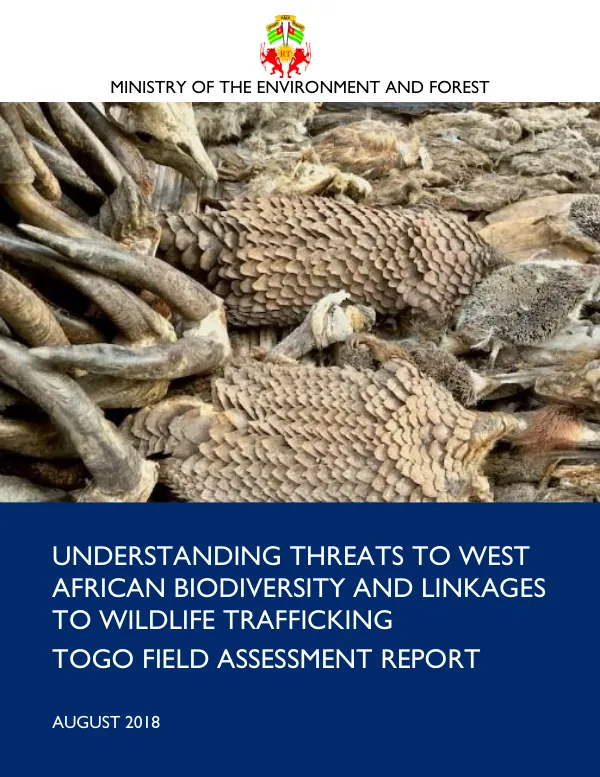
Understanding Threats to West African Biodiversity and Linkages to Wildlife Trafficking - Togo Field Assessment Report
Sign inTETRA TECH
Understanding Threats to West African Biodiversity and Linkages to Wildlife Trafficking - Togo Field Assessment Report
The Togolese Republic Ministry of the Environment and Forest Resources conducted a field assessment to understand threats to West African biodiversity and linkages to wildlife trafficking.
2018 · 28 pages
Sign in to readA free account is required to download.
Abstract
The assessment was conducted in August 2018, with the support of the United States Agency for International Development (USAID) through the West Africa Biodiversity and Climate Change (WA BiCC) program. The assessment aimed to identify the scope and nature of wildlife trafficking in Togo, including the movement of wildlife products through markets, entry points, and other routes. The assessment team visited various locations, including the Akodessewa fetish market in Lomé, the airport, seaport, land boundary border posts, and mail/courier services. The assessment found that wildlife trafficking is a significant threat to West African biodiversity, with Togo being a key transit point for the movement of wildlife products. The Akodessewa fetish market in Lomé was identified as a major hub for the sale of wildlife products, including pangolin scales, ivory, and other endangered species. The assessment also found that airport and seaport officials were often complicit in wildlife trafficking, with some officials accepting bribes to allow the movement of wildlife products. The assessment highlighted the need for proactive enforcement to deter wildlife trafficking. The Togolese government has established a national enforcement strategy, which includes proactive investigations, staffing, recruitment, and law enforcement training. The assessment also recommended the use of specialized investigative techniques, including forensic technology, financial investigations, and intelligence-led investigations, to combat wildlife trafficking. The assessment concluded that wildlife trafficking is a complex issue that requires a coordinated effort from government agencies, civil society organizations, and local communities. The report made several recommendations, including the strengthening of law enforcement capacity, the improvement of border control, and the enhancement of public awareness about the risks of wildlife trafficking. The assessment also highlighted the need for international cooperation to combat wildlife trafficking. The Togolese government has established partnerships with international organizations, including the Convention on International Trade in Endangered Species of Wild Fauna and Flora (CITES), to combat wildlife trafficking. The assessment was conducted by a team of experts, including Mr. Apla Yao Mawouéna, Director of Forest Resources, Mr. Okoumassou Kotchikpa, and Mr. Jonas Komi Anthe. The team worked closely with customs officials, law enforcement agencies, and other stakeholders to gather information and validate the findings of the assessment. The assessment was supported by the WA BiCC program, which aims to promote biodiversity conservation and climate change mitigation in West Africa. The program has provided technical and financial support to the Togolese government to strengthen its capacity to combat wildlife trafficking. The assessment has provided valuable insights into the scope and nature of wildlife trafficking in Togo, and has highlighted the need for a coordinated effort to combat this complex issue. The report has made several recommendations, which are aimed at strengthening law enforcement capacity, improving border control, and enhancing public awareness about the risks of wildlife trafficking.
Related documents