CARE
USAID ACCESO Monthly Update October 2011
The agricultural development initiative in Honduras, known as USAID ACCESO, is a four-year project supported by the United States Agency for International Development (USAID).
2011 · 5 pages
Sign in to readA free account is required to download.
Abstract
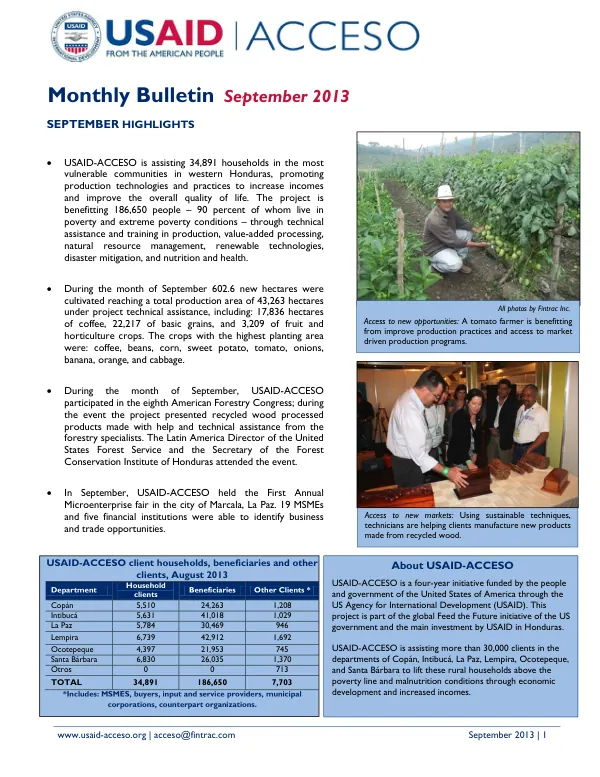
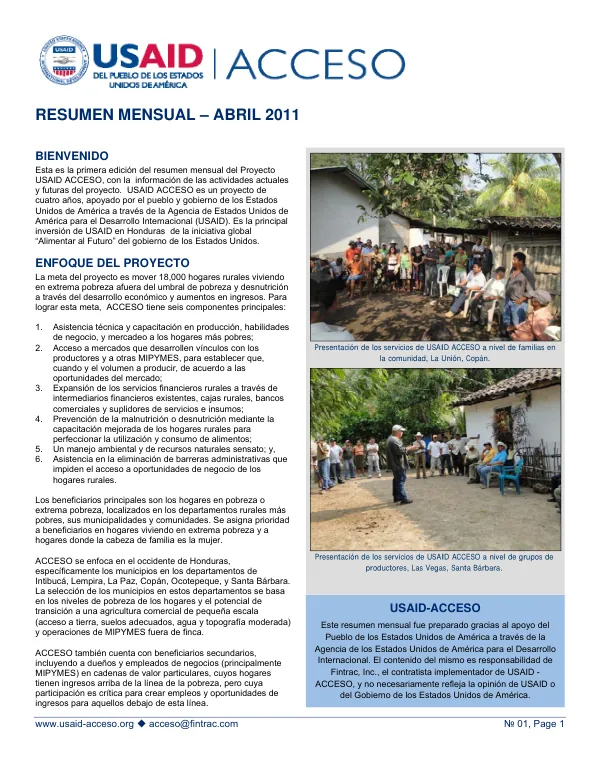
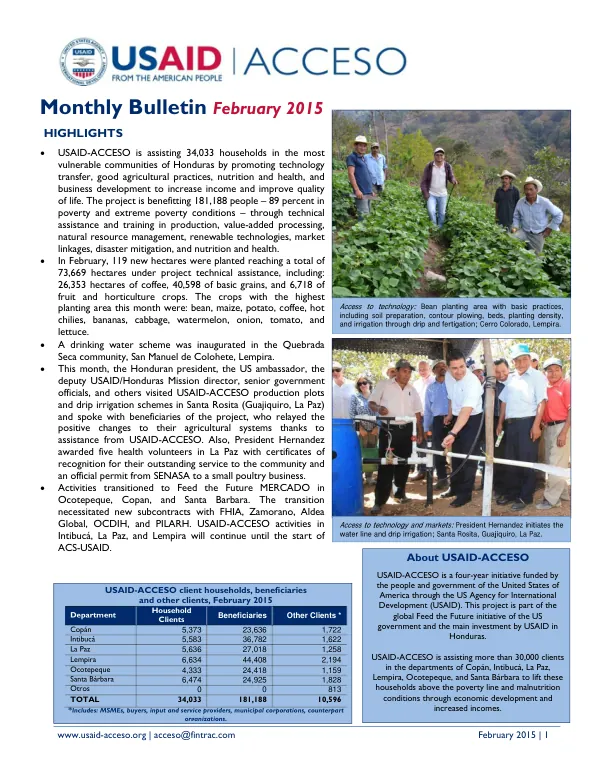
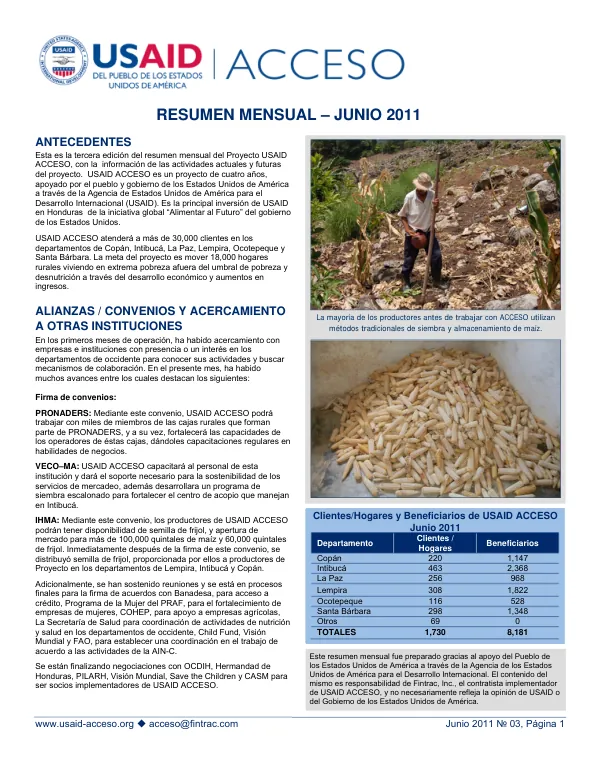
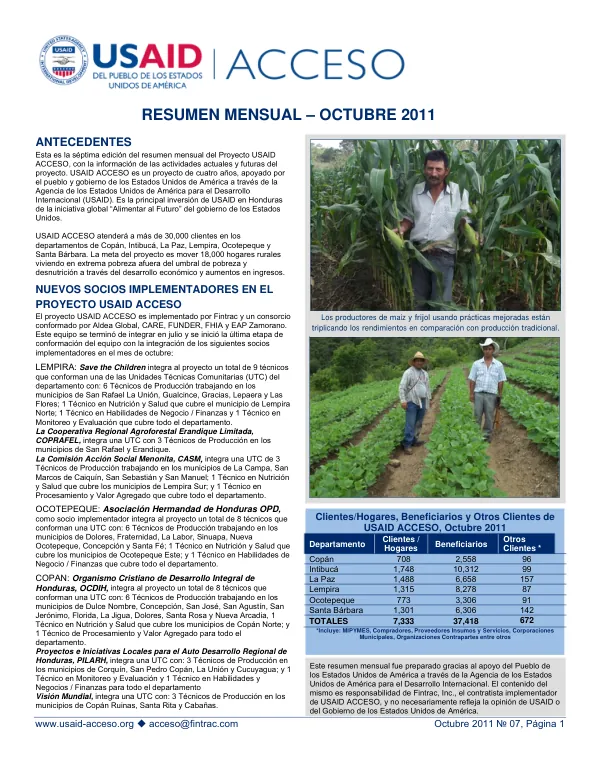
The project aims to improve the livelihoods of rural households living in extreme poverty by increasing their income and access to markets. The initiative is implemented by Fintrac and a consortium of local organizations, including Aldea Global, CARE, FUNDER, FHIA, and EAP Zamorano. The project targets over 30,000 clients in the departments of Copán, Intibucá, La Paz, Lempira, Ocotepeque, and Santa Bárbara. The goal is to move 18,000 households out of extreme poverty and malnutrition through economic development and increased income. As of October 2011, 4,860 of the 7,333 client households (66%) were living in extreme poverty, and 477 households (7%) were living in poverty. The project has made significant progress in providing technical assistance to farmers. During the month of October, 117 additional hectares of land received assistance, bringing the total to 3,863 hectares. The project has also conducted 838 events of training and education in production, with 8,558 participants. These events focused on basic practices for soil management, cultural practices, and integrated pest management. In addition to production training, the project has also provided training in animal husbandry, with 34 events and 431 participants. The project has also conducted 27 field visits with 320 participants to promote the adoption of good agricultural practices and the incorporation of new crops. Furthermore, the project has provided training in post-harvest management, with 26 events and 430 participants. The project has also made progress in promoting access to markets. In October, the project participated in the Feria del Regalo in San Pedro Sula, where 166 different products were showcased from 29 microenterprises working with ACCESO. The project has also initiated meetings with mayors interested in establishing green markets for the sale of fresh fruits and vegetables and products from microenterprises. The project's main goals are to move 18,000 households out of extreme poverty, generate $73.95 million in net income for assisted clients, and create 10,425 permanent jobs in assisted communities. The project has also made progress in providing training in business and financial skills, with 65 events and 924 participants. The project has also initiated assistance and training for young entrepreneurs through the "Programa Conjunto" initiative.
Related documents