ENGENDERHEALTH
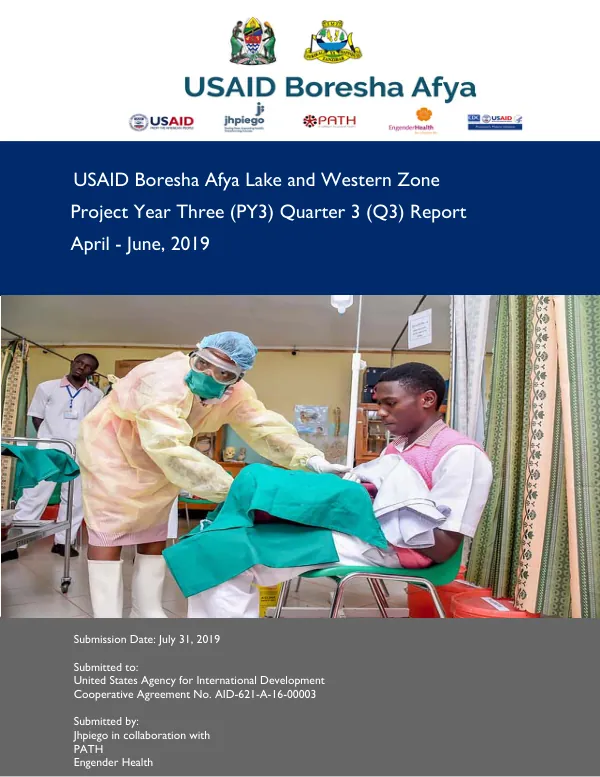
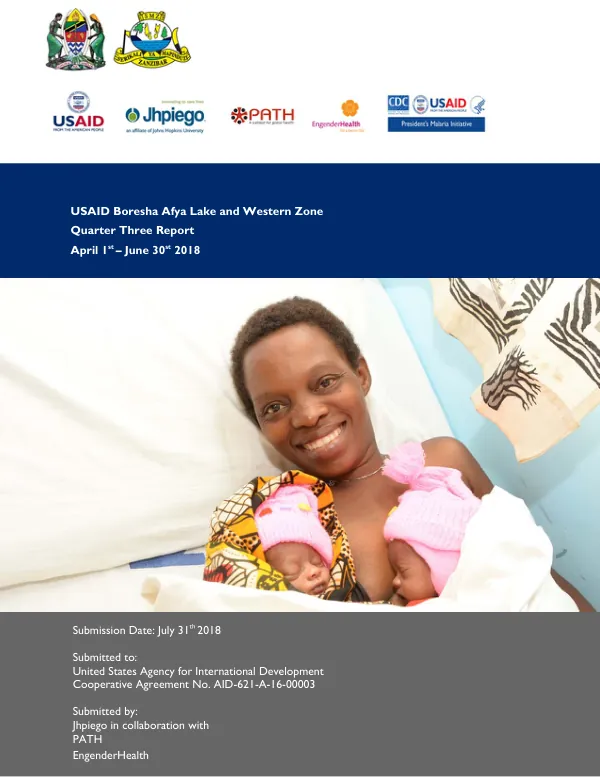
USAID Boresha Afya Lake & Western Zone, PY18 Q3 Report
The USAID Boresha Afya Lake and Western Zone program is a health initiative implemented in Tanzania, with a focus on improving maternal and child health, malaria case management, and family planning services.
2018 · 88 pages
Sign in to readA free account is required to download.
Abstract
The program is led by Jhpiego in collaboration with PATH and EngenderHealth, and is funded by the United States Agency for International Development (USAID) under Cooperative Agreement No. AID-621-A-16-00003. The program's geographic focus is on the Lake and Western Zones of Tanzania, with a specific emphasis on improving health services in these regions. The program's implementation period spans two years, with the current report covering the third quarter of Program Year 2 (PY2), from April 1 to June 30, 2018. The program's main purpose is to improve the health outcomes of mothers and children in the Lake and Western Zones, with a focus on reducing maternal and child mortality rates. To achieve this goal, the program is implementing a range of interventions, including improving the availability of quality, integrated health services, enhancing the enabling environment for health service provision, and increasing access to health services at the community level. The program's key findings and methodologies include: * Improved availability of quality, integrated health services, with a focus on maternal and child health, malaria case management, and family planning services. * Enhanced enabling environment for health service provision, through the implementation of policies and guidelines that support the delivery of quality health services. * Increased access to health services at the community level, through the establishment of community health workers and the implementation of community-based health programs. The program's implementation details include: * Staffing and HR administration, with a focus on recruiting and retaining skilled health professionals. * Short-term technical assistance, to provide technical support to health facilities and communities. * Project coordination and management, to ensure the effective implementation of program activities. The program's geographic focus and context include: * The Lake and Western Zones of Tanzania, which are characterized by high levels of poverty and limited access to health services. * The program's implementation is guided by the Tanzania National Health Policy and the Tanzania Health Sector Strategic Plan. The program's timeframes and recommendations include: * The program's implementation period spans two years, with the current report covering the third quarter of PY2. * The program's key recommendations include the need for continued support for the implementation of health policies and guidelines, the need for increased funding for health services, and the need for continued technical assistance to support the delivery of quality health services. The program's cross-cutting interventions include: * Health system strengthening, through the implementation of policies and guidelines that support the delivery of quality health services. * Digital health, through the implementation of electronic health information systems and the use of mobile health technologies. The program's EMMP implementation monitoring and reporting include: * The program's EMMP is designed to track progress towards the achievement of program objectives. * The program's monitoring and reporting framework includes the use of indicators and metrics to track progress towards the achievement of program objectives. The program's challenges and mitigation measures include: * The program faces challenges related to the availability of skilled health professionals, the availability of funding for health services, and the need for continued technical assistance to support the delivery of quality health services.
Related documents