INTERNATIONAL CHILDREN'S FUND, INC.
USAID/DCHA Sri Lanka Complex Emergency Fact Sheet #17, Fiscal Year (FY) 2009
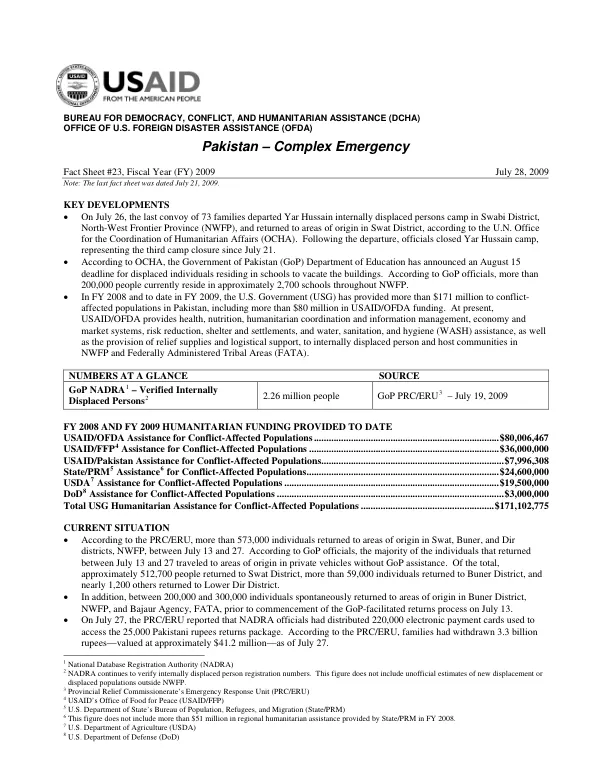
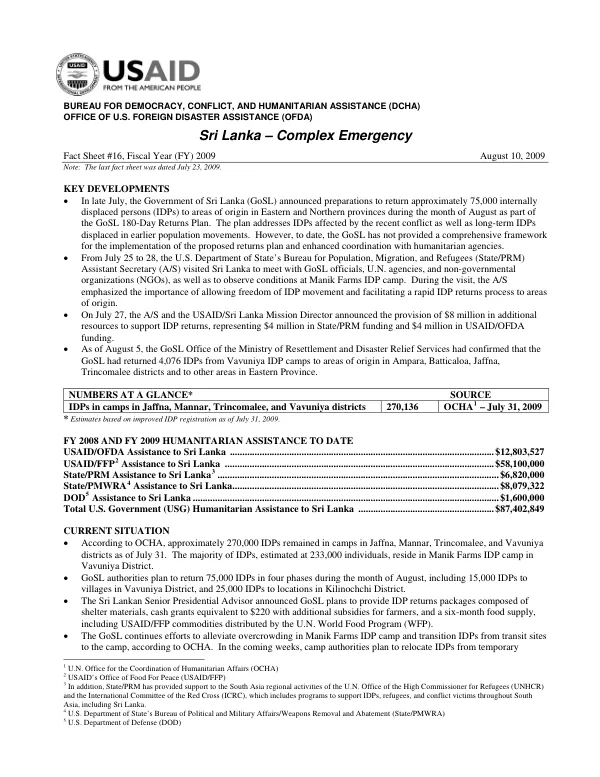
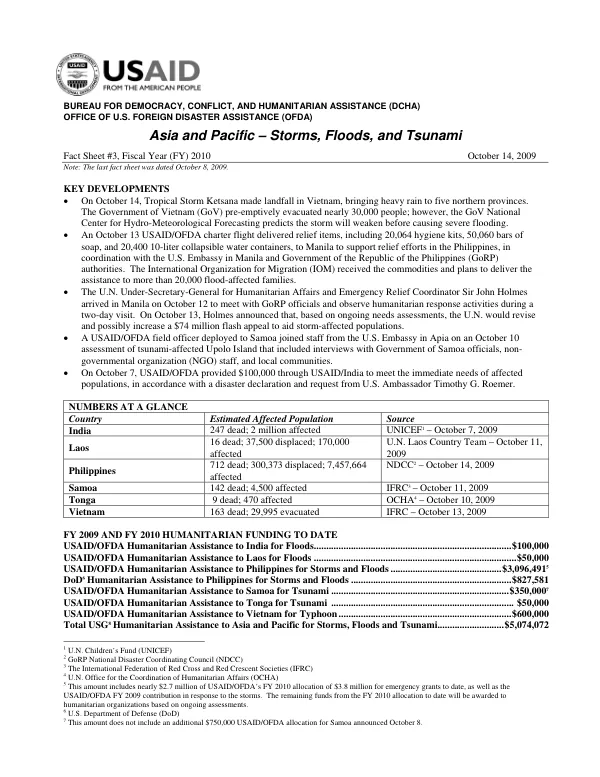
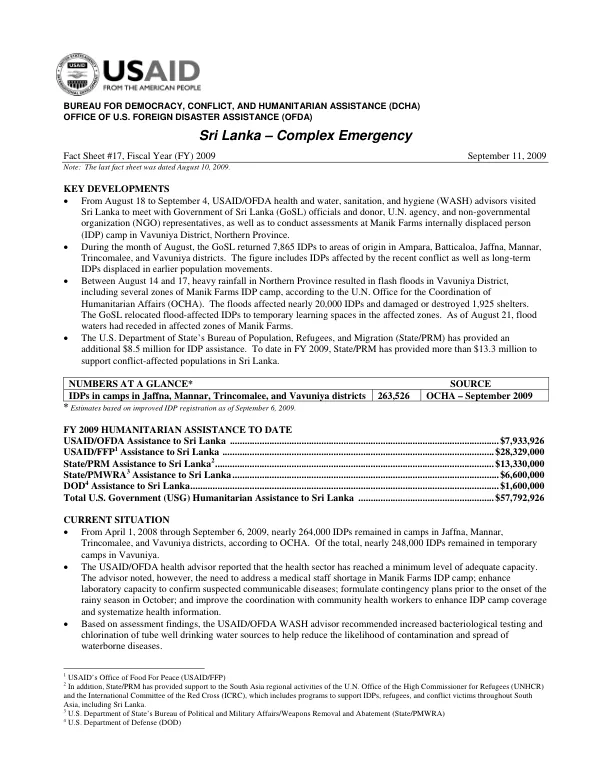
The Sri Lanka Complex Emergency began in 2008, with nearly 264,000 internally displaced persons (IDPs) remaining in camps in Jaffna, Mannar, Trincomalee, and Vavuniya districts as of September 6, 2009.
2009 · 4 pages
Sign in to readA free account is required to download.
Abstract
The majority of IDPs, approximately 248,000, were residing in temporary camps in Vavuniya. The Government of Sri Lanka (GoSL) had authorized the departure of 6,490 IDPs, including elderly persons, people with learning disabilities, and individuals from other vulnerable groups, from IDP camps to host families and elders' welfare centers. Health assessments conducted by the USAID/OFDA health advisor revealed a shortage of GoSL medical staff in Manik Farms IDP camp, despite government efforts to ensure adequate staffing in all health facilities. The advisor also noted the need to enhance laboratory capacity to confirm suspected communicable diseases, formulate contingency plans prior to the onset of the rainy season in October, and improve coordination with community health workers to enhance IDP camp coverage and systematize health information. The U.N. World Health Organization (WHO) reported a cumulative total of 15,371 chicken pox cases and 3,482 hepatitis A cases in transit sites and temporary IDP camps in Vavuniya since January and May, respectively. The GoSL Ministry of Health (MOH) has recently appointed public health inspectors (PHIs) to strengthen the communicable disease reporting system. The PHIs will collect case counts, supervise home follow-up visits to monitor patients treated for suspected cases of communicable diseases, identify environmental health risks such as WASH conditions, and improve reporting for disease outbreaks. The USAID/OFDA health advisor noted increasing numbers of reported chicken pox cases since mid-July and decreasing numbers of reported cases for hepatitis A, dysentery, and diarrhea cases over the past four weeks. The U.N. Shelter Cluster members conducted an assessment following the August 14 to 17 flash floods and found that the majority of tents and shelters did not sustain serious damage. However, the U.N. Shelter and WASH Cluster members are identifying flood-prone areas in Manik Farms to determine the possible relocation of IDPs to other areas in the event of additional floods during the October to December rains. U.N. Shelter Cluster agencies are repairing damaged emergency shelters and have approved a proposal to provide training on shelter maintenance to IDPs in Manik Farms. The USAID/OFDA WASH advisor reported varied access to WASH services due to continued overcrowding in several zones of Manik Farms, poor WASH facility maintenance, road access, and proximity to water points. The advisor also noted that the upcoming seasonal rains in October and associated flooding could further limit access to WASH services and facilities in zones located in low-lying areas. Some IDPs collect water using open-top water containers and prefer non-chlorinated drinking water due to taste, significantly increasing the risk of contamination of stored drinking water and spread of waterborne diseases. The U.S. Department of State's Bureau of Population, Refugees, and Migration (State/PRM) has provided an additional $8.5 million for IDP assistance, bringing the total to more than $13.3 million in FY 2009. The U.S. Department of Defense (DOD) has also provided $1.6 million in assistance to Sri Lanka. The total U.S. Government (USG) humanitarian assistance to Sri Lanka is $57.7 million.
Related documents