CARE
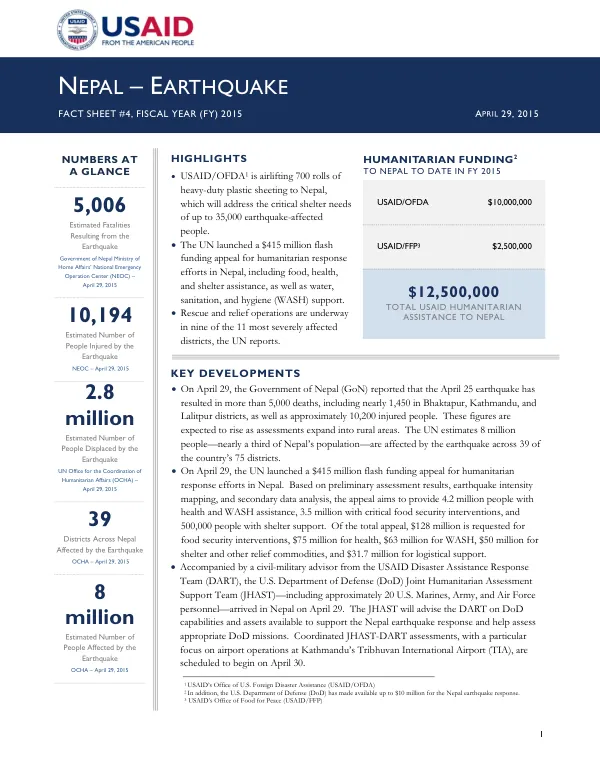
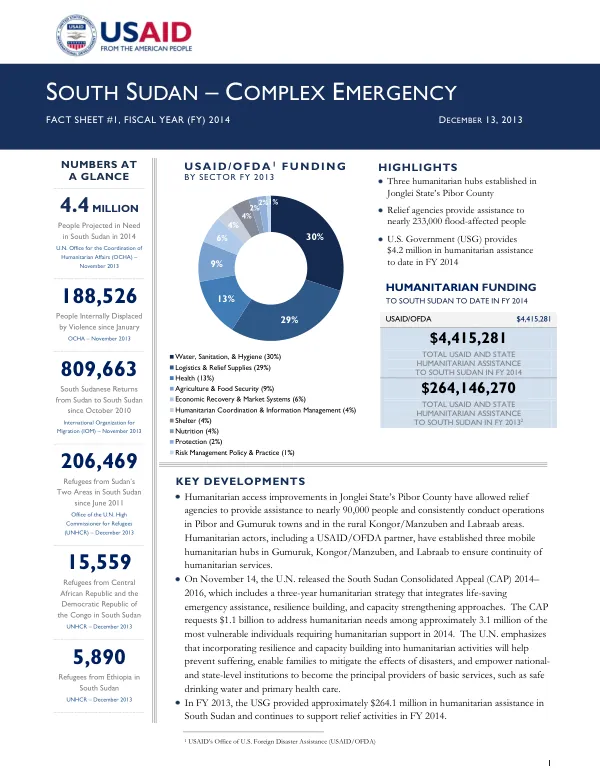
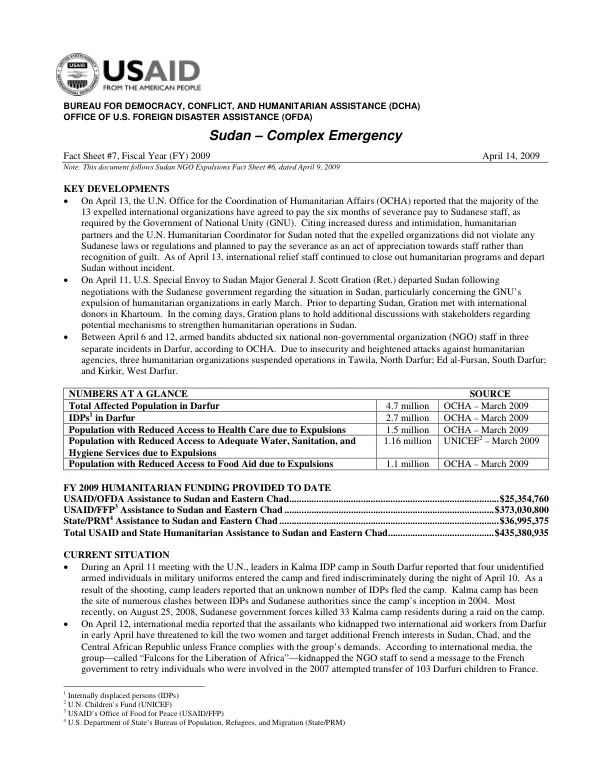
USAID-DCHA Sudan NGO Fact Sheet #7, Fiscal Year (FY) 2009
The Sudan complex emergency has been ongoing since 2003, with the conflict in Darfur being a major concern.
2009 · 4 pages
Sign in to readA free account is required to download.
Abstract
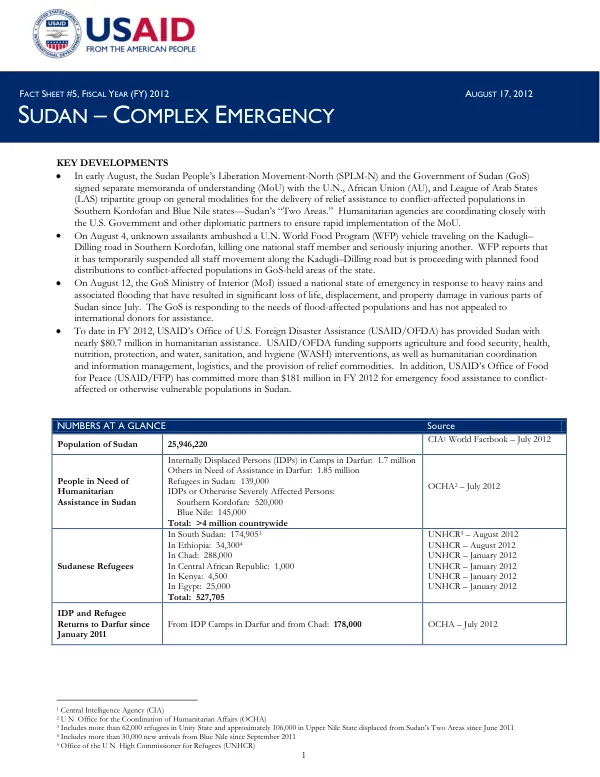
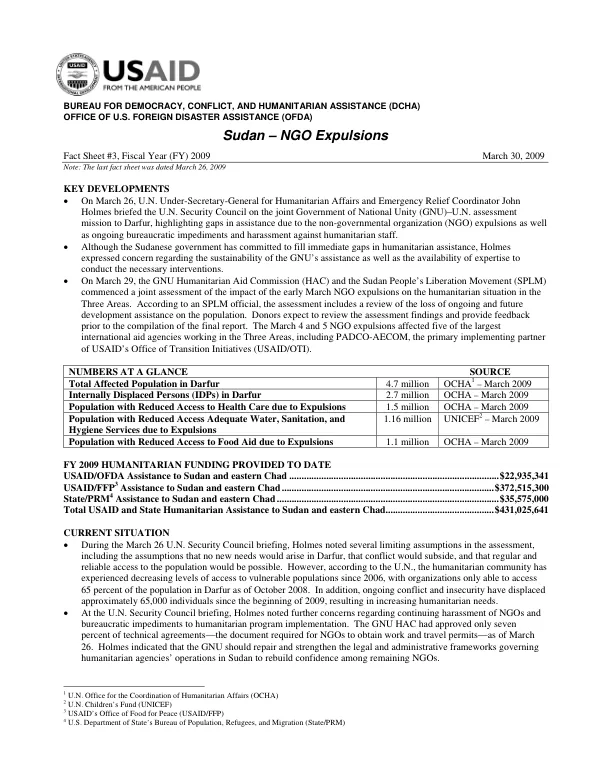
The conflict has resulted in significant humanitarian needs, with 4.7 million people affected in Darfur, including 2.7 million internally displaced persons (IDPs). The IDPs are in need of assistance with food, water, sanitation, and hygiene, with 1.5 million people having reduced access to health care and 1.16 million people having reduced access to adequate water, sanitation, and hygiene services due to the expulsions of humanitarian organizations. The expulsions of humanitarian organizations in early March have had a significant impact on the humanitarian response in Sudan. The organizations were expelled due to allegations of violating Sudanese laws and regulations, but humanitarian partners and the U.N. Humanitarian Coordinator for Sudan have stated that the organizations did not violate any laws and were expelled due to increased duress and intimidation. As a result of the expulsions, many humanitarian programs have been closed, and international relief staff have departed Sudan. The U.N. Office for the Coordination of Humanitarian Affairs (OCHA) has reported that the security situation in Darfur has stabilized, despite some acts of banditry and carjacking in North and West Darfur. However, the expulsions of humanitarian organizations have created gaps in assistance that Sudanese government agencies cannot address, particularly in the Three Areas. The U.N. Mission in Sudan (UNMIS) has reported continuing tensions in the Three Areas, and the assessment team plans to finalize the results of the Three Areas assessment and determine recommendations on addressing gaps. The humanitarian response in Sudan is being led by the U.N. and humanitarian partners, with the U.N. World Food Program (WFP) working to address immediate needs and review medium- and long-term strategies to meet food aid gaps throughout Darfur. The WFP has conducted a one-time, two-month food distribution in areas affected by the NGO expulsions, but recent distributions lack reliable monitoring and accountability. The health situation in Darfur is also a concern, with additional confirmed cases of meningitis reported throughout the region. The logistics and relief commodities situation in Sudan is also a concern, with the GNU Humanitarian Aid Commission (HAC) releasing relief commodities seized from expelled humanitarian organizations and warehoused in Nyala, South Darfur. The U.N. Joint Logistics Center (UNJLC) has assumed custody of Khartoum-area warehouses from GNU authorities and is working to identify an emergency transportation service provider to replace CARE and deliver stockpiled commodities to distribution sites. The U.S. government has provided significant humanitarian assistance to Sudan and Eastern Chad, with USAID/OFDA providing $25,354,760 in assistance to Sudan and Eastern Chad, USAID/FFP providing $373,030,800, and State/PRM providing $36,995,375. The total USAID and State humanitarian assistance to Sudan and Eastern Chad is $435,380,935.
Related documents