BANYAN GLOBAL
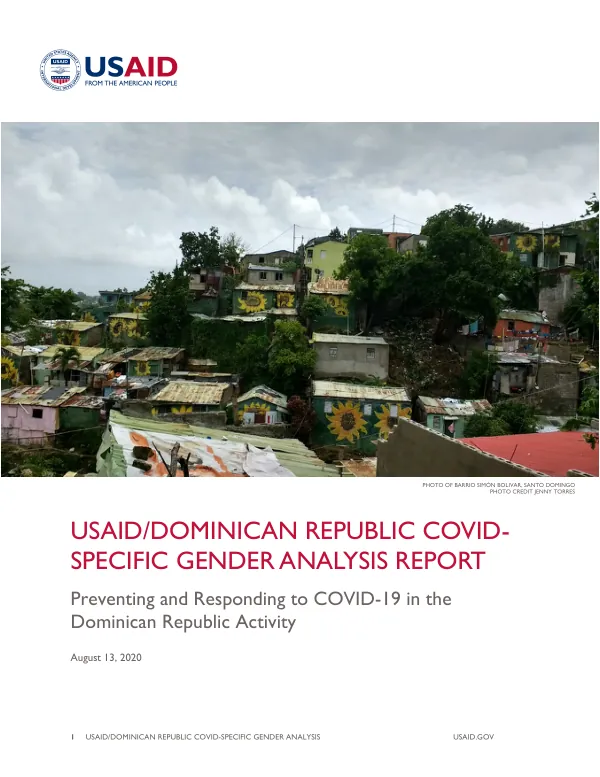
USAID/Dominican Republic COVID-Specific Gender Analysis Report (Draft)
The Preventing and Responding to COVID-19 in the Dominican Republic Activity is a USAID-funded initiative aimed at mitigating the impact of the COVID-19 pandemic in the Dominican Republic.
2020 · 41 pages
Sign in to readA free account is required to download.
Abstract
The activity focuses on five key intermediate results, including improved protection of migrant populations, psychosocial support and guidance for vulnerable populations, improved data collection and analysis, enhanced capacity of the Ministry of Education, and increased knowledge and practices of key behaviors at the community level. The activity's gender analysis, conducted by Banyan Global, highlights the need to address the unique challenges faced by women and girls in the context of the pandemic. Undocumented migrant populations, including Haitian women and children, experience high levels of gender and racial discrimination, as well as barriers to accessing gender- and COVID-specific services. Young women in particular are vulnerable to pregnancies, and women and girls are especially vulnerable to infection due to their engagement in informal work. The analysis recommends supporting non-governmental organizations to continue filling service gaps for undocumented migrants, promoting economic development activities targeting migrant populations, and delivering life-saving food and hygiene assistance to the most-marginalized and at-risk households. Additionally, the report suggests implementing a cash-transfers program to meet the subsistence and health needs of remote and quarantined at-risk households and strengthening communication to communities about accessing assistance programs and promoting positive gender roles. The analysis also highlights the need to address gender-based violence (GBV) in the context of the pandemic. Incidences of GBV likely have increased due to stay-at-home measures, and GBV helplines are underutilized. The report recommends supporting the development of a family helpline to provide mental-health monitoring, risk assessments, and referrals for integrated multisectoral specialized services, establishing a mechanism for the delivery of basic provisions for families most at risk, and supporting communication campaigns to improve awareness of GBV services. The activity's focus on women's economic empowerment and equality is also emphasized, with recommendations related to this area tagged with the WE3 designation to facilitate tracking of investments in this area. The report highlights the need to promote economic development activities targeting migrant populations, especially families most at risk, such as women-headed households, and to deliver life-saving food and hygiene assistance to the most-marginalized and at-risk households. Overall, the gender analysis provides critical insights into the unique challenges faced by women and girls in the context of the COVID-19 pandemic in the Dominican Republic and highlights the need for targeted interventions to address these challenges and promote gender equality and women's empowerment.
Related documents