TETRA TECH
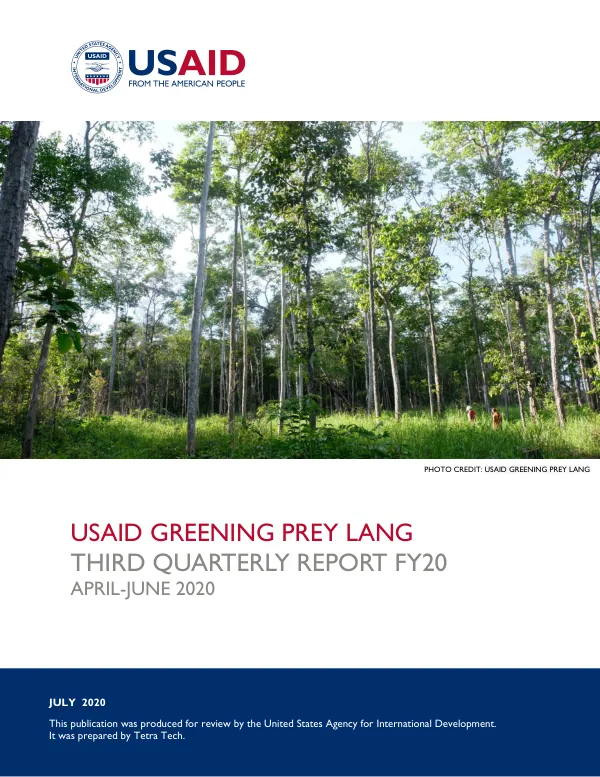
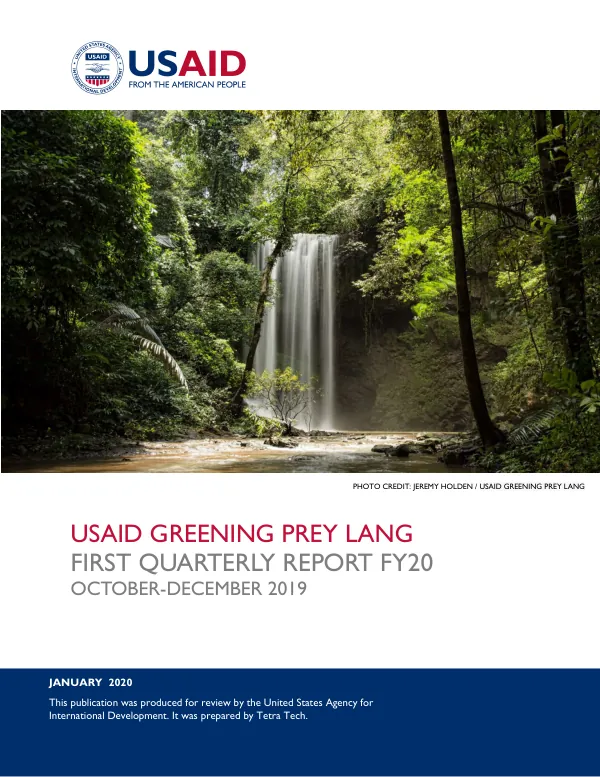
USAID GREENING PREY LANG: FY20 FIRST QUARTERLY REPORT
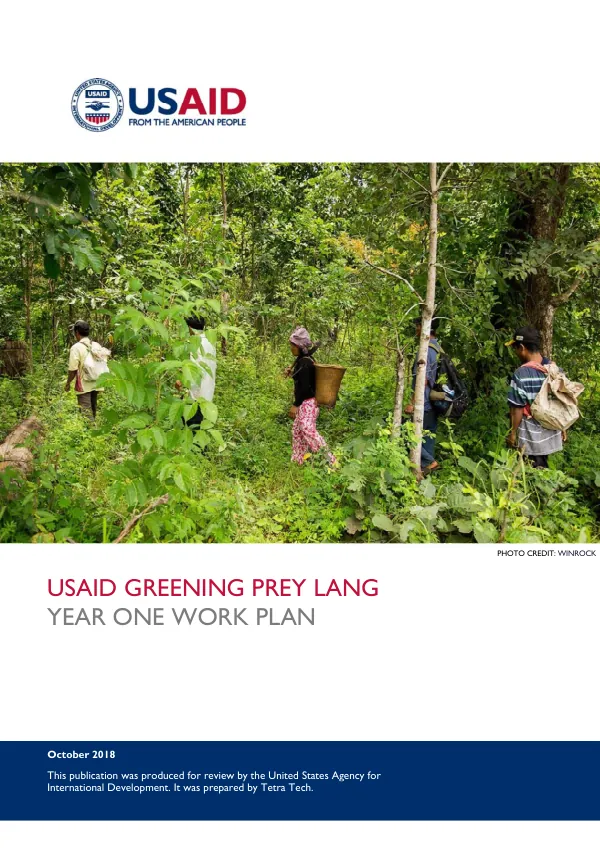
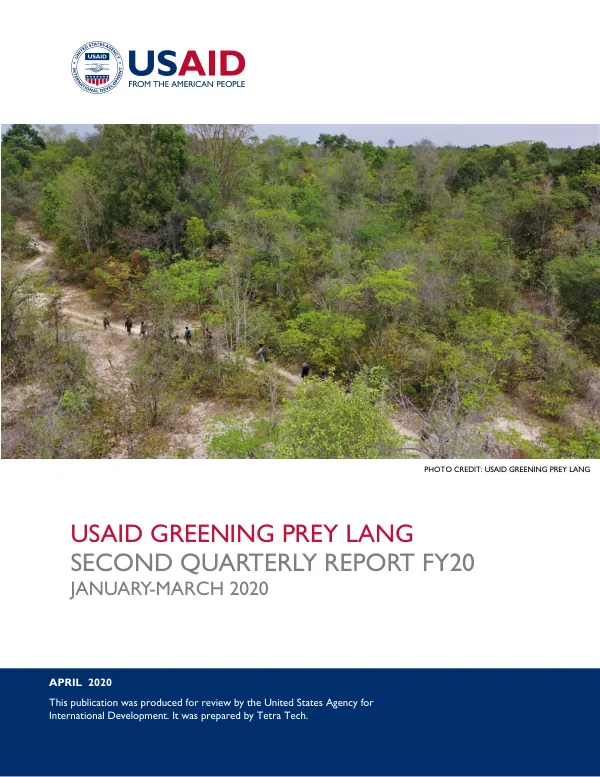
The Greening Prey Lang activity is a USAID-funded program aimed at conserving biodiversity and promoting sustainable economic opportunities in the Prey Lang Extended Landscape.
2020 · 73 pages
Sign in to readA free account is required to download.
Abstract
The program began in 2018 and is implemented by Tetra Tech. The geographic focus of the program is the Prey Lang Extended Landscape, which spans across several provinces in Cambodia. The program has three main objectives: improved biodiversity conservation and ecosystem health, increased sustainable and equitable economic opportunities, and strengthened inclusive and effective landscape governance. Objective 1 aims to conserve biodiversity and promote ecosystem health through the establishment of protected areas and community-managed forests. Objective 2 focuses on promoting sustainable economic opportunities through the development of community-based ecotourism and sustainable agriculture practices. Objective 3 aims to strengthen inclusive and effective landscape governance through the establishment of a community network and coordination with local authorities. The program has made significant progress in its first quarter, with the establishment of several community-protected areas and community forests. The program has also conducted training and capacity-building activities for local communities and stakeholders. Additionally, the program has established a community network, which has facilitated coordination and collaboration among local communities and stakeholders. The program has also made progress in promoting sustainable economic opportunities, with the development of community-based ecotourism and sustainable agriculture practices. The program has also conducted market research and analysis to identify opportunities for sustainable economic development. The program has faced several challenges, including limited resources and capacity constraints. However, the program has made significant progress in its first quarter, and it is expected to continue making progress in the coming quarters. The program will continue to work with local communities and stakeholders to promote biodiversity conservation and sustainable economic opportunities. The program has established several key partnerships, including with the Ministry of Environment, the Ministry of Agriculture, Forestry, and Fisheries, and the Ministry of Tourism. The program has also established partnerships with several non-governmental organizations, including Conservation International and the Deutsche Gesellschaft für Internationale Zusammenarbeit. The program has made significant progress in its first quarter, and it is expected to continue making progress in the coming quarters. The program will continue to work with local communities and stakeholders to promote biodiversity conservation and sustainable economic opportunities. The program has established a robust monitoring and evaluation system, which includes the use of geographic information systems and performance indicator tracking tables. The program will continue to track its progress and make adjustments as necessary to ensure that it is meeting its objectives. The program has also established a community network, which has facilitated coordination and collaboration among local communities and stakeholders. The community network has been instrumental in promoting biodiversity conservation and sustainable economic opportunities. The program has established several key performance indicators, including the establishment of protected areas and community-managed forests, the promotion of sustainable economic opportunities, and the strengthening of inclusive and effective landscape governance. The program will continue to track its progress and make adjustments as necessary to ensure that it is meeting its objectives. The program has also established a robust communication and outreach strategy, which includes the use of social media and community-based communication channels. The program will continue to communicate with local communities and stakeholders to promote biodiversity conservation and sustainable economic opportunities.