USAID DEC
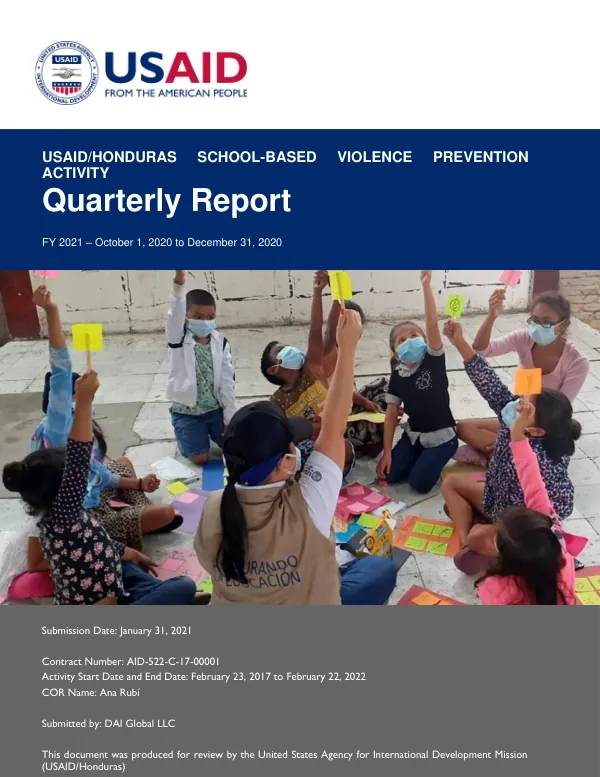
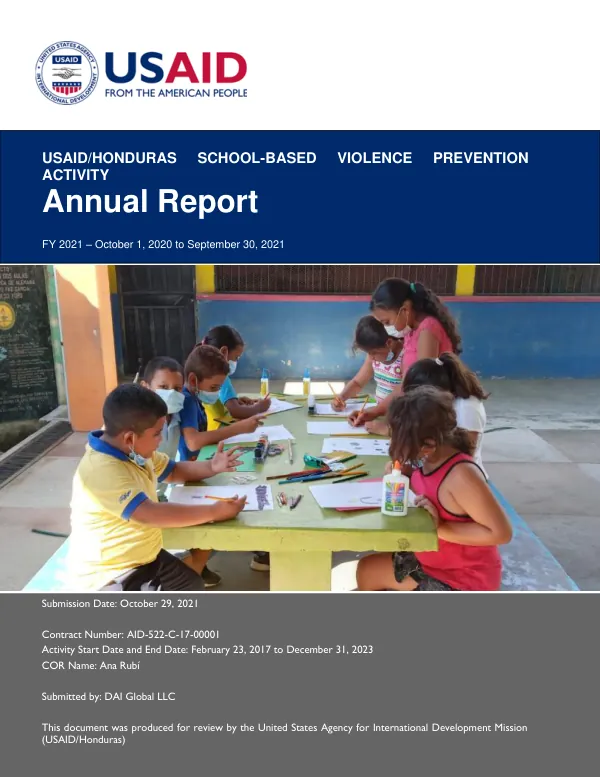
USAID/Honduras School-Based Violence Prevention Activity: Gender and Social Inclusion Strategy
Sign inDAI GLOBAL, LLC
USAID/Honduras School-Based Violence Prevention Activity: Gender and Social Inclusion Strategy
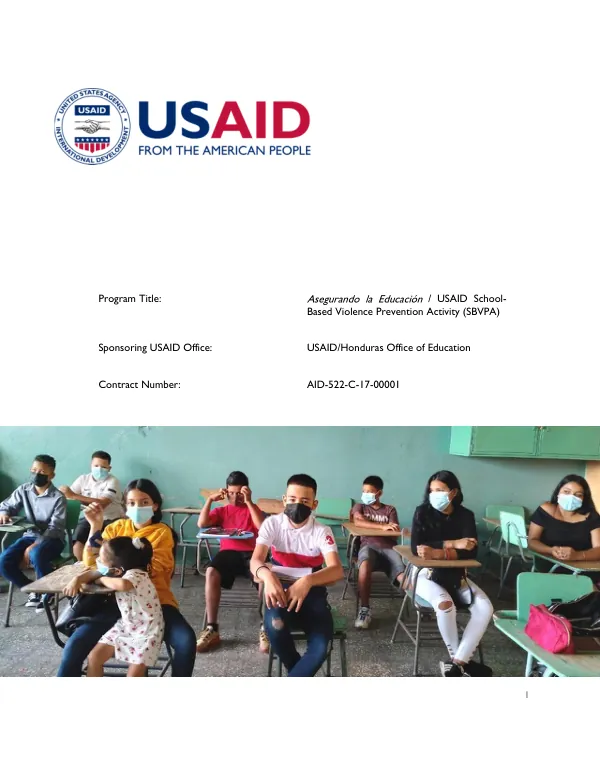
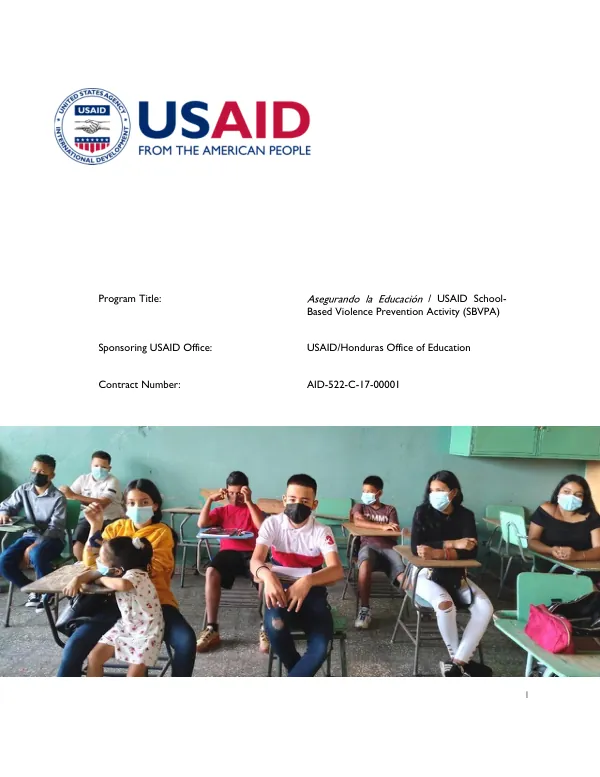
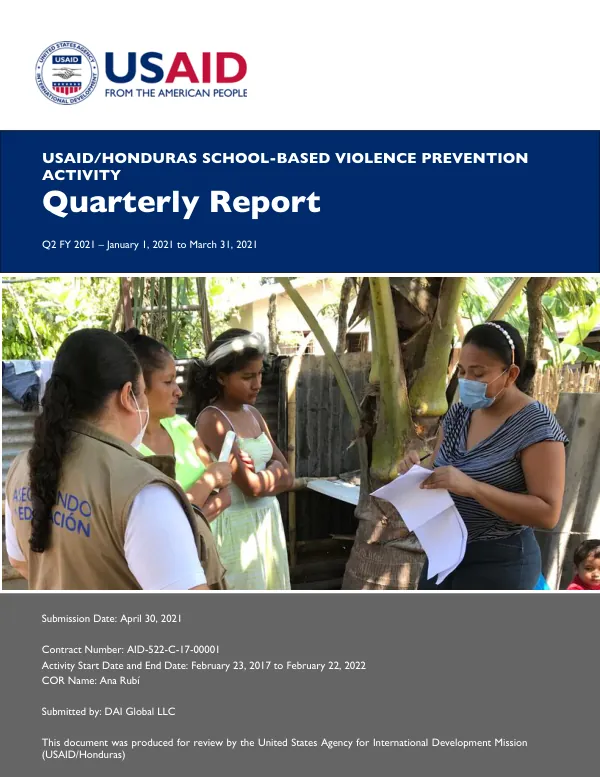
The USAID/Honduras School-Based Violence Prevention Activity, also known as Asegurando la Educación, aims to reduce school-based violence (SBV) in Honduras.
2018 · 30 pages
Sign in to readA free account is required to download.
Abstract
The activity is a crucial component of the Honduran Ministry of Education's (MOE) efforts to improve education quality and provide safe learning environments for all children. The MOE has made significant strides in improving education, with an 86% basic education completion rate and a high net enrollment rate in basic education. School-based violence remains a major threat to education quality in Honduras, with a significant impact on students' educational achievement. The MOE is concerned about reducing the impact of school violence on Honduran students. The USAID School-Based Violence Prevention Activity has developed strategic relationships with government officials, educators, and community members, and has received recognition and appreciation from students, parents, and stakeholders for its support. The activity's Gender and Social Inclusion Strategy is built on the findings of Asegurando's Gender and Social Inclusion Analysis, submitted to USAID in February 2018. This document provides specific strategies for implementing the project's activities and work plan, as well as indicators and strategies for monitoring and evaluation to measure progress towards accomplishments in the gender and social inclusion strategy. The strategy aims to examine violence through a gender lens, recognizing that gang violence and criminality are pervasive in many Honduran communities and are often characterized by underlying gender dynamics. By applying a gender lens, the activity seeks to understand existing gender norms, beliefs, and risk factors that promote, reinforce, or mitigate School-Related Gender-Based Violence (SRGBV). The strategy acknowledges that school-based violence impacts both boys and girls, and that addressing SRGBV requires a comprehensive approach that takes into account the unique experiences and needs of both genders. The activity's objectives are aligned with the United Nations Sustainable Development Goals (UNSDG), specifically SDG 4a, which seeks to provide safe, non-violent, inclusive, and effective learning environments for all children. The activity's implementation is guided by the Country Development Cooperation Strategy (CDCS) and the Central America Regional Security Initiative (CARSI), which aim to promote regional security and stability. The activity's strategies for implementation are outlined in the document, including overall strategies, strategies for students with disabilities, lesbian, gay, bisexual, transgender, and intersex (LGBTI) students, ethnic minority students, and strategies by objective. The document also provides a summary of school diagnostics, a summary of gender analysis, and references and resources for Asegurando. Overall, the USAID/Honduras School-Based Violence Prevention Activity's Gender and Social Inclusion Strategy aims to address the complex issue of school-based violence in Honduras by examining violence through a gender lens and developing comprehensive strategies to reduce SRGBV and promote safe, inclusive, and effective learning environments for all children.