AMERICAN INTERNATIONAL HEALTH ALLIANCE
USAID HRH2030/PHILIPPINES FY2019 ANNUAL REPORT
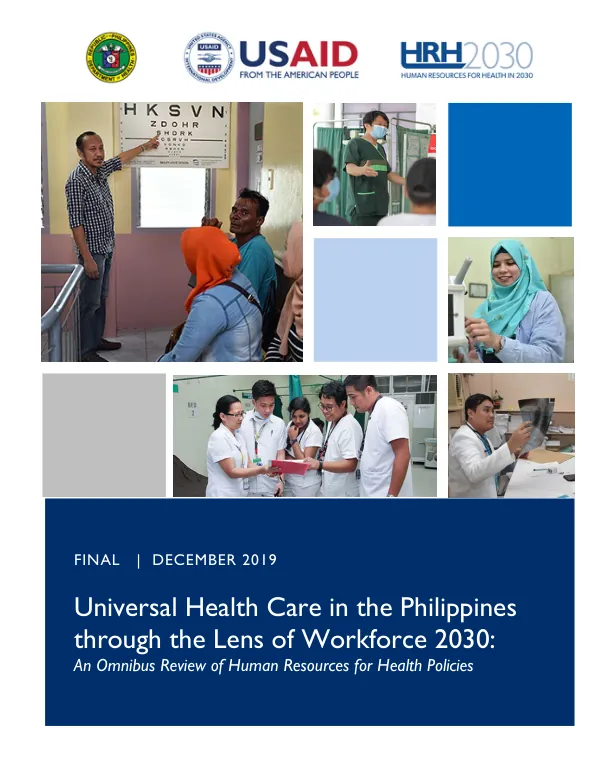
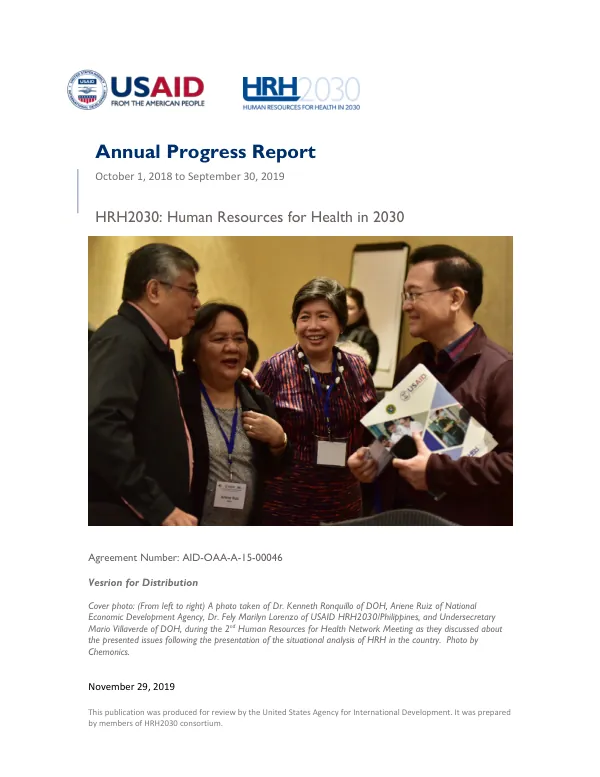
The Human Resources for Health in 2030 Philippines' Activity (HRH2030/Philippines) is a globally funded initiative aimed at developing the health workforce needed to prevent maternal and child deaths, support family planning, and protect communities from infectious diseases such as tuberculosis.
2019 · 45 pages
Sign in to readA free account is required to download.
Abstract
The activity is part of the United States Agency for International Development (USAID) Human Resources for Health in 2030 initiative, which contributes to USAID's goal of "Family Health Improved" by strengthening the health workforce for improved family planning and tuberculosis outcomes. The activity works with the Philippine Department of Health (DOH) and other key stakeholders to assess and strengthen human resources for health (HRH) with a focus on supporting the improvement of family planning, maternal and child health, and tuberculosis outcomes. Specifically, HRH2030/Philippines provides capacity building to DOH to strengthen the development, deployment, training, and management of a fit-for-purpose and fit-for-practice health workforce in both government and private sectors to improve equity, access, and quality of family planning, maternal and child health, and tuberculosis services. The activity aims to achieve three objectives: improve HRH planning and implementation at primary care levels especially for tuberculosis and family planning/maternal and child health services; strengthen HRH performance management and development with a focus on tuberculosis and family planning/maternal and child health; and improve the use of data for HRH decision-making at central and regional levels. In Year 2, USAID HRH2030/Philippines' progress built on its first year of mobilizing stakeholder relationships and buy-in for its technical assistance interventions. The activity focused on completing research and assessment reports for the evidence-based development of interventions, tools, approaches, and recommendations to optimize and strengthen the Philippines' health workforce. USAID HRH2030/Philippines, through an expanded technical team, emphasized applying sustainable approaches across its activities and continued to collaborate with key stakeholders, including counterparts at DOH, other USAID implementing partners, and international donors such as the World Health Organization. The activity contributed to improved HRH planning by addressing issues affecting tuberculosis and family planning service delivery such as maldistribution through implementing the Workload Indicators of Staffing Need (WISN) study. This study determined workload pressure to identify appropriate health worker staffing levels. The activity completed a review of the DOH deployment program, conducted an inventory and analysis of the Global Fund (GF) TB HRH investments, and determined competency needs. The activity also presented updates on its technical assistance to the HRH Network's quarterly meetings, comprising public and private organizations working toward the effective and efficient management of the health workforce. USAID HRH2030/Philippines continued to collaborate with key stakeholders, including counterparts at DOH, other USAID implementing partners, and international donors such as the World Health Organization, to advance the goals of the activity. The geographic coverage of the activity includes 9 regions, 18 provinces/cities, and 18 health care provider networks (formerly known as Service Delivery Networks (SDNs)). The activity has a reporting period from October 1, 2018 to September 30, 2019, and is implemented by Chemonics International with subcontractors Palladium, American International Health Alliance, Open Development, Alliance for Improving Health Outcomes, EpiMetrics, Integrative Competitive Intelligence Asia, Nephila Web.