USAID DEC
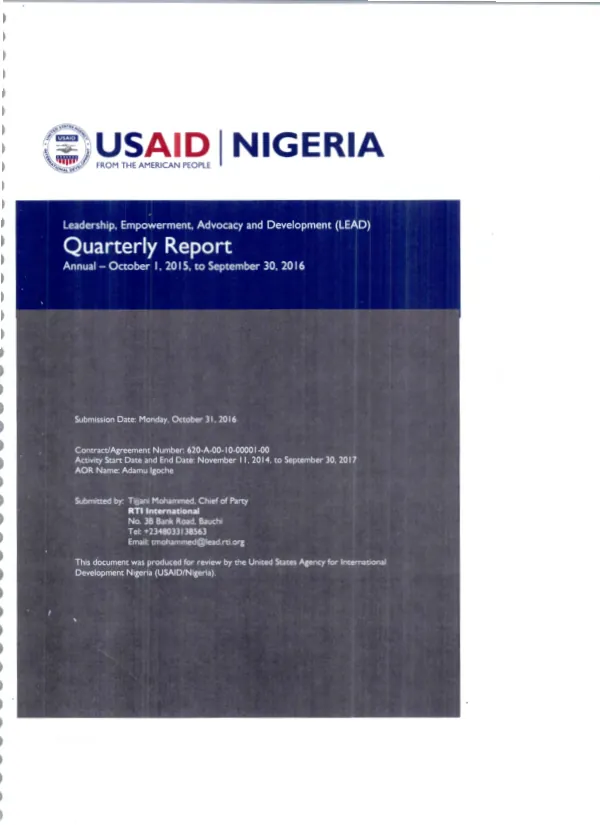
USAID I Nigeria Leadership, Empowerment, Advocacy and Development (LEAD), Annual (October 2015-September 2016)
Sign inUSAID
USAID I Nigeria Leadership, Empowerment, Advocacy and Development (LEAD), Annual (October 2015-September 2016)
The program aimed to strengthen local government capacity, increase transparency of local government operations, and improve access to basic education and reading and strengthened health system.
2016 · 242 pages
Sign in to readA free account is required to download.
Abstract
The geographic focus was on Rivers State, with a focus on improving the lives of citizens through improved governance, education, and health. Implementation of the program involved the establishment of a network of civil society organizations (CSOs) in Rivers State. The CSOs were responsible for implementing various activities aimed at achieving the program's objectives. These activities included training programs for farmers, infrastructure development, and market linkage facilitation. The program also focused on strengthening the capacity of local organizations, including CSOs, to deliver services to the community. The program's implementation was monitored through regular progress reports and evaluations. The reports highlighted the achievements of the program, including the strengthening of local government capacity, the increase in capacity of local organizations, and the improvement in access to basic education and reading and strengthened health system. The reports also highlighted the challenges faced by the program, including the challenges of implementing projects in a challenging environment. The program's impact was evident in the improvements in the lives of the people of Rivers State. The program's efforts led to an increase in household income, improved access to education and healthcare, and improved governance. The program also contributed to the development of the state's economy, with the establishment of new businesses and the creation of jobs. The program's success was attributed to the effective collaboration between the government, CSOs, and other stakeholders. The collaboration enabled the effective implementation of the program's activities and ensured that the program's objectives were met. The program's success also highlighted the importance of investing in the development of local communities and the importance of empowering local communities to take ownership of their development. The program's achievements were recognized by various stakeholders, including the government and international organizations. The program's success was also recognized through various awards and recognition, including the award of the best development project in Nigeria. The program's legacy continued even after its completion. The program's legacy included the establishment of a network of CSOs that continued to work towards the development of the state. The program's legacy also included the development of a culture of transparency and accountability in the state's governance system. The program's impact was also felt in the area of education. The program's efforts led to an increase in the number of children attending school, and the quality of education improved. The program also contributed to the development of the education sector, with the establishment of new schools and the training of teachers. The program's impact was also felt in the area of health. The program's efforts led to an improvement in the quality of healthcare services, and the number of people accessing healthcare services increased. The program also contributed to the development of the health sector, with the establishment of new healthcare facilities and the training of healthcare workers. The program's impact was also felt in the area of governance. The program's efforts led to an improvement in the governance system, with the establishment of a culture of transparency and accountability. The program also contributed to the development of the governance sector, with the establishment of new institutions and the training of public servants. The program's impact was also felt in the area of economic development. The program's efforts led to an increase in the number of businesses and the creation of jobs. The program also contributed to the development of the economy, with the establishment of new industries and the development of infrastructure. The program's impact was also felt in the area of gender equality and female empowerment. The program's efforts led to an increase in the number of women participating in the economy and the number of women holding leadership positions. The program also contributed to the development of the gender sector, with the establishment of new programs and the training of women. The program's impact was also felt in the area of environmental compliance. The program's efforts led to an improvement in the environmental conditions, with the establishment of new environmental regulations and the enforcement of environmental laws. The program's impact was also felt in the area of youth development. The program's efforts led to an increase in the number of young people participating in the economy and the number of young people holding leadership positions. The program also contributed to the development of the youth sector, with the establishment of new programs and the training of young people. The program's impact was also felt in the area of public-private partnership and global development alliance. The program's efforts led to an increase in the number of partnerships between the government and the private sector, and the number of partnerships between Nigeria and other countries. The program also contributed to the development of the public-private partnership sector, with the establishment of new partnerships and the training of partners. The program's impact was also felt in the area of conflict mitigation. The program's efforts led to a reduction in the number of conflicts, and the number of people affected by conflict. The program also contributed to the development of the conflict resolution sector, with the establishment of new programs and the training of mediators. The