DIMAGI, INC.
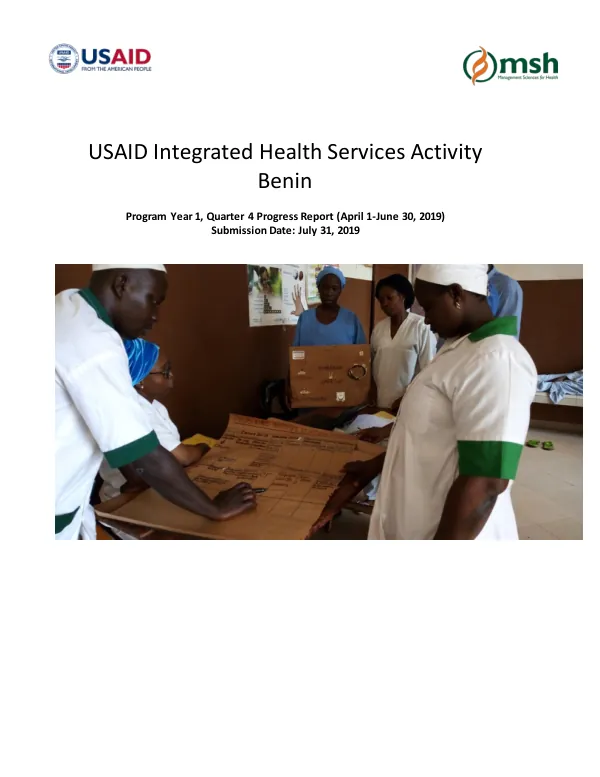
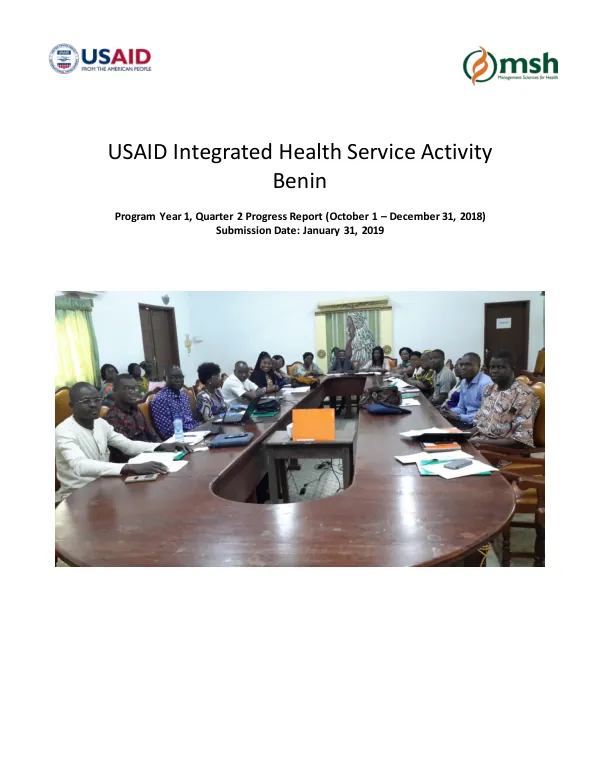
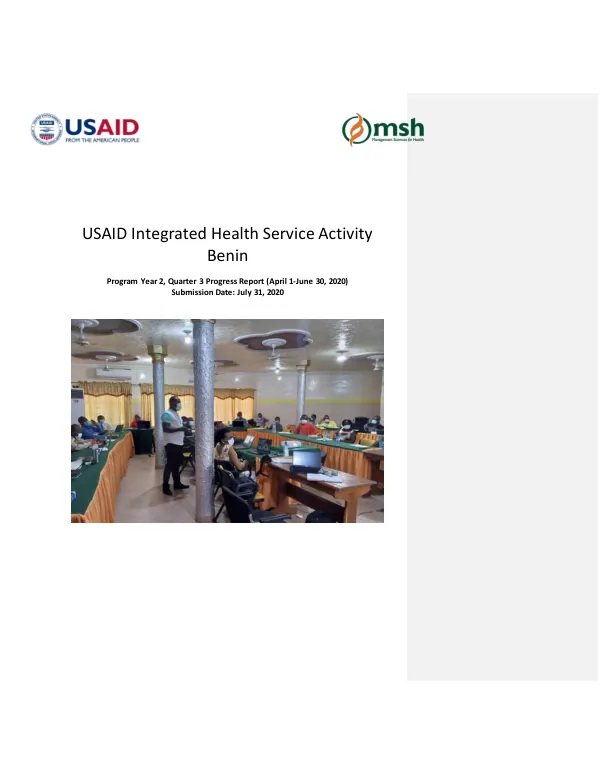
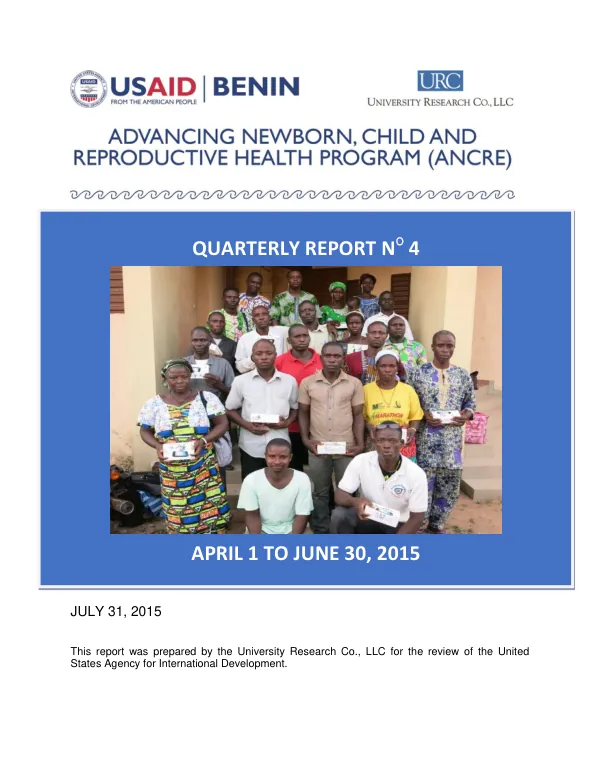
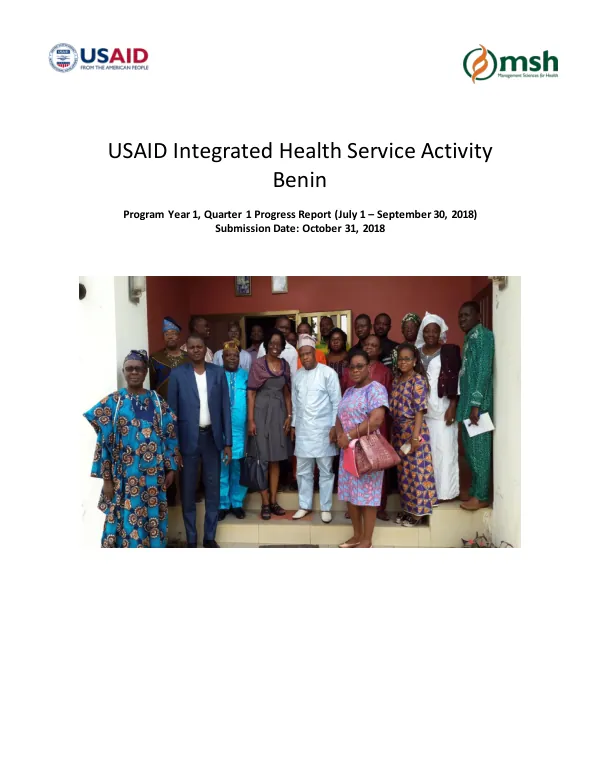
USAID Integrated Health Service Activity Progress Report for Benin
The USAID Integrated Health Service Activity in Benin is a five-year program aimed at strengthening the delivery of high-impact malaria, family planning, maternal and child health, and gender-based violence services in the public sector.
2018 · 14 pages
Sign in to readA free account is required to download.
Abstract
The program is implemented by Management Sciences for Health (MSH) in collaboration with four local partners and is financed by the United States Agency for International Development (USAID). The program's primary goal is to contribute to the reduction of maternal, newborn, child, and adolescent girls' mortality and morbidity in Benin. The program is implemented in four departments: Alibori, Atacora, Ouémé, and Plateau, which have a combined population of 3,362,501 people. The program focuses on four intermediate results: increasing the quality of high-impact services, increasing the uptake of high-impact health services, strengthening local leadership, management, and governance, and supporting central government planning and coordination of high-impact health interventions. The program incorporates the guiding principles of USAID/Benin's strategic framework, which emphasizes strengthening health systems, improving service delivery quality, transforming gender relations, increasing demand for high-impact services, and reducing barriers to improved health and health-seeking behaviors. The program collaborates closely with the Ministry of Health (MOH) at the central, departmental, and health zone levels, local leaders, civil society organizations, and community-based organizations to ensure effective implementation of activities. During Quarter 1 (July-September 2018), the program's activities focused on introducing IHSA to central and departmental MOH key stakeholders, Government of Benin administrative representatives, and key IHSA stakeholders. The program also conducted workplanning sessions with central and departmental MOH and administrative representatives to further inform the workplanning process. Additionally, the program participated in ongoing strategic and consultative activities at central or department level to further inform the workplanning process. A key priority for IHSA is to develop an engagement strategy to keep MOH counterparts informed and engaged as the primary IHSA implementing partner. The strategy will include collaboration mechanisms such as regular meetings, joint planning sessions, and technical assistance to ensure effective implementation of activities. The program also aims to promote MOH ownership of the activity at both the central and departmental levels and to promote access to and use of services among hard-to-reach populations. The program's progress during Quarter 1 was marked by the introduction of IHSA to the MOH, departments, and partners, as well as the conduct of workplanning sessions with central and departmental MOH and administrative representatives. The program also participated in ongoing strategic and consultative activities at central or department level to further inform the workplanning process. The program's engagement strategy is still in development, but it aims to include collaboration mechanisms such as regular meetings, joint planning sessions, and technical assistance to ensure effective implementation of activities. The program's implementation is expected to contribute to the reduction of maternal, newborn, child, and adolescent girls' mortality and morbidity in Benin. The program's focus on strengthening health systems, improving service delivery quality, transforming gender relations, increasing demand for high-impact services, and reducing barriers to improved health and health-seeking behaviors is expected to have a positive impact on the health outcomes of the target population.